Why many British Muslims have no political home


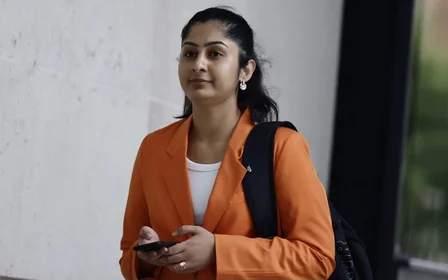
Iqbal Mohamed’s resignation from Your Party last month over its response to his social media posts came just days after another Muslim MP’s exit.
Earlier in November, Adnan Hussain withdrew from the party, citing “persistent infighting” and what he described as “veiled prejudice”.
Their back-to-back departures expose not just internal dysfunction, but a wider crisis of belonging.
Mohamed’s resignation came after he clashed with Zarah Sultana - who is also Muslim, and who cofounded Your Party with former Labour leader Jeremy Corbyn earlier this year - over the issue of transgender rights.
In a post on X, Mohamed said that women’s rights must not be “taken away”. A spokesperson for Sultana responded by noting that trans rights were “non-negotiable” for Your Party.
New MEE newsletter: Jerusalem Dispatch
Sign up to get the latest insights and analysis on Israel-Palestine, alongside Turkey Unpacked and other MEE newsletters
Although Mohamed’s viewpoint on gender identity is grounded in what many orthodox Muslims consider the traditional Islamic understanding of biological sex, this standpoint is unacceptable in Your Party’s moral ecosystem.
The speed of the response signalled a familiar message: dissent from progressive orthodoxy is not tolerated, even when articulated from a sincere religious standpoint.
Strategic partnership
For decades, British Muslims have been treated as a dependable progressive bloc, particularly by Labour. But the partnership was never ideological; it was strategic, and today’s left demands moral conformity on questions of gender, sexuality and identity, producing inevitable collisions with orthodox Muslims.
The Green Party, which some have suggested as an alternative home for Muslims who feel disenfranchised, has shown its own blind spots.
The 2019 call by Jonathan Bartley, then the party’s co-leader, for a ban on halal slaughter revealed tensions between progressive rhetoric and respect for Muslim religious life - and these fissures are not new.
With little room on the progressive left and outright hostility on the right, many Muslims are searching for new political avenues
More than a decade ago, in 2012, a furore erupted after Muslim journalist Mehdi Hasan expressed a pro-life position, with sections of the left demonstrating how narrow the range of acceptable moral positions can be, even for established commentators.
The 2019 Birmingham school protests, in which Muslim parents challenged a curriculum that included material on LGBTQ issues, further exposed these fractures.
In a column for Middle East Eye, Peter Oborne and John Holmwood have described how the “British values” framework imposes a one-way demand: Muslims must show tolerance, but their own moral boundaries are rarely tolerated in return.
Amid this backdrop, Gaza is no longer a peripheral issue; it is a defining one. It has reordered political loyalties, particularly among younger Muslims who are unwilling to accept moral equivocation. For many, Gaza is not simply a foreign policy question; it is a referendum on political sincerity.
Political drift
Polling backs this sense of a political drift among Muslims. A 2023 survey found a steep decline Labour support, with just five percent of Muslims leaning towards the party, compared with 71 percent in 2019. In another poll last year, 44 percent listed the Israel-Palestine conflict as one of their top issues, and 21 percent said it was their single biggest concern.
Among those prioritising Gaza, 86 percent were open to voting for an independent pro‑Palestinian candidate - a sign of deep volatility. Political scientist Parveen Akhtar’s research on the 2024 election found seismic shifts in heavily Muslim constituencies, where independents like Mohamed and Hussain defeated Labour candidates, demonstrating how moral disillusionment can override historic loyalties.
Labour’s attempt to outflank Reform UK on immigration has sharpened the unease. The optics of toughened immigration rhetoric being celebrated by far‑right commentators is alarming for settled Muslim communities, whose families have spent decades integrating, building businesses, and anchoring local economies.
They fear that the rhetoric threatens not only migrants at the border, but the delicate social progress they have achieved over generations.
With little room on the progressive left and outright hostility on the right, many Muslims are searching for new political avenues. Some are exploring faith-rooted civic platforms, while others are investing inwards: building mosques, schools, community organisations and local advocacy networks.
Some are even contemplating migration to countries they perceive as more accommodating of religious life - an indictment of Britain’s shrinking pluralistic space.
The recent departures from Your Party are not isolated incidents; they are symbolic. Many British Muslims feel their moral convictions are increasingly incompatible with mainstream politics. True pluralism requires more than demographic inclusion; it demands respect for moral and metaphysical commitments.
The deeper question is stark: can there ever be a lasting alliance between those who centre their lives on God and those committed to an explicitly Godless political order? Britain’s political future may depend on whether it is willing to accommodate religious conviction, or continues to insist on conformity.
The views expressed in this article belong to the author and do not necessarily reflect the editorial policy of Middle East Eye.
Middle East Eye delivers independent and unrivalled coverage and analysis of the Middle East, North Africa and beyond. To learn more about republishing this content and the associated fees, please fill out this form. More about MEE can be found here.