Why Netanyahu leaked his secret wartime visit to the UAE


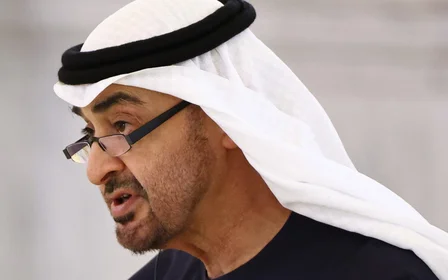
On 13 May, Benjamin Netanyahu's office issued a brief yet dramatic statement saying that, during the war with Iran, the Israeli prime minister had "secretly visited" the United Arab Emirates and met President Mohammed bin Zayed in what it described as a "historic breakthrough".
Hours later, the UAE foreign ministry pushed back with unusual sharpness, calling the report "entirely unfounded" and reminding the world that Emirati-Israeli relations operate openly under the 2020 Abraham Accords. The Emiratis were reportedly furious over the disclosure.
Israeli outlets quickly filled in the blanks. The Times of Israel, which is close to Netanyahu, published specific details on the secret trip to further embarrass Abu Dhabi and deliberately undermine its denial.
The outlet said the meeting took place on 26 March in the oasis city of Al-Ain, near the Oman border and lasted several hours, adding that "MBZ drove Netanyahu in his personal car from the plane to the palace".
Some platforms claimed that flight-tracking data showed two Israeli-linked Bombardier business jets flying from Tel Aviv to Al-Ain that day. Netanyahu's former chief of staff Ziv Agmon wrote openly on Facebook that he had accompanied his boss, that the visit was "top secret until today" and that Sheikh Mohammed had personally driven Netanyahu from the airport to the palace.
New MEE newsletter: Jerusalem Dispatch
Sign up to get the latest insights and analysis on Israel-Palestine, alongside Turkey Unpacked and other MEE newsletters
The Wall Street Journal reported that Mossad chief David Barnea had also travelled to the UAE at least twice during the war.
By bringing the visit into the public eye, Netanyahu is pushing the UAE towards a greater acknowledgement of their cooperation, which Abu Dhabi prefers to keep discreet
Others reported that Shin Bet director David Zini had also visited, while Israeli military chief of staff Eyal Zamir was separately reported to have made the trip too.
American officials, including US Ambassador Mike Huckabee, had already confirmed that Israel deployed Israeli soldiers to operate Iron Dome batteries on Emirati soil.
At this point, two things are clear: Netanyahu did visit, and the UAE denied it.
The question is not why Netanyahu visited Abu Dhabi, but why his office leaked the information and why there is an insistence on portraying the UAE as dishonest.
Why did Abu Dhabi deny the visit, especially given that their ties are openly governed by the Abraham Accords? And what implications does this public dispute carry for the bilateral relationship?
Netanyahu's calculations
Netanyahu is the longest-serving prime minister in Israeli history, a politician defined by corruption charges, an ICC warrant and a reputation for authoritarian tendencies.
He faces an election later this year, an ongoing corruption trial and an International Criminal Court warrant over Gaza. He needs every win he can claim - particularly one that makes him look like a statesman welcomed in an Arab capital rather than an international pariah.
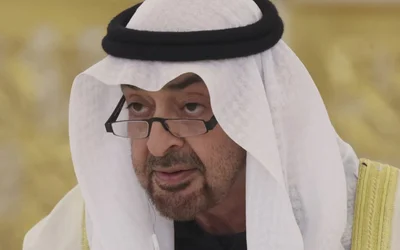
Announcing a face-to-face meeting with the UAE president serves that purpose precisely. It tells the Israeli public that the Abraham Accords have survived the Gaza war.
It further signals that Iran failed to isolate Israel during a regional confrontation and that Netanyahu personally can still close deals in the region. In other words, he cashed in a significant diplomatic event for domestic gain - one that appears of far less political significance to the UAE.
There are additional motives. By bringing the visit into the public eye, Netanyahu is pushing the UAE towards a greater acknowledgement of their cooperation, which Abu Dhabi prefers to keep discreet.
If the Emirates eventually confirms what it currently denies, that confirmation will become part of Netanyahu's legacy. If they do not, the leak still generates the headlines he wants. In every scenario, Netanyahu gains; in every scenario, the UAE loses.
Beyond domestic calculations, there is a message directed at Iran: Israel is capable of moving its prime minister, intelligence chiefs and military chief into the Gulf during a hot conflict. This capability functions as a deterrent in itself.
But the most consequential motive is Israel's desire to deepen the rift between the UAE and its regional rivals, especially within the GCC. By publicly entangling Abu Dhabi in Israeli security arrangements, Netanyahu advances a divide-and-conquer strategy - deepening regional fragmentation while reinforcing the UAE's dependence on Israeli security coordination.
This is something the UAE neither needs nor would willingly invite at this stage.
Abu Dhabi's dilemma
Abu Dhabi's denial is not really about whether the meeting happened. It is about the consequences of admitting it. Four pressures pulled the Emiratis towards a flat rejection.
The first is regional public opinion. With images of the Gaza genocide still vivid, hosting Netanyahu publicly would inflame populations across the Arab and Muslim world and damage the UAE's standing within it.
Domestically, the UAE has invested heavily in promoting tolerance and coexistence as official values, but the gap between that language and a wartime alignment with Netanyahu is wide enough to fuel quiet internal discomfort.
Publicly confirming wartime intelligence cooperation with Israel lends credibility to Iran's narrative about GCC complicity
Second, the leak sabotages Abu Dhabi's efforts to manage a delicate balancing act: maintaining its normalised ties with countries such as Turkey and Qatar following the resolution of the Gulf crisis in 2021 while sustaining its relationship with Israel in the post-2023 environment.
Just before the Iran war erupted, the UAE was already struggling to contain regional anger over its perceived role in Yemen, Somalia, Sudan and Libya - theatres in which Abu Dhabi was widely seen as Israel's proxy. Netanyahu's leak directly undermines that containment effort, leaving the UAE more vulnerable and isolated.
Third, the Iranian assault hit the UAE harder than any other Gulf state. According to the Emirati defence ministry, Iran launched more than 550 missiles and 2,200 drones towards the country during the war.
Publicly confirming wartime intelligence cooperation with Israel lends credibility to Iran's narrative about GCC complicity and could justify - in the eyes of Tehran's hardliners - fresh rounds of attacks the UAE cannot easily absorb.
Fourth is the Emirati business model. The UAE promotes itself as a stable hub for capital, talent and tourism. Visible entanglement with Israel in a war against Iran is corrosive to that brand and would unsettle investors who need to believe the country is not perpetually under threat.
There is also a matter of protocol. The Emirati establishment dislikes being surprised. Netanyahu's unilateral disclosure broke the basic rules of clandestine diplomacy and was read in Abu Dhabi as a domestic political stunt at their expense. The denial is partly a signal that the UAE will not be turned into a prop in an Israeli election campaign.
In this sense, Netanyahu's leak has a real-life political, economic, financial, and security impact on the UAE.
But it is not without precedent. In late 2020, Netanyahu leaked his visit to Saudi megacity Neom - a move that backfired badly. Riyadh recognised the tactic for what it was, reversed course on normalisation and hardened its position in ways that still resonate today.
Netanyahu's latest leak may reinforce Saudi Arabia's decision to keep normalisation on hold. Whether it produces a similar reckoning in Abu Dhabi is another question - the UAE's entanglement with Israel is deeper and more institutionalised than Riyadh's ever was.
But even in Abu Dhabi, some are beginning to ask whether the relationship is worth the cost: whether it undermines Emirati strategic autonomy while drawing the country deeper into conflicts and isolation it cannot control.
The views expressed in this article belong to the author and do not necessarily reflect the editorial policy of Middle East Eye.
Middle East Eye delivers independent and unrivalled coverage and analysis of the Middle East, North Africa and beyond. To learn more about republishing this content and the associated fees, please fill out this form. More about MEE can be found here.