Why Syria needs to play the long game against Israel


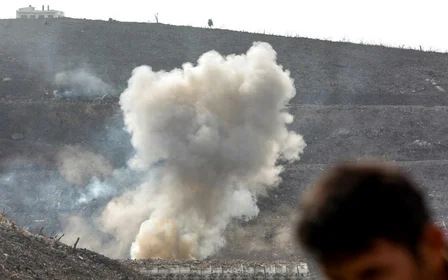
Israel’s unprecedented aerial assault on Syria this month, targeting military and civilian sites in Damascus and Sweida, has been sold as a protective measure for the Druze minority - an ironic stance, given Israel’s ongoing war against Palestinians, including Gaza’s Christian minority.
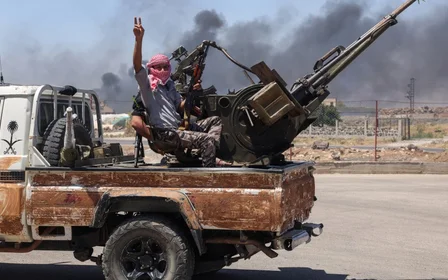
The Israeli aggression followed the Syrian government’s intervention in the country’s south amid escalating violence between Druze factions and Bedouin communities.
This intervention was part of the government’s broader efforts to consolidate national sovereignty and regain full authority over all of Syria, amid efforts by foreign-backed minority groups to establish sectarian or ethnic enclaves.
Ahead of its assault, Israel promoted the narrative that Syria’s new government was prepared to normalise relations with Tel Aviv under favourable conditions, including sustained Israeli control over the occupied Golan Heights. But Damascus has denied reports of any direct talks between President Ahmed al-Sharaa and Israeli officials.
Regardless, the recent Israeli aggression points to the failure of Israel’s diplomatic and military pressure on Syria’s new administration. Prime Minister Benjamin Netanyahu has stated that Israel’s ambitions in Syria include demilitarisation of the south, under the guise of protecting the Druze, but Tel Aviv’s broader geopolitical strategy is clear: to weaken the Syrian government, while fostering sectarian and ethnic divides.
New MEE newsletter: Jerusalem Dispatch
Sign up to get the latest insights and analysis on Israel-Palestine, alongside Turkey Unpacked and other MEE newsletters
Such managed chaos would enable Israel to consolidate its occupation, accelerate its land grabs, and expand its influence eastwards through alliances with other minority groups, such as the Kurdish People’s Protection Units (YPG).
Israel’s longstanding strategy involves weaponising minorities across the region to further its expansive geopolitical agenda, as demonstrated historically in Palestine, Lebanon, Iraq and Syria.
Fragmenting the region
Israel has employed the Druze community against Palestinians, including in the recent Gaza genocide. In Lebanon, Israel supported the Christian-dominated South Lebanon Army, which ultimately disbanded in 2000 after the Israeli withdrawal. Tel Aviv has also long supported Kurdish factions in northern Iraq, throwing its weight behind their independence aspirations.
For Israel, fragmenting the region into smaller ethnic and sectarian entities serves in the long run to legitimise its own presence as a settler-colonial state. In addition, it believes that fostering such divisions creates a sense of unity and alignment among minority groups against regional majorities, mainly Sunni Arabs.
This strategy has been used by other foreign regional powers, enabling the Assad regime to survive 14 years of civil war.
For Syria, its strategic options remain limited as Sharaa attempts to navigate Israel's destabilising military power and influence
Druze leader Hikmat al-Hajri, who supported the Assad regime during the Syrian uprising, has become a central figure opposing the new administration. After former President Bashar al-Assad’s fall last December, Hajri reportedly represented a local military council, including former Assad generals, that was aligned with Israel and the YPG; in addition to demanding a land corridor eastwards from southern Syria towards the American al-Tanf military base, some members of the council reportedly pledged loyalty to Israel.
In parallel with Israel’s recent strikes on Syrian government positions, Hajri also demanded the establishment of a corridor connecting Sweida to the country’s northeast, where the YPG operates.
This request has prompted strong reactions, particularly from Turkey - especially as the Syrian Democratic Forces, of which the YPG is the primary component, have refused to dissolve and surrender their weapons to the central government in Damascus, anticipating support from Israel.
Turkish President Recep Tayyip Erdogan has denounced Israel as a “terrorist state” aiming to undermine Syria’s sovereignty and unity, and rejected the partitioning of Syria along ethnic or sectarian lines. Still, amid a shifting regional power balance following the brief Israel-Iran war, Ankara has exercised notable restraint towards Israel, recognising that further escalation could lead to the Syrian state’s collapse, thus serving Tel Aviv’s interests.
Diplomatic route
Turkey’s reluctance to counter Israel in this moment is influenced by a combination of internal and external factors, including economic challenges, domestic political opposition, and the ongoing dissolution of the Kurdistan Workers’ Party.
While ties with the administration of US President Donald Trump previously helped Turkey advocate for Syria, recent events have shown that trusting Trump is unwise; he is not a reliable ally. Deciding to counter Israel using hard power, based on perceived support from Trump, would be a mistake.
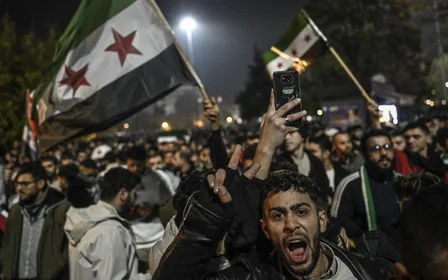
As a consequence, Turkey has chosen a diplomatic route, joining 10 Arab states in condemning Israel and reaffirming Syria’s sovereignty and territorial integrity. According to the Syrian President Ahmed Al-Sharaa, intervention from Ankara and some Arab countries to counter Israel's schemes in Syria has "saved the region from an unknown fate".
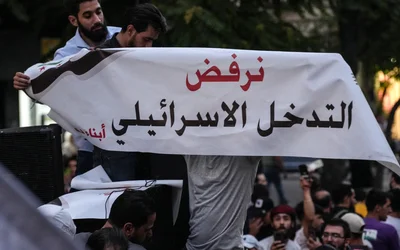
For Syria, its strategic options remain limited as Sharaa attempts to navigate Israel’s destabilising military power and influence. Advocating for a military confrontation - with an unrestrained Israel and an unprepared Syria - might not be the most prudent choice, especially if it were to result in further gains for Israel.
While the new administration and the Syrian people continue to prioritise reconstruction, stabilisation and institution-building, it is crucial to consider strategies that could increase the costs of Israeli actions in Syria.
Given the geopolitical and security complexities, Syria might benefit from leveraging diplomatic channels and regional alliances more actively, particularly with Turkey, Saudi Arabia and supportive Arab states, to counter Israel’s ambitions without immediate escalation. Strengthening internal cohesion, enhancing national legitimacy, and isolating minority factions backed by foreign powers through intense public pressure could help to reduce the state’s vulnerabilities.
Ultimately, Syria’s resilience will depend upon balancing diplomatic engagement, internal stability and military preparedness against Israel’s multifaceted strategy.
One critical move could be to eliminate the internal threat stemming from the YPG, in cooperation with Ankara and a willing coalition.
In other words, if the current negotiation process does not result in YPG surrendering weapons and disarming, a military operation would seem inevitable against the armed group to discourage Israel from banking on separatist minorities.
Such a move could undermine the value of the Hajri card for Israel, and potentially block Israel’s expansion to eastern and northern Syria via the Druze Trojan horse.
By deepening military and security ties with Turkey, delimiting maritime borders with Ankara, and intensifying its readiness to play the long game, Syria could ultimately raise the costs of Israeli intervention in the future.
The views expressed in this article belong to the author and do not necessarily reflect the editorial policy of Middle East Eye.
Middle East Eye delivers independent and unrivalled coverage and analysis of the Middle East, North Africa and beyond. To learn more about republishing this content and the associated fees, please fill out this form. More about MEE can be found here.