

Why the UK capitulated to Israel in consulate surrender deal


Three days ago, Israeli National Security Minister Itamar Ben Gvir mounted and drove a bulldozer to complete the destruction of a Palestinian building in occupied East Jerusalem. About 70 people are now homeless.
Soldiers had arrived around 3am to storm the apartment block, force open doors and drive out residents, who were not granted time to collect their belongings. The whole building has now been razed to the ground.
As Ben Gvir completed his destruction in al-Tur district of occupied East Jerusalem, another victim of Israel’s eviction policy was packing her bags in Sheikh Jarrah, just a 10-minute drive away.
British Consul General Helen Winterton was making final preparations to flee East Jerusalem over the Allenby crossing to Jordan.
Ben Gvir’s demolition of an East Jerusalem apartment block, and the hasty departure of British diplomats from their 180-year-old consulate, are not just closely linked. Both are part of precisely the same process: the massive programme of ethnic cleansing across East Jerusalem by Prime Minister Benjamin Netanyahu’s government.
New MEE newsletter: Jerusalem Dispatch
Sign up to get the latest insights and analysis on Israel-Palestine, alongside Turkey Unpacked and other MEE newsletters
The primary victims are now homeless Palestinians, but it is also important for Israel to drive out international institutions, consulates and missions that serve Palestinians. Earlier this year, Israel invaded, closed and dismantled the headquarters of Unrwa, the United Nations agency responsible for Palestinian refugees, in occupied East Jerusalem.
Following the closure of the British consulate, just seven consulates general remain in East Jerusalem: Belgium, France, Greece, Spain, Italy, Sweden and Turkey. A diplomat from one of those consulates told me yesterday that with the British gone, he fears his country could be next.
Enforced departure
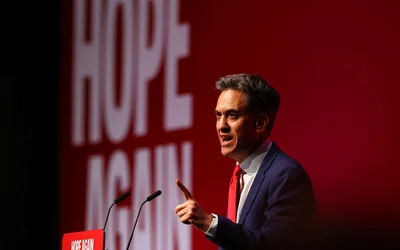
In a statement on Thursday, British Foreign Secretary Ed Miliband put a brave face on the enforced departure of 20 British diplomats, the downgrading of the consulate and the removal of his consul general. He insisted that the renamed UK mission “is independent, operational, and will continue to deliver vital services and our work with the Palestinian people”.
Miliband’s Israeli counterpart, Gideon Saar, spat out the reality: “The British Consulate in Jerusalem is ending its operations today.” He noted that seven diplomats would remain, but with a “very limited” scope of activity.
I have spoken to many Palestinians in occupied East Jerusalem. I will not quote them by name because of the coercive environment that is now omnipresent here; with Palestinian civil society under constant attack, even casual private remarks can lead to interrogation, jail and torture.
Miliband's decision to sanction the settlements was brave and respectful of Britain's international obligations, but it reportedly horrified many people across Whitehall
Schooled in an endless succession of British betrayals, dating back to the 1917 Balfour Declaration, Palestinians have no doubt that Miliband has sold them out. Indeed, it is fair to speak of a sense of loss - and in some cases near bereavement - among intellectuals, activists and leaders of civil society in occupied East Jerusalem.
The consul general and her team would listen to their voices, bearing witness to human rights infractions, and report back faithfully to Whitehall. Much unsung work was carried out in the consulate with regards to arranging aid to Gaza.
These Palestinians are distrustful of Miliband’s narrative that the British consulate will be back. Its surrender, they point out, is now a “fact on the ground”. The departure of 20 diplomats, along with the property’s historic title, will have to be negotiated back at a heavy price - supposing they return at all.
Why did Miliband, who was so brave and principled over West Bank sanctions, give away the consulate?
I have followed the events of the last few weeks closely, speaking to many members of the British community in occupied East Jerusalem, as well as sources in London, and politically connected Palestinians. I think I understand the answer: at the heart of this week’s capitulation to Netanyahu’s government was an old-fashioned Whitehall coup.
Competing policies
Miliband’s decision to sanction the settlements was brave and respectful of Britain’s international obligations, but it reportedly horrified many people across Whitehall and inside Downing Street, crucially including Prime Minister Andy Burnham’s national security adviser, Jonathan Powell.
Powell is one of a group of senior officials and cronies from the Blair premiership, brought back to the heart of government by former Prime Minister Keir Starmer in the wake of his 2024 election landslide. He was retained by Burnham when he entered Downing Street last July.
Powell deserves respect for his creative role in the Northern Ireland peace process at the turn of the century. He gave prescient advice to Starmer not to send Peter Mandelson to the White House. Starmer would probably still be prime minister had he taken it.
Powell’s record on Israel and Palestine is less happy. As the principal adviser to Starmer on national security, foreign policy and intelligence, he is indelibly associated with the discredited decisions made in the Starmer years - especially the government’s policies on Gaza and the West Bank, during a period when the British government refused to stand up for the International Criminal Court or to call out Israeli war crimes in Gaza. It also failed to recognise the momentous International Court of Justice (ICJ) order that Israel should end its illegal occupation.
From the moment Miliband became foreign secretary, with a mandate to bring in new policies on the Israeli occupation, the potential for conflict between the Foreign Office and Downing Street has been glaring.
It first came out into the open when Powell reportedly opposed Miliband over the settlement trade ban. This sort of dispute can cause great damage to governments.
In the late 1980s, Prime Minister Margaret Thatcher’s appointment of Alan Walters as her economic adviser led to the furious resignation of Nigel Lawson as her chancellor, and played a significant role in her ultimate downfall.
While we are nowhere near a Miliband or Powell resignation, it is fair to say that Britain today has two policies towards Israel: Miliband’s versus Powell’s.
Grave error
I have not been able to discover whether Miliband sanctioned last week’s trip to Israel by Powell, but I presume he must have done so. Either way, the foreign secretary made a grave error: his policy was undermined from the moment Powell set off to negotiate with Israeli officials, and the sordid surrender deal over the consulate is the result.
The fundamental problem is that Miliband believes in universal human rights and international law, meaning in turn that he regards East Jerusalem as occupied territory - where, under international law, Israel has zero legal rights.
Israel, by contrast, thinks that greater Jerusalem is the true capital of Israel; that international law counts for nothing; and that Britain’s consulate, with its duty to Palestinians, is an ugly historical anomaly.
Powell is a fixer with a deep background in the troubled world of Blairite politics. He set out to make a deal between two positions that are impossible to reconcile. Simply talking to Israel meant making a mockery of Miliband’s public acceptance of the ICJ’s judgment that Israel has no jurisdiction over East Jerusalem and the occupied territories. This explains why the Powell deal was a dog’s breakfast.
British diplomats in East Jerusalem saw their role as worthwhile and valuable. They wanted to stay. They knew there were dangers, especially in the current frenzied climate, where Ben Gvir personally oversees demolitions of Palestinian homes and is responsible for the torture of detainees.
There is little doubt that had the consulate remained open, diplomats would have come under increasing attack from Ben Gvir and the goons with whom he surrounds himself. I assume that they understood the wider Israeli policy of strangling East Jerusalem and shrinking Palestinian space.
I also assume they understood that a British diplomat’s life is not without risk and consequence: when Saddam Hussein invaded Kuwait, the embassy stayed open, even though basic facilities were cut, reducing staff to relying on the swimming pool for drinking water.
I believe that a principled foreign secretary such as Miliband would have listened to this advice from working diplomats on the ground, but for Powell’s pernicious interference.
The views expressed in this article belong to the author and do not necessarily reflect the editorial policy of Middle East Eye.
Middle East Eye delivers independent and unrivalled coverage and analysis of the Middle East, North Africa and beyond. To learn more about republishing this content and the associated fees, please fill out this form. More about MEE can be found here.