World Cup 2026: Arab teams offer a master class in grace and solidarity

As we head into the quarterfinals of the Fifa World Cup 2026, Morocco carries the flag and the hopes of not just a whole nation, but a continent and a region.
This has been a historic tournament for many reasons. For the first time, eight Arab teams qualified for the World Cup: Algeria, Egypt, Iraq, Jordan, Morocco, Qatar, Saudi Arabia and Tunisia.
Morocco’s victory against co-hosts Canada meant they became the first African and Arab country to reach this stage of the tournament in consecutive editions. The Atlas Lions were also the first Arab side to progress beyond the group stage, which they did in Mexico in 1986.
In the 2022 World Cup, the North African side stunned observers by reaching the semi-finals and finishing fourth overall.
The other nations, to varying degrees, have also made their mark on the biggest sporting stage in the world. The power of this representation - at what is expected to be the most-watched sporting event in history - cannot be understated.
New MEE newsletter: Jerusalem Dispatch
Sign up to get the latest insights and analysis on Israel-Palestine, alongside Turkey Unpacked and other MEE newsletters
The opportunity to shift the narrative and project a different image of Arabs and the Arab world, away from the misconceptions and negative depictions in the media and popular culture, has been seized with both hands.
Jordan made its historic debut at a World Cup, led by Moroccan coach Jamal Sellami, and despite being drawn into a tough group, the team scored in all of its games. The excellent team goal scored by Musa al-Taamari against the reigning world champions, Argentina, will be a treasured memory.
Lessons on identity
It was off the pitch, however, where the Jordanian team won the admiration of many with a display of traditional Arabic hospitality and generosity.
Following their last game, images and videos circulated on social media of the spotless changing rooms vacated by the team in the San Francisco Bay Area Stadium, where they left a thank-you note, gifts and boxes of traditional Arabic sweets for stadium staff.
There have also been moments where lessons on identity and diversity have come to the fore.
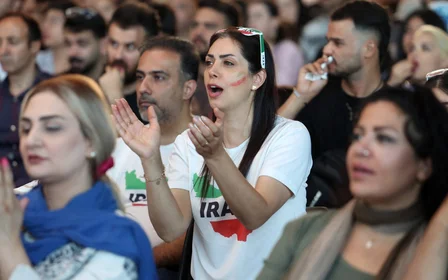
In Iraq’s second World Cup appearance, the multiethnic composition of the team showed strength in unity and a shared national identity, where historically there has been division. On the road to the World Cup, fans of the Lions of Mesopotamia became accustomed to seeing the Iraqi national flag alongside Kurdish and Assyrian flags, reflecting pride across Iraq’s diverse communities.
While Tunisia had a tournament to forget, the first goal they conceded was scored by Yasin Ayari, a Tunisian-Moroccan footballer born in and representing Sweden. His apologetic reaction after the goal encapsulated in one moment the complexity of identity and the nuances of loyalty, particularly for Arabs living in the West.
While this was largely seen as a heartening moment, previous disparaging comments about dual national players made on Dutch television by retired Netherlands midfielder Rafael Van der Vaart - who reportedly said that “all Moroccans who aren’t good enough to play for the Netherlands end up playing for Morocco” - resurfaced during the World Cup, highlighting the contempt that some still have towards African and Arab footballers.
This made Morocco’s victory against the Netherlands in the round of 32 even sweeter. The irony of the winning penalty coming from Ismael Saibari was not lost on viewers; one of the outstanding players of the tournament, Saibari has hitherto played his entire senior career in the Netherlands.
Exceptional tournament
An Arab nation that did not qualify for the World Cup, but has nonetheless featured prominently across our screens since the start of this tournament, is Palestine.
Fifa organisers have consistently attempted to appease the host nations, specifically the US, and to provide a sanitised and whitewashed view of the world through this tournament. This includes putting out a centralised global feed that licensed broadcasters must use, which seems to not linger for too long on Palestinian flags prominently on display.
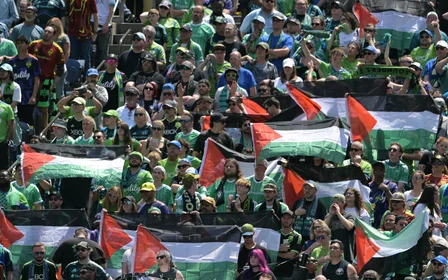
But videos and images across social media show fans in stadiums frequently expressing solidarity with the Palestinian cause by carrying the flag. In one reported incident, American stadium security appeared to attempt to seize a Palestinian flag, sparking chants of “Free Palestine” from a section of fans.
Despite restrictions and repression at home, there is unshakeable compassion and solidarity among these nations on the global stage
In addition, Egyptian coach Hossam Hassan firmly put the issue in the spotlight after his team’s round-of-32 victory against Australia. He celebrated the win on the pitch by raising a Palestinian flag, adding in a post-match interview: “May God grant them victory … I’m dedicating this victory to the Egyptian people and Palestinian people.”
And before Egypt’s round-of-16 defeat to Argentina, Hassan spoke passionately about Palestinian suffering, stating that “every day, human beings are killed in their thousands, children and women”. Through football, a tool of “soft power”, all involved in the World Cup should send a message, he added: “Please let the Palestinian people live.”
While Arab nations have been participating since the very earliest editions of the competition, starting with Egypt in 1934, this tournament has been an exceptional one for countries in the region.
The participating Arab nations have shown the world that they can compete and win at the highest levels of the sport, while also displaying another side of the region. Even more importantly, the players, coaching staff and fans have demonstrated that despite restrictions and repression at home, there is unshakeable compassion and solidarity among these nations on the global stage.
The views expressed in this article belong to the author and do not necessarily reflect the editorial policy of Middle East Eye.
Middle East Eye delivers independent and unrivalled coverage and analysis of the Middle East, North Africa and beyond. To learn more about republishing this content and the associated fees, please fill out this form. More about MEE can be found here.