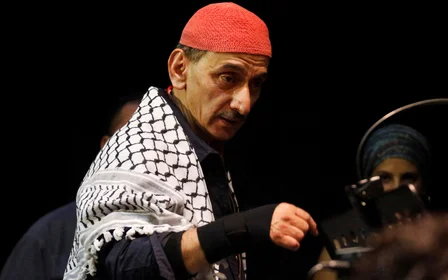
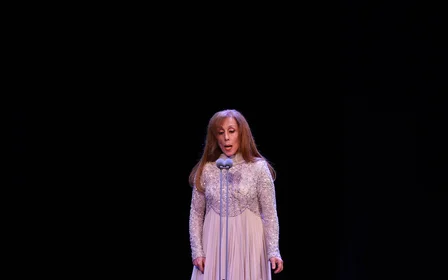
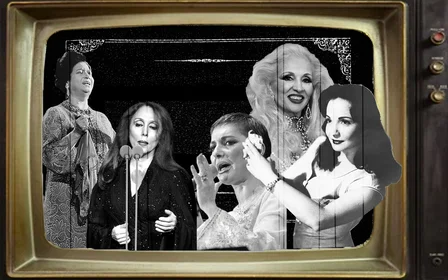
Ziad Rahbani: A musical genius connected to his people

This week, mourning crowds gathered outside Khoury Hospital in Beirut’s Hamra neighbourhood to bid a final farewell to the iconic and much-adored Lebanese composer, pianist and playwright Ziad Rahbani, who passed away at just 69.
Rahbani reportedly chose not to undergo a liver transplant, following months of hesitation over the treatment of his deteriorating health.
The crowd - many dressed in black, clutching roses, a few Palestinian and Lebanese Communist party flags and some holding up Ziad’s portrait - spontaneously broke into a solemn chant of Saalouni el Nass (People Asked Me). It was the first song Ziad ever composed for his mother, Fairuz, written when he was just 17.
As the hearse carrying his body departed for his funeral in Bikfaya, the mourners erupted into applause and whistles - as if this was Ziad’s final play, the curtains closing on a remarkable and unrepeatable chapter of artistic authenticity, social and political rebellion and intellectual brilliance.
When asked by a reporter "What did Lebanon lose today?", Talal Haider, the great Lebanese poet and close friend of Ziad, poignantly replied "Lebanon lost itself".
New MEE newsletter: Jerusalem Dispatch
Sign up to get the latest insights and analysis on Israel-Palestine, alongside Turkey Unpacked and other MEE newsletters
Comrade Ziad
At a young age, on the cusp of the Lebanese civil war, Ziad left East Beirut where his family were living, to settle in Hamra, choosing to live at the heart of Lebanon’s pro-Palestinian leftist movements and communist party, among his comrades and friends.
Hamra was the neighbourhood where Ziad spent most of his life. His home and famous recording studio, Nota, were there. His historic plays - that shaped Lebanon’s daily life, people’s consciousness, sarcasm and vocabulary for decades - were first staged in its theatres such as Piccadilly.
There’s not a single house in Lebanon that Ziad wasn’t present in. His work touched everyone, even those who were against him politically
And he played countless concerts in the neighbourhood’s small jazz clubs and hotel bars, like Blue Note and the Cavalier.
Since the 1970s until today, his music has been played on a daily basis in Hamra’s bars and cafes - many of them once his regular hangouts.
And on Monday, he left Hamra forever.
This was the people’s funeral for Ziad Rahbani, known affectionately as Comrade Ziad. The huge crowd that filled the streets included his friends, neighbours, comrades, actors, musicians, writers and poets from across Lebanese society. And of course, his fans - an entire generation raised on his music and plays.
There’s not a single house in Lebanon that Ziad wasn’t present in. His work touched everyone, even those who were against him politically would secretly listen to his music.
Ziad may have been a cultural icon and visionary, but he lived modestly, among the people and his community.
Ziad’s socially realist and politically charged plays from the 1970s to the 1990s spoke to a whole generation and brought him national acclaim. While he had previously contributed music to the plays of his father and uncle - the monumental artistic duo known as the Rahbani Brothers - on productions such as Al Mahatta (The Station, 1973) and Mais El Rim (1975), Ziad quickly carved out his own distinct identity as a playwright, director and actor.
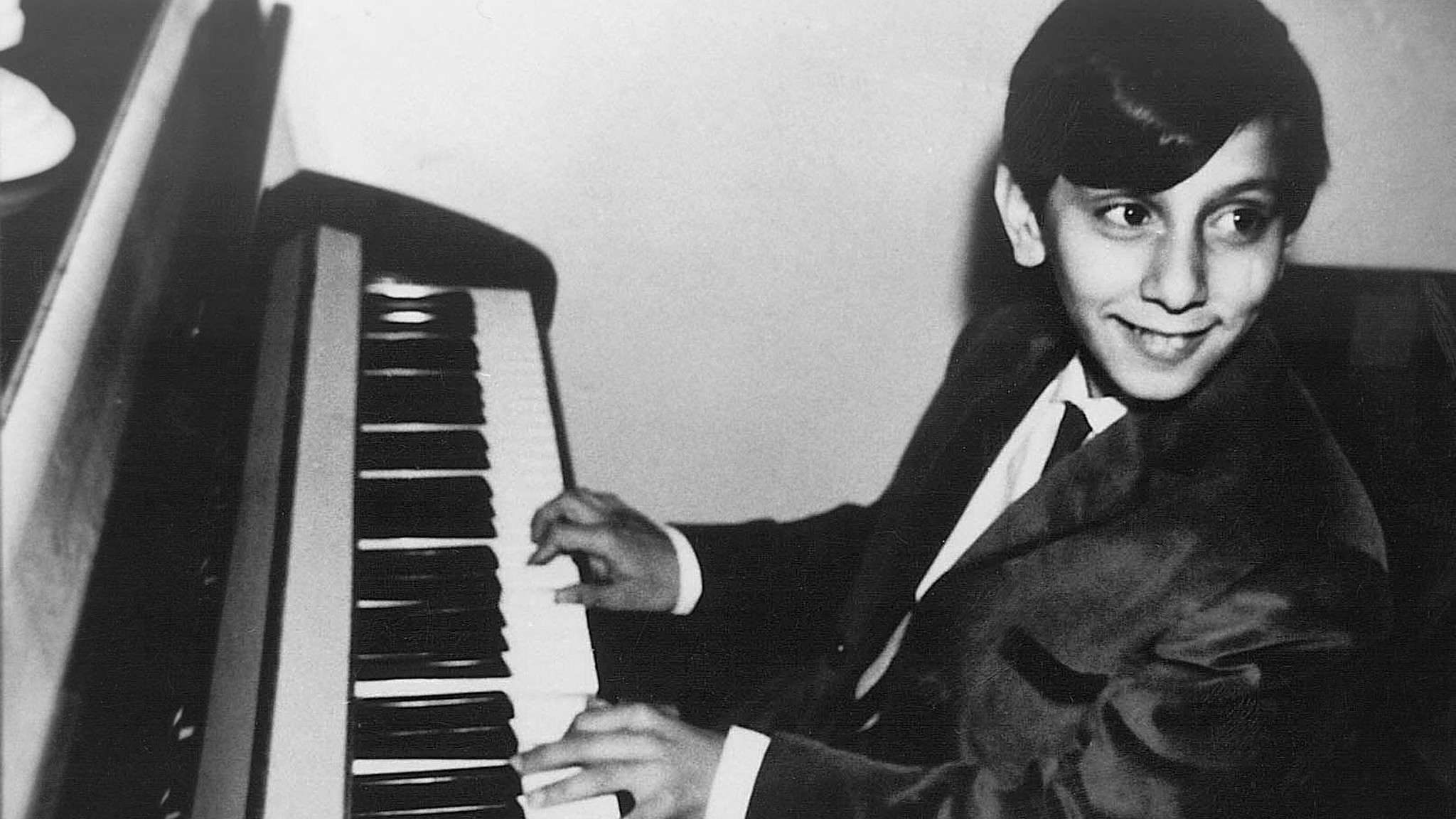

His second play, Nazel el Surour (The Happiness Hotel, 1973), written when he was just 18, marked a turning point in modern Arabic theatre.
A bold political satire - often said to have predicted the civil war - it tackled themes of corruption, class inequality and poked fun at failed revolutionary ideals. In Bennesbeh Labokra… Chou? (What About Tomorrow?), Ziad focused his attention on the struggles of Lebanon’s working class and their everyday hardships.
Ziad’s plays combined deep and complex subject matter with a dark fatalistic humour that dissected Lebanese society
And in Film Ameriki Tawwil (The American Motion Picture), inspired by One Flew Over the Cuckoo’s Nest - he explored sectarianism and the division and despair it brought, criticising its discourse and exposing the banality of it in the middle of the Lebanese civil war.
Ziad’s plays - listened to religiously throughout the war and until today - combined deep and complex subject matter with a dark, fatalistic humour that dissected Lebanese society.
They captured the absurdity and doomed reality of life in Lebanon under sectarian politics, class divides and war - themes that sadly have not lost their relevance today.
The songs he composed for them - set to lush soundscapes with influences ranging from Brazilian, soul, funk, jazz and dabke - revealed his encyclopedic knowledge of music, and genius ability in arranging and composing, and fusing different styles and genres.
The father of 'Oriental jazz'
Ziad's timeless soundtracks came to define the sound of the leftist movement, and jokes and phrases from the plays seeped into everyday conversation, becoming part of the cultural fabric.
His work was a guiding force in Lebanon’s political consciousness. He shaped the leftist movements that he was part of with his ideas, radio shows, writings and music.
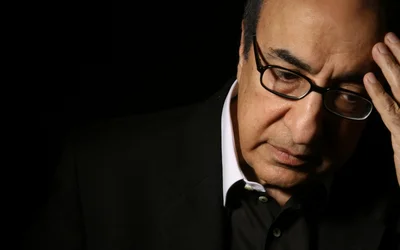
Ziad’s contribution to Lebanese and Arabic music was revolutionary - laying new foundations for its modernisation. He created his own musical world, always innovating and coming out with pioneering ideas that resulted in forward-thinking waves of music.
He was a musical genius who was able to create his own distinct sound and identity, completely separate from the shadow of the Rahbani Brothers - his father Assi and uncle Mansour Rahbani - and his mother, Fairuz, who dominated the Lebanese music industry for decades.
As an artist, his musical offering was difficult to categorise and define - elegant and complex yet subtle, gritty and experimental yet accessible, and never lacking in originality.
Across his career, he covered the full spectrum of styles, from the Rahbani Brothers' classical sound to unusual bellydance records, Arabic jazz, funk, disco and soul to tarab, dabke, Brazilian, Latin and political protest music.
He took elements of the genres he loved to compose new chapters in Arabic music that were distinctly Ziad. A true musical maverick, he was able to present his ideas in a way that immediately connected to his people.
Ziad Rahbani was the father of ‘Oriental jazz’, the term he used (and later critiqued) when he fused Arabic and jazz music over several projects such as Houdou Nisbi and Behashakal, the sound later becoming part of his musical identity.
While the greats of Arabic music had long brought a variety of international influences into their music, Ziad’s contribution left an undeniable mark on contemporary Arabic music.
We can trace the beginnings of Oriental jazz to Abu Ali - the 13-minute masterpiece, an Arabic jazz-funk instrumental version of the introduction for his 1974 play Abu Ali Al Asmarani.
It was recorded in Athens with the 35-piece symphony orchestra of Greek radio at great cost, and released on the small and innovative independent label Zida run by Lebanese-Armenian producer Khatchik Mardirian, which put out all of Ziad’s creative output for two years.
Ziad even flew out members of his inner circle to be involved in the project, including the actor and singer Joseph Sakr, his close friend and longtime collaborator, and two members of the cult politically engaged group Firkat Al Ard, who he was working with at the time - guitarist Issam Hajali and jazz saxophonist and composer Toufic Farroukh.
Ziad’s productions brought Fairuz closer to the people, reshaping her sound for a rapidly changing Lebanon and wider Arab world
Aimed at the global disco market, Abu Ali didn’t break internationally at the time of its release in 1979, but the record displays Ziad’s immense talent as a composer, and his perfectionism - sometimes to the point of obsession - when it came to instrumentation and arrangement.
As Hajali told us in a previous interview about Abu Ali, "[Ziad] wrote everything. Nothing was accidental, everything was written, even the whisper". Forty years later, it has become a cult record, played on international radio stations and in the global underground clubbing scene.
On the same trip to Greece, the music for Fairuz’s 1979 album Wahdon was recorded. Also released on Zida, it was a landmark release for the iconic singer - the first to be entirely produced, composed and arranged by her son.
Ziad’s collaboration with Fairuz spanned decades. He revolutionised her sound, modernising it for a new generation and bringing a multitude of influences, from jazz and Brazilian, to her music across albums like Kifak Inta?, Maarifti Feek and Wala Keef?.
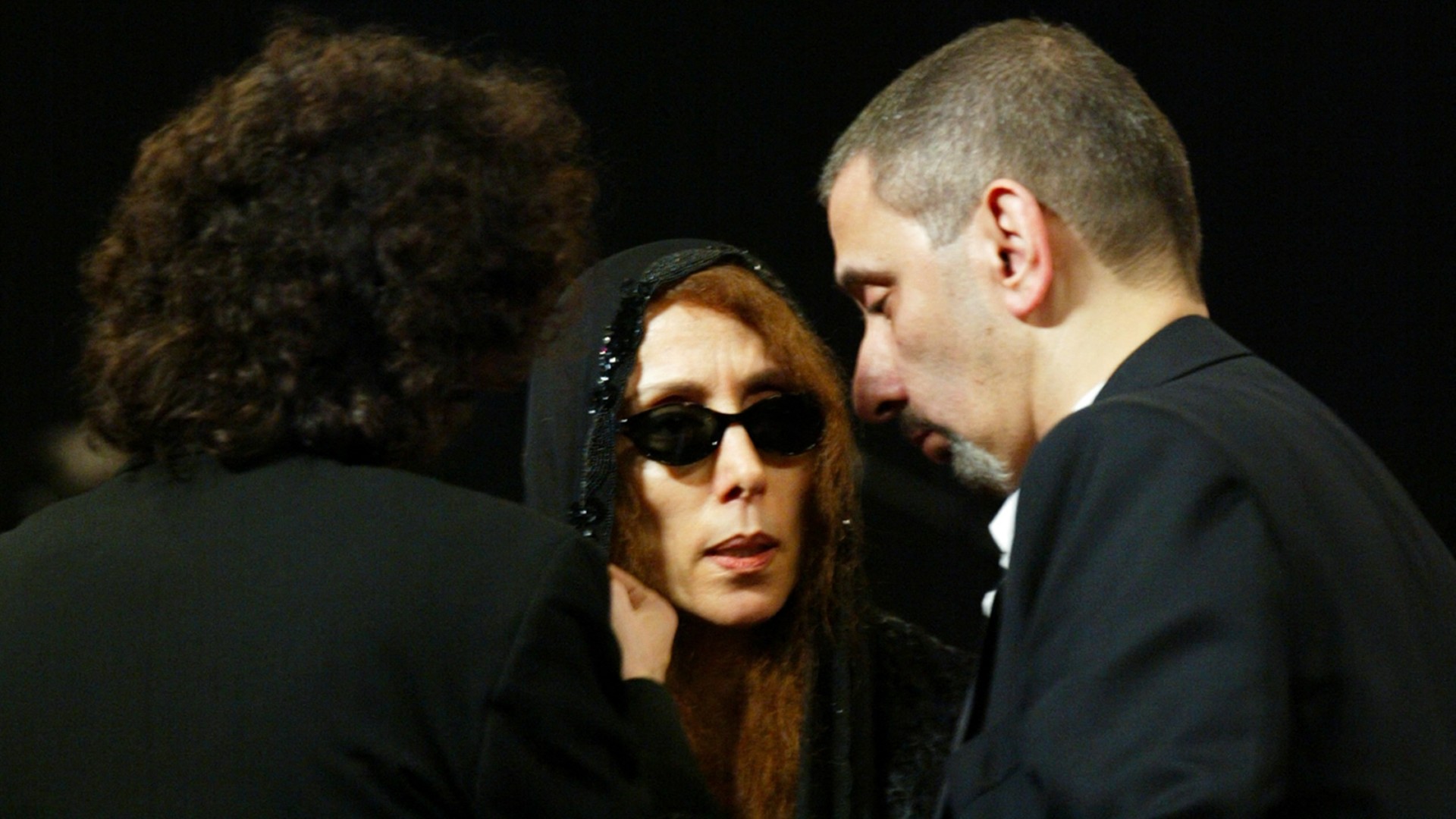
This transformation of Fairuz’s musical style - paired with bold lyrics - was initially controversial to some across the Arabic-speaking world.
It marked a sharp departure from the romantic folkloric style and weighty poetic lyricism that had defined the Rahbani Brothers’ work, where Fairuz was positioned as the ethereal voice of a fictionalised ideal of Lebanon - elevating her to an untouchable sacred figure.
Ziad’s productions brought Fairuz closer to the people, reshaping her sound for a rapidly changing Lebanon and wider Arab world, and placing her as a modern evolving artist, rather than a nostalgic and static symbol to the past.
Raw and uncompromising
Ziad lived his life and made music in unwavering alignment with his vision and ideals - always raw and uncompromising.
Ziad wasn’t just a cultural giant, he was a lexicon, a mood, a feeling, at the very crux of Lebanese identity
He kept a strong political and social consciousness to his work throughout his career, fighting against all forms of commercialism, consumerism and capitalism in music and society.
He was deeply involved in Lebanon’s political life, expressing strong - and often controversial - opinions about what was happening in the country and regionally through his articles, music, radio shows and interviews.
His opinions, political analyses and cutting humour made reverberations throughout Lebanese society - even among his political opponents.
Ziad didn’t do things in half measures. Music and politics were his only worries. He lived a free life, on his own terms, and left the same way.
But he wasn’t just a cultural giant, Ziad was a lexicon, a mood, a feeling, at the very crux of Lebanese identity.
With his death, his legend and the legacy he left behind will live on.
The views expressed in this article belong to the author and do not necessarily reflect the editorial policy of Middle East Eye.
Middle East Eye delivers independent and unrivalled coverage and analysis of the Middle East, North Africa and beyond. To learn more about republishing this content and the associated fees, please fill out this form. More about MEE can be found here.