Baftas 2026: BBC faces backlash for airing n-word, cutting 'free Palestine' from speech

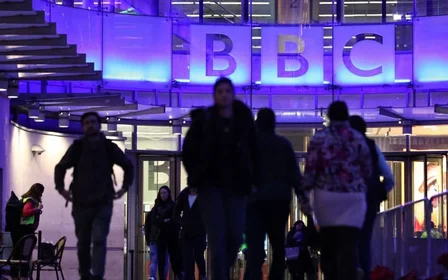
The BBC sparked outrage over the weekend after broadcasting the 79th British Academy Film Awards (Baftas) with a racial slur and cutting an expression of pro-Palestinian solidarity by an awardee.
Whilst acclaimed Sinners stars Michael B Jordan and Delroy Lindo were presenting an award in the early minutes of the ceremony, a member of the audience with Tourette syndrome shouted a racial slur, which seemed to be heard by the actors on stage as well as clearly on the broadcast.
The ceremony's host, Alan Cumming, had told the audience earlier on that a campaigner for people with Tourette syndrome - a neurological disorder characterised by sudden, involuntary movements or sounds - was in attendence.
Afterwards, he acknowledged the shouting, saying the audience "may have noticed" the "strong language", and added that he apologised if "anyone was offended". This clarification was not broadcast.
The corporation also cut short the acceptance speech of British-Nigerian filmmaker and writer Akinola Davies Jr, who won Outstanding Debut by a British Writer, Director or Producer alongside his brother Wale Davis.
New MEE newsletter: Jerusalem Dispatch
Sign up to get the latest insights and analysis on Israel-Palestine, alongside Turkey Unpacked and other MEE newsletters
The cut portion of the speech included: "to all those whose parents migrated to obtain a better life for their children, to the economic migrant, the conflict migrant, those under occupation, dictatorship, persecution and those experiencing genocide, you matter, your stories matter more than ever.
"Your dreams are an act of resistance. To those watching at home, archive your loved ones, archive your stories, yesterday, today and forever. For Nigeria, for London, the Congo, Sudan, free Palestine."
The Baftas ceremony was recorded on a two-hour delay and edited before it was aired on BBC One.
This has sparked anger online, with many questioning why the BBC did not edit out the racial slur. Many social media users were especially perplexed given that the corporation edited out the end of Davies Jr’s speech.
The BBC apologised for airing the racial slur during the awards. In a statement to Middle East Eye, the corporation said: "Some viewers may have heard strong and offensive language during the BAFTA Film Awards. This arose from involuntary verbal tics associated with Tourette syndrome, and as explained during the ceremony it was not intentional. We apologise that this was not edited out prior to broadcast and it will now be removed from the version on BBC iPlayer."
The broadcaster did not respond to repeated requests for comment about cutting Akinola Davies Jr's speech, directing MEE instead to its statement about airing the racial slur.
'Shameful' decision
Several social media users underlined that their anger was not at the campaigner with Tourette syndrome who shouted the slur, but at the BBC for their "abysmal handling" of the situation.
"The racial abuse of Delroy Lindo & Michael B Jordan is NOT about Tourette syndrome. It’s about how normalised, accepted and even encouraged, anti-Black racism really is," posted writer and political activist Richard Sudan.
"The BBC CHOOSING to broadcast the racial abuse of two world leading Black actors, to millions, IS the story."
Another user wrote: "Anti-Blackness & anti-Palestinian racism are connected and the editing makes clear whose comfort and power they’re prioritizing."
"The BBC’s choice to censor 'Free Palestine' out of the BAFTAs, but to leave the N-word in place, shows just how much its editorial choices are shaped by fear of lobby groups and the govt, rather than serving viewers and license fee payers," posted media critic and former BBC journalist Karishma Patel.
One user argued that this choice indicated that, for the BBC, "advocating for Palestinian liberation is more offensive than the n word".
Amnesty UK called the decision to cut Davies Jr's speech "shameful" and thanked the filmmaker for using his "platform to speak out for the rights of migrants and people facing and fleeing from persecution and mass atrocities - from the Congo to Sudan to Palestine".
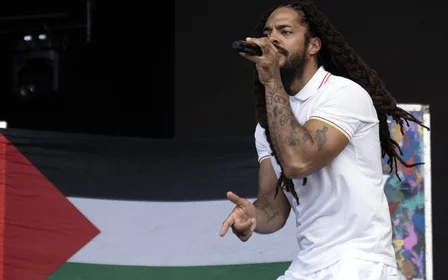
It was reported last week that the BBC would be monitoring the Baftas broadcast closely for politically charged speeches, following its live broadcast of the Glastonbury Festival last year, in which artist Bob Vylan chanted "Death to the IDF" during his set.
Middle East Eye delivers independent and unrivalled coverage and analysis of the Middle East, North Africa and beyond. To learn more about republishing this content and the associated fees, please fill out this form. More about MEE can be found here.