
Global reactions pour in as UK, Australia and Canada recognise Palestinian state

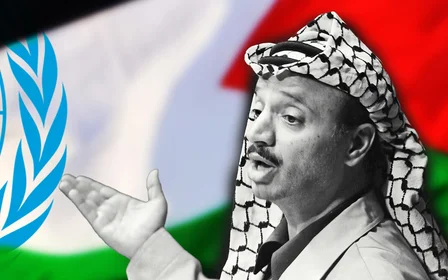
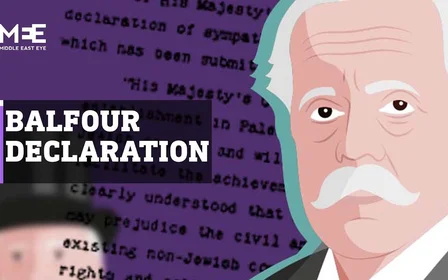
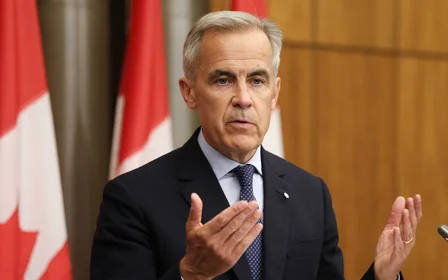
More than 100 years after the Balfour Declaration backed “the establishment in Palestine of a national home for the Jewish people”, the UK, along with Canada, Australia and Portugal officially announced their recognition of a Palestinian state on Sunday.
France is expected to imminently follow suit.
Expectedly, this historical injunction has drawn fierce criticism from the Israeli government. Prime Minister Benjamin Netanyahu vowed that the establishment of a Palestinian state “will not happen”, adding that Israel’s response to the moves would come after he returned to Israel from his visit to the United States.
Speaking to BBC Radio 4 Today programme on Monday, Israeli government spokesperson David Mencer said "the Jewish community will never forgive Labour for this betrayal".
As the announcements trickled in over recent days, online social media users expressed different views.
New MEE newsletter: Jerusalem Dispatch
Sign up to get the latest insights and analysis on Israel-Palestine, alongside Turkey Unpacked and other MEE newsletters
A wave of voices dismissed the move as “performative recognition” unlikely to make any change to stop the ongoing genocide in Gaza and annexation of the occupied West Bank.
"Recognition of a state that doesn’t exist and not the genocide befalling the people of the non-existent state is a cover for actually doing something of consequence," said Palestinian writer Yara Hawari on X.
"It operates as symbolic gesture while shielding Israel from accountability for war crimes and systemic violations," she continued.
Several social media users pointed out that the countries do not recognise Tel Aviv's war in Gaza as genocide, despite conclusions by the UN, international rights organisations and legal and genocide experts.
Others highlighted that the UK and Canada continue to supply arms to Israel.
The UK has only suspended 30 of its 250 arms export licences to Israel and supplies components for F-35 fighter jets, the most powerful aircraft in the Israeli arsenal.
Canada never stopped its arms shipments to Israel despite pledging to stop new permits, while Australia continues its exports of F-35 parts.
One social media user called state recognition “a pathetic gesture that means nothing without sanctions and ceasing to sell arms to Israel".
When I was in the West Bank, Palestinians emphasised this was bottom of the list of things the UK should do.
— Owen Jones (@owenjonesjourno) September 21, 2025
"They should have done this in the 90s", they said. They asked what was being left intact by Israel to recognise.
The move was for UK domestic consumption, they said, in… https://t.co/zdDiQdFnrt
Abubaker Abed, a Palestinian journalist from Gaza, called on people to "talk to us, not about us."
"Anything that bothers Zionists is welcome, but it has to be realistic and fair," he said, adding that the recognition of Palestine would be "meaningless" and "performative" if it didn't also secure the end of the ongoing genocide, "the right to return to our own original hometowns and reconstruction of Gaza, and the release of all Palestinian hostages".
Similarly, across the occupied West Bank where de facto annexation is underway, Palestinian said they feel the recognition does not go far enough in stopping Israel's attacks and ending its unlawful occupation.
"In fact, everyday settler attacks have increased, the arrests increase, the raids increase...and the [Israeli] checkpoints fill the West Bank," one Palestinian said.
Palestinians in Ramallah have described the recognition of a Palestinian state by Britain, Australia and Canada as a positive step but say it does not go far enough.
— Middle East Eye (@MiddleEastEye) September 22, 2025
The three countries announced the decision ahead of the UN General Assembly in New York, breaking from years of… pic.twitter.com/QvfBDl2wAQ
Others have hailed the move as a victory for the Palestinian cause.
Decolonial scholar Sabreena Ghaffar-Siddiqui posted: "It is a victory because it really upsets Zionists who have spent almost 100 years trying to erase Palestine...
“But the real victory is in what this statement means for Israel’s future. What we are actually acknowledging the existence of here is the inevitable demise of Israel,” she added.
This is a victory, but not in the way many of you may think it is.
— Dr. Sabreena Ghaffar-Siddiqui (@sabreenaGS) September 21, 2025
The existence of Palestine and its people has never been dependent on colonisers telling it that it exists.
These 3 settler/colonial nations are FORCED to make this symbolic and politically meaningless gesture… pic.twitter.com/qelTPn3bIC
Former Palestine Liberation Organization politician Hanan Ashrawi said the recognition of Palestine by various states in recent months "must not be underestimated or dismissed".
"They signal a sea change in the world that had hitherto granted and protected Israel’s impunity and ongoing genocide," she said in a post on X.
"Now there are many courses of action open to these states to stop the genocide and take punitive measures against Israel. The test lies in whether they will."
Middle East Eye delivers independent and unrivalled coverage and analysis of the Middle East, North Africa and beyond. To learn more about republishing this content and the associated fees, please fill out this form. More about MEE can be found here.