Queuing for water and phone charging: What survival looks like in Gaza
Nearly two years after Raja al-Shawish's husband went missing at an Israeli checkpoint, she says she no longer feels like a woman.
Since his disappearance, she has had to bear the responsibility of raising her children alone, from the moment she wakes up, until the time she goes to sleep.
The routines that once gave her a sense of herself have been replaced by the daily demands of survival, leaving little room for the life she once knew or the woman she once was.
"My husband was with me during the first year of the genocide, and although it was harsh, he would carry the burden with me and make it feel less devastating," Raja told Middle East Eye from an Unrwa classroom in western Gaza City that has been her home for around two years.
"Since he disappeared, and during the starvation, I have sold all my gold - except for one piece - to feed our children. I kept the last piece for when he returns. I will sell it then and use the money to celebrate."
New MEE newsletter: Jerusalem Dispatch
Sign up to get the latest insights and analysis on Israel-Palestine, alongside Turkey Unpacked and other MEE newsletters
Raja's husband, Muhamed, 48, went missing on 21 October 2024 after Israeli forces invaded their neighbourhood in northern Gaza and forced them south.
According to an eyewitness, Israeli forces ordered Muhamed to walk as a human shield.
When he refused, the soldiers violently beat him. The eyewitness said they had no further information about his fate since.
"I contacted the Red Cross and HaMoked [an Israel-based human rights organisation], but they told me that the Israeli authorities do not acknowledge that he is being held by them," Raja said.
"He has been gone for two years, but I live with the certainty that he is still alive. People often come to me and tell me, 'You have to consider that he may have been killed'. I tell them no.
"I can't even imagine that he was killed. Deep inside, I am certain that he is just being detained."
Since Israel launched its genocidal war on 7 October 2023, more than 74,000 Palestinians have been killed, including more than 21,500 children - of which 1,029 are under the age of one.
The scale of the killings remains difficult to establish as more than 11,200 Palestinians have either been reported missing or are unaccounted for.
The killing has also continued despite a ceasefire being signed on 10 October 2025.
'It's not just about the destruction, the losses and the people who are gone. More importantly, it's about the social habits that have disappeared and how society itself has changed'
- Raja al-Shawish, mother
Since then, Israel has killed at least 1,400 Palestinians and wounded another 4,131, including journalists, doctors, first responders, writers, artists and footballers, among others.
The devastation has drawn widespread international condemnation and prompted legal proceedings against Israel over its conduct in the enclave and its occupation of the West Bank and East Jerusalem.
At the International Court of Justice (ICJ), Israel faces a case brought by South Africa alleging violations of the Genocide Convention, in which the court has found that Palestinians in Gaza have a plausible right to be protected from acts of genocide.
Separate proceedings have also addressed the legality of Israel's occupation of Palestinian territory.
At the International Criminal Court (ICC), prosecutors have issued arrest warrants for Israeli Prime Minister Benjamin Netanyahu and his former defence minister, Yoav Gallant, over alleged crimes against humanity and war crimes.
The Israeli government has repeatedly rejected such allegations and defended its attacks on residential buildings, schools, hospitals and other civilian sites by saying that Hamas or other Palestinian armed groups operate from them.
'My life has disappeared'
For Raja, however, the disappearance of her husband has meant losing more than the person she shared her life with.
The weight of carrying responsibilities she once shared with him, while attempting to survive an ongoing genocide, has gradually erased the woman she once was.
"My life has disappeared. I stopped seeing myself as a woman. I wasn't like this before. When people saw me before the genocide, they would ask, 'Are you a professional?’ because I was always so put-together and dressed nicely," Raja continued.
"Now people ask me: 'Why have you let yourself go like this? Are you in mourning?'
"I tell them: 'No, I'm not in mourning. My husband isn't here. My love isn't here. Who am I supposed to dress up for?"
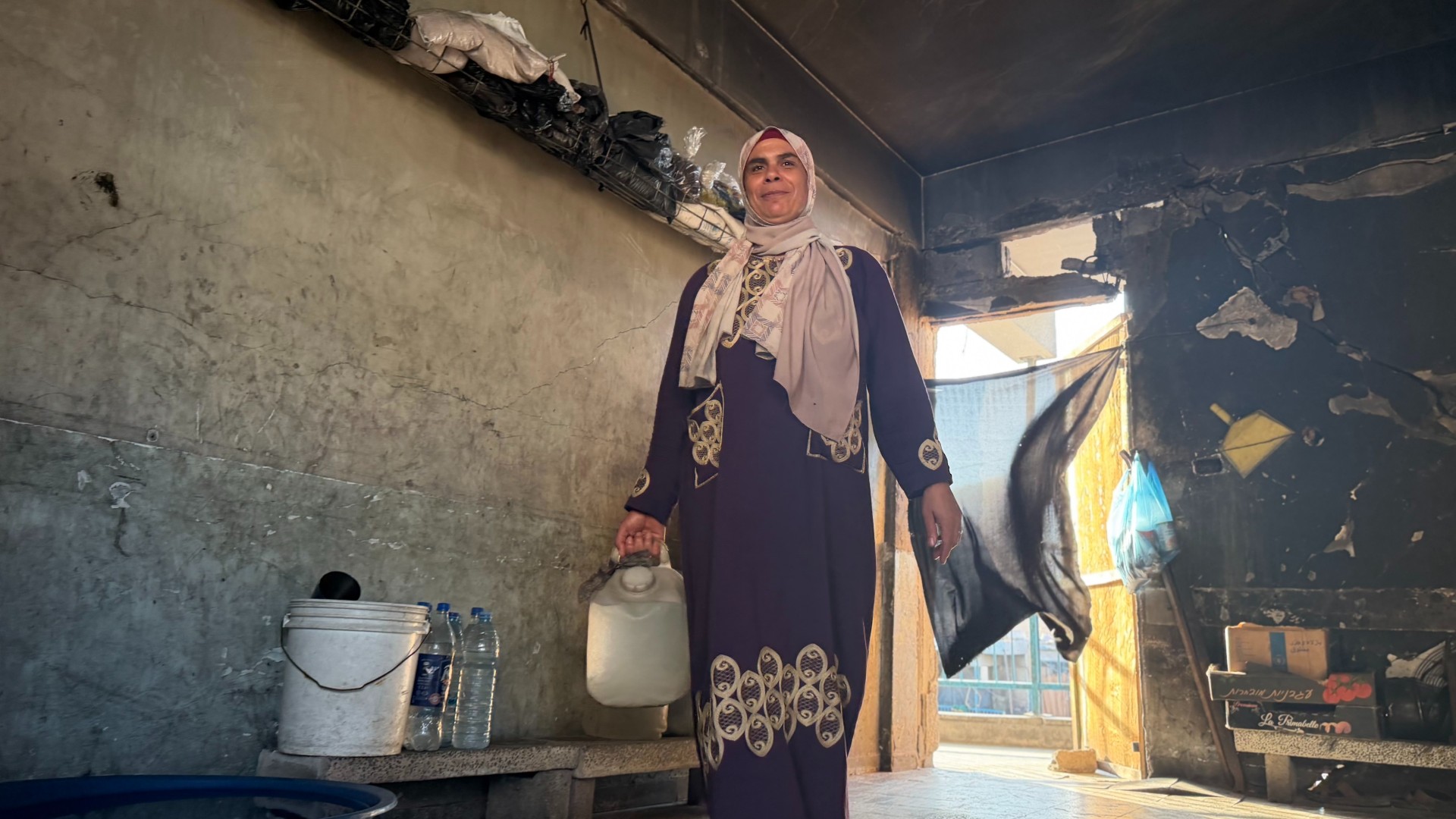

For two years, she says she has put her life, and that of her children, on hold.
Over the past couple of months, she turned down multiple marriage proposals for one of her daughters, insisting that the girl could not get married without her father there.
Eventually, after people urged her to reconsider, she agreed. Her daughter's wedding is planned for the end of October, and Shawish is holding on to the hope that her husband will return before then.
But the changes to her family's life are only part of a broader transformation she has witnessed around her.
"Life has changed completely. And it's not just about the destruction, the losses and the people who are gone. More importantly, it's about the social habits that have disappeared and how society itself has changed. Everyone has become irritable, and there are conflicts between people," she added.
"All of this is because of the poverty, displacement, overcrowding and difficult living conditions we have endured. This is something that might be impossible to fix."
Survival as a full-time job
But for most Palestinians, the day starts with more immediate questions: where to find water, what to eat and how to get through the next few hours.
At dawn, Nihad al-Skafi joins the queues for water.
The 36-year-old father of five spends his mornings securing what his family needs to get through the day.
"From the moment we wake up until we go to sleep, all that occupies us are basic survival tasks: collecting water, finding food, eating, staying alive, then sleeping,” Skafi told MEE as he filled a water container from a hose emerging from the ground in a displacement camp in western Gaza.
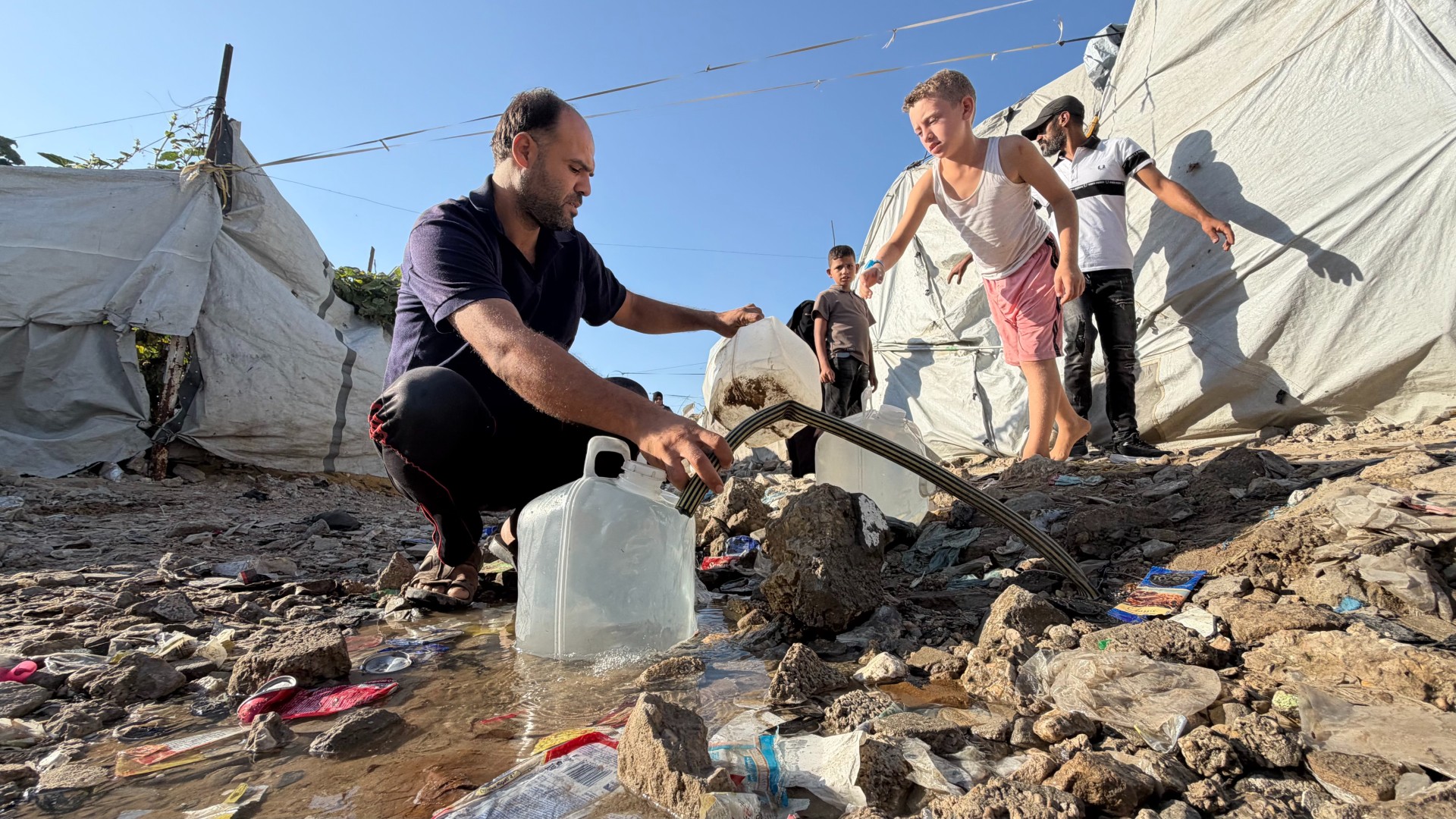
"The water I'm collecting now is only for washing and bathing, and it is extremely salty. For drinking water, we have to wait for the water truck to arrive every other day. We wake up at dawn to take our place in the long queue."
Before the genocide, Skafi, originally a resident of Shujaiya, worked as a construction worker. Today, he waits his turn to receive food parcels from charities and relief organisations to feed his family.
By midday, the question becomes what there is to eat.
"If we get food, then we have something to eat for lunch. But if we can't get a hot meal, we have to figure out what we’re going to eat and how we're going to get it. Then comes the struggle to find firewood and get a fire going just to cook. Every step is a struggle," he continued.
"Our gas cylinder ran out, and now we have to wait around 40 days until it's our turn to refill it. Until then, we have no choice but to go back to using firewood."
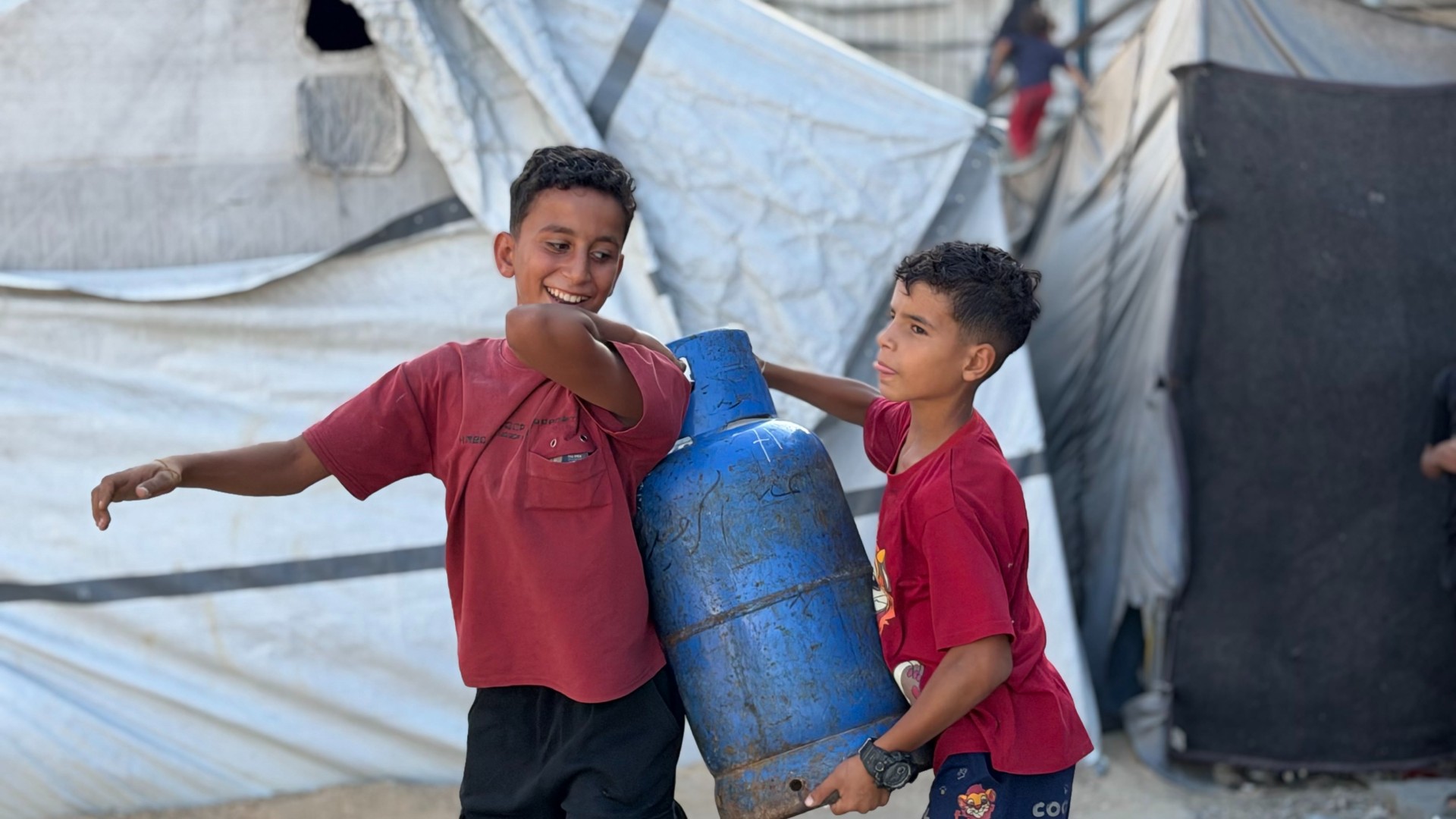
Cooking gas remains severely scarce in Gaza despite an agreement allowing fuel and cooking gas to enter under the October 2025 ceasefire.
As a result, supplies have remained far below demand, leaving families waiting weeks or months for their turn.
The Gaza General Petroleum Authority publishes beneficiary lists as new shipments arrive and distributes the available gas according to those lists.
Making money from scarcity
By afternoon, another basic task comes into focus: finding electricity to charge mobile phones.
With Gaza's electricity infrastructure almost entirely destroyed during the genocide, most Palestinians have no access to a regular power supply.

Many rely on private generators or solar panels for electricity, while those without them have to pay to charge their phones at small charging points.
Electricity from private generators now costs around 30 to 35 shekels ($10-$11) per kilowatt-hour.
For Hilal al-Zuwaidi, 34, this has become a source of income, a job he never imagined doing.
Before the war, he worked in construction and traded fruit. Today, he earns a small income charging mobile phones for displaced people and residents.
"This is a new kind of job that we didn't know before the war," he said.
"Displaced people and those living nearby bring their phones every day to charge them. I charge one phone for one shekel if they bring their own charger, and two shekels if they don't."
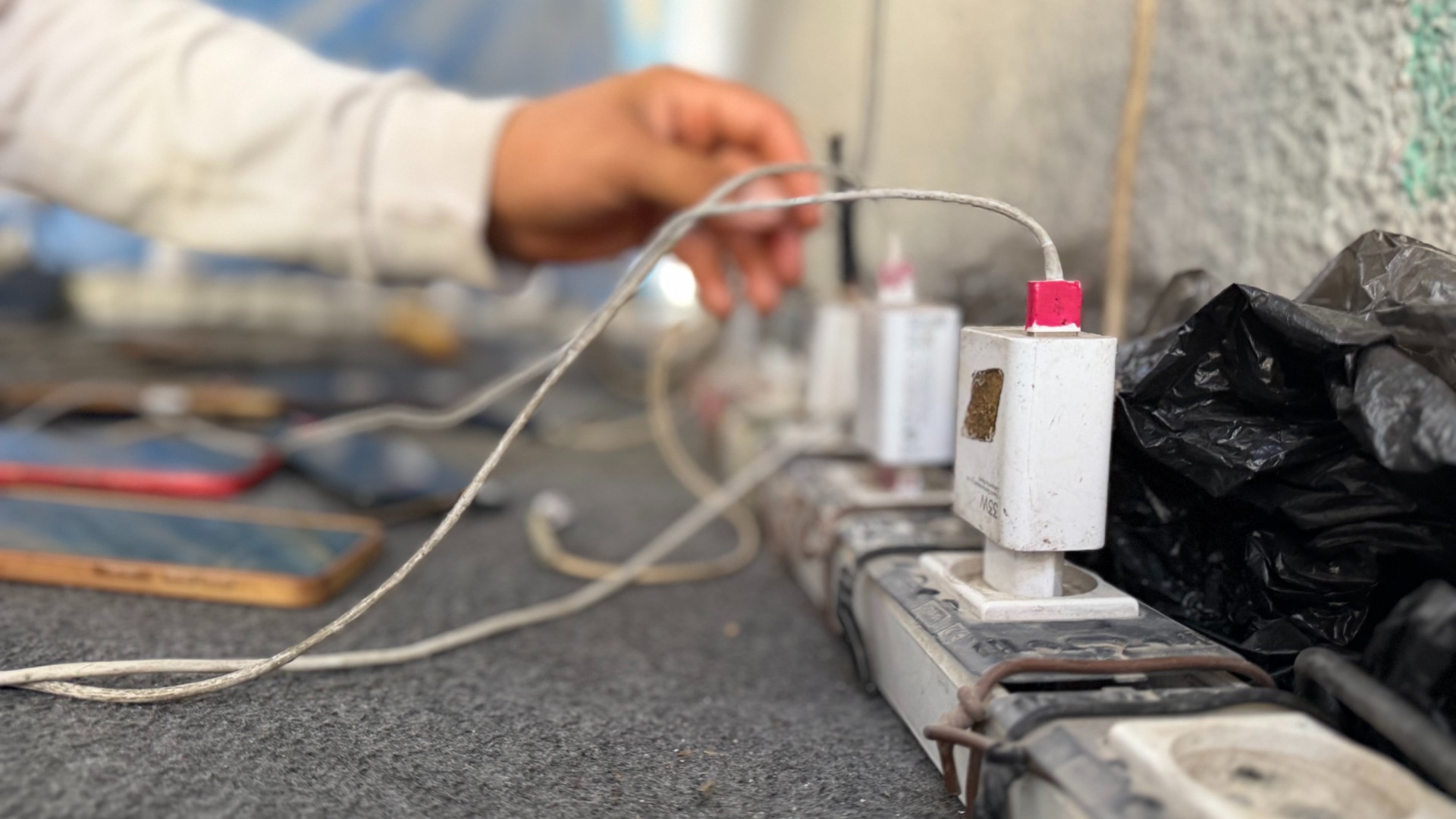
Zuweidi lamented however that repeated power cuts often shut down his generator and he "struggles with the cost of electricity".
"Today, a family of four with phones needs to spend around 120 shekels a month just to charge their phones. Not everyone can afford that when most people have lost their jobs and have no source of income at all," he said.
"So many people come to charge their phones on credit. I have an entire notebook recording what people owe me. Some families have accumulated debts of 300 or 400 shekels."
Before the war, the 34-year-old earned around 400 to 500 shekels ($131-$164) a week. Today, he earns roughly the same amount over an entire month.
"We're just trying to make a living out of whatever we can. We never had charging points like this in Gaza before," he said.
"It's just another thing we never imagined we'd have to deal with because of the war."
Middle East Eye delivers independent and unrivalled coverage and analysis of the Middle East, North Africa and beyond. To learn more about republishing this content and the associated fees, please fill out this form. More about MEE can be found here.