
War in Yemen: Who are the Southern Transitional Council? Why are they backed by the UAE?

The conflict in Yemen, a country already ripped apart by a decade of civil war, has taken another turn.
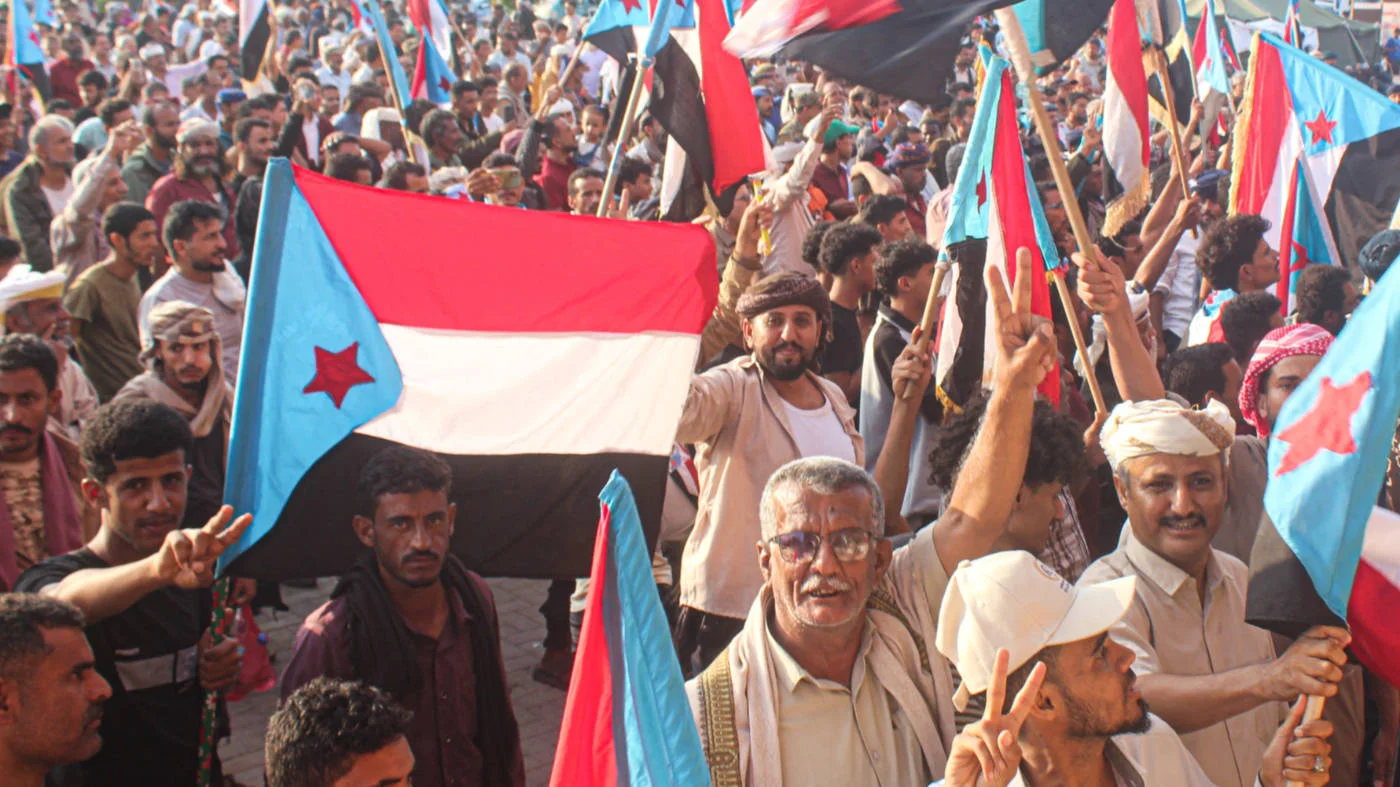
Fighters aligned with the Southern Transitional Council (STC), which in turn is backed by the UAE, stormed the province of Hadhramaut in the south of Yemen earlier this month, seizing the city of Seiyun.
The STC is part of the UN-recognised Yemeni government but has called for the secession of an independent South Yemen.
For much of the past two centuries, Yemen has been broadly divided into the north and the south, although no formal borders have existed.
The British controlled an area including the strategically important port of Aden from the mid-19th century until armed rebellion broke out in 1963.
New MEE newsletter: Jerusalem Dispatch
Sign up to get the latest insights and analysis on Israel-Palestine, alongside Turkey Unpacked and other MEE newsletters
Yemen gained independence four years later, renamed itself the People's Republic of South Yemen and took Aden as its capital.
In 1969, Marxist-Leninists seized control in a bloodless coup. The country was renamed the People’s Democratic Republic of Yemen (PDRY) and became the Arab world’s only communist state, establishing relations with the USSR, Cuba and China.
In contrast, the north of Yemen gained independence from Ottoman rule in 1918. The monarchy descended into civil war during the 1960s, before the Republic of Yemen was declared in 1970.
During the 1970s, the two neighbours had a tense relationship, including sporadic conflict.
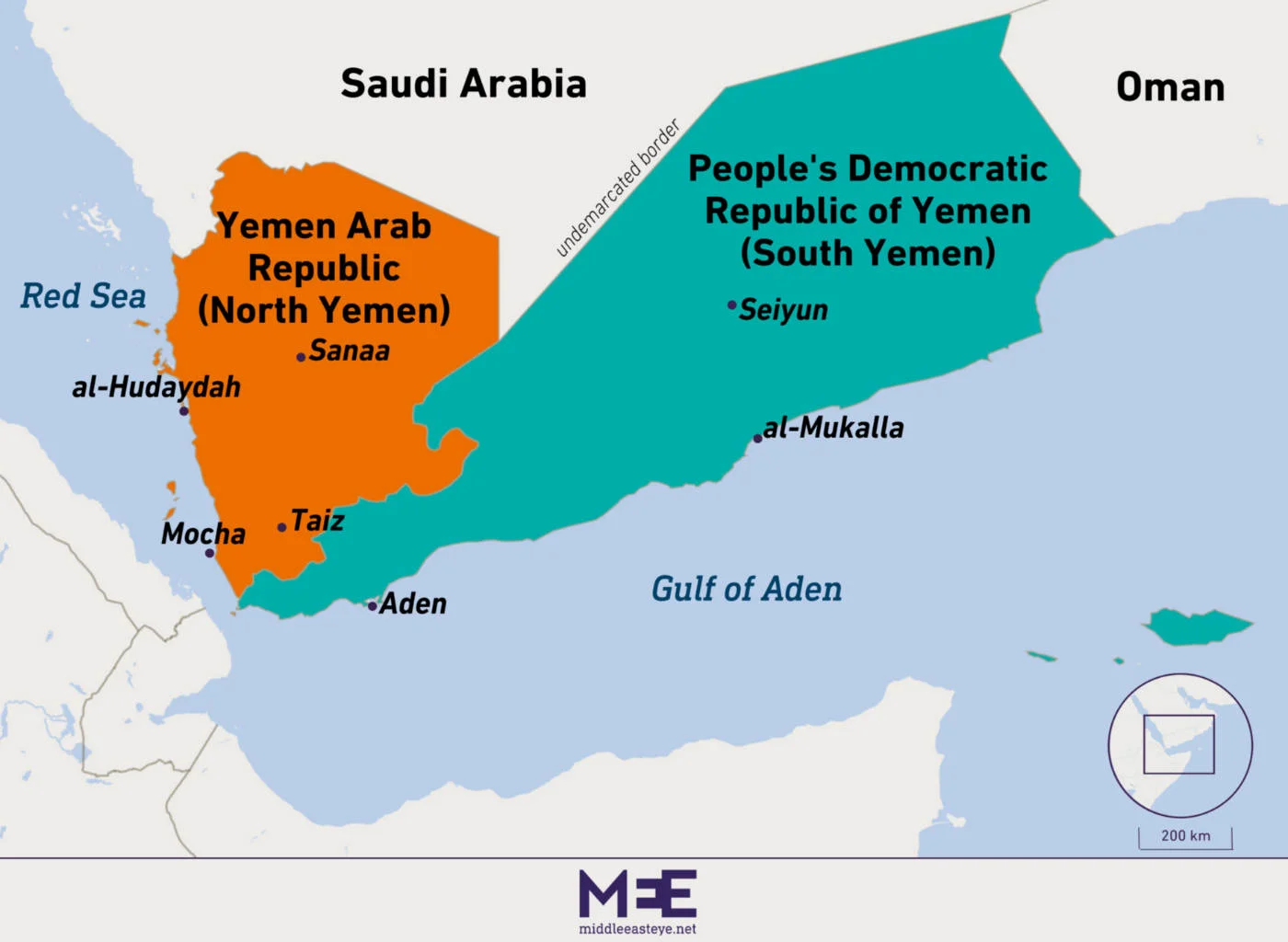

By the late 1980s, the PDRY had been weakened by the collapse of the USSR, its main patron, and the two Yemeni states united in May 1990.
But divisions remained, not least a southern secessionist attempt that was quashed in 1994. And from 2004, the Zaydi Shia Houthis rebelled in the north-west.
Amid protests that swept the Middle East, long-standing president Ali Abdullah Saleh stood down in 2012, to be replaced by his deputy Abd Rabbuh Mansour Hadi.
Civil war broke out in 2014: by September, the Houthis had taken the capital Sanaa, and Hadi had fled to Saudi Arabia.
Saleh initially sided with the rebels, then supported the Saudis in December 2017, only to be killed by a Houthi sniper days later.
The war is ongoing, though it appears to have reached a stalemate. The Houthis are still in charge in the north, with various groups within the Presidential Leadership Council vying for influence in the south.
What’s life like in southern Yemen?
Yemen had a population of just under 41 million in 2024, according to the World Bank. Of those, around 70-80 percent live in Houthi-controlled areas, while the remaining 10m live in South Yemen.
But hunger and disease, caused by the civil war, have been compounded by extreme weather and flooding.
According to the IPC in June 2025, more than half of the population of government-controlled Yemen face high levels of food insecurity. More than 1.5 million people have been hit by emergency-level acute hunger and malnutrition. At least 4.5 million people have been displaced.
What is the Southern Transitional Council?
The STC has driven the recent push across Hadhramaut. It emerged in April 2017 from the broader Southern Movement (al-Hirak), which wants a separate state in “South Arabia”, as the group calls the region.
It was established in 2017 with financing from the United Arab Emirates, following the dismissal of Aidaroos al-Zubaidi as governor of the Aden Governorate by Yemen’s then president-in-exile, Mansour Hadi.
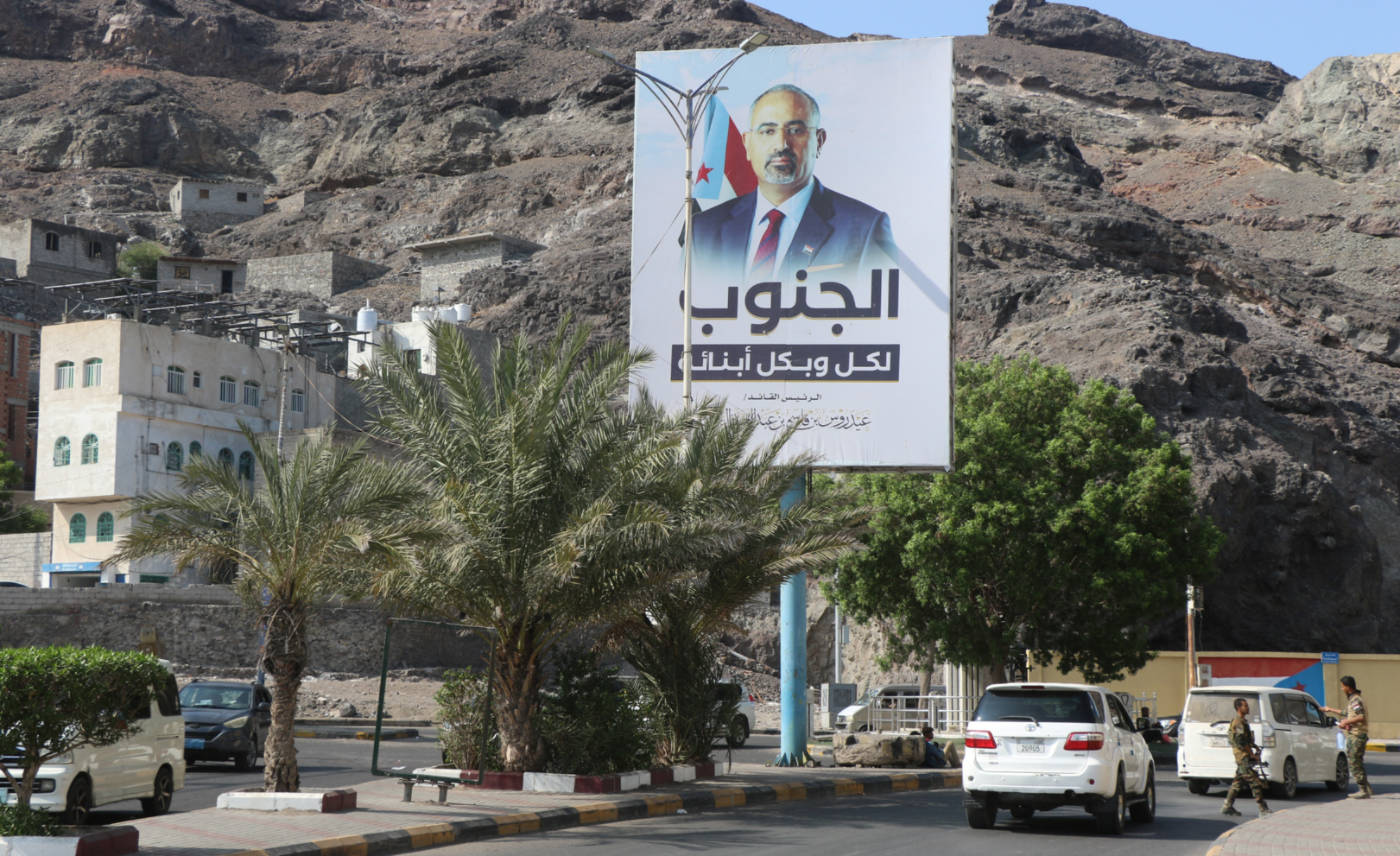
In August 2019, the STC seized control of Aden, the seat of Hadi’s government. Saudi-mediated peace talks between the STC and the government followed. Hadi quit, and the STC joined the government in April 2022.
The STC says its eventual aim is independence for the south, but that it will represent southerners in the government as part of a “coalition of different agendas”.
It now holds three seats on the eight-person presidential committee, with Zubaidi appointed vice-president.
So what’s happening in Hadhramaut?
Hadhramaut is a large, sparsely populated governorate stretching from the Gulf of Aden to Yemen’s northern border with Saudi Arabia. It also holds around 80 percent of the country’s mild oil reserves.
Until earlier this month, it was officially controlled by the government, although several tribal groups also have influence.
In the past, these groups have worked with the government and the STC against Al-Qaeda in the Arab Peninsula (AQAP), which has a presence in the governorate. But relations have sometimes been fractious.
In January 2025, the Hadhramaut Tribal Alliance (HTA), the tribal groups’ armed wing, seized control of several oil fields.
This led to power cuts across the governorate, including in its capital, al-Mukalla, which in turn caused protests.
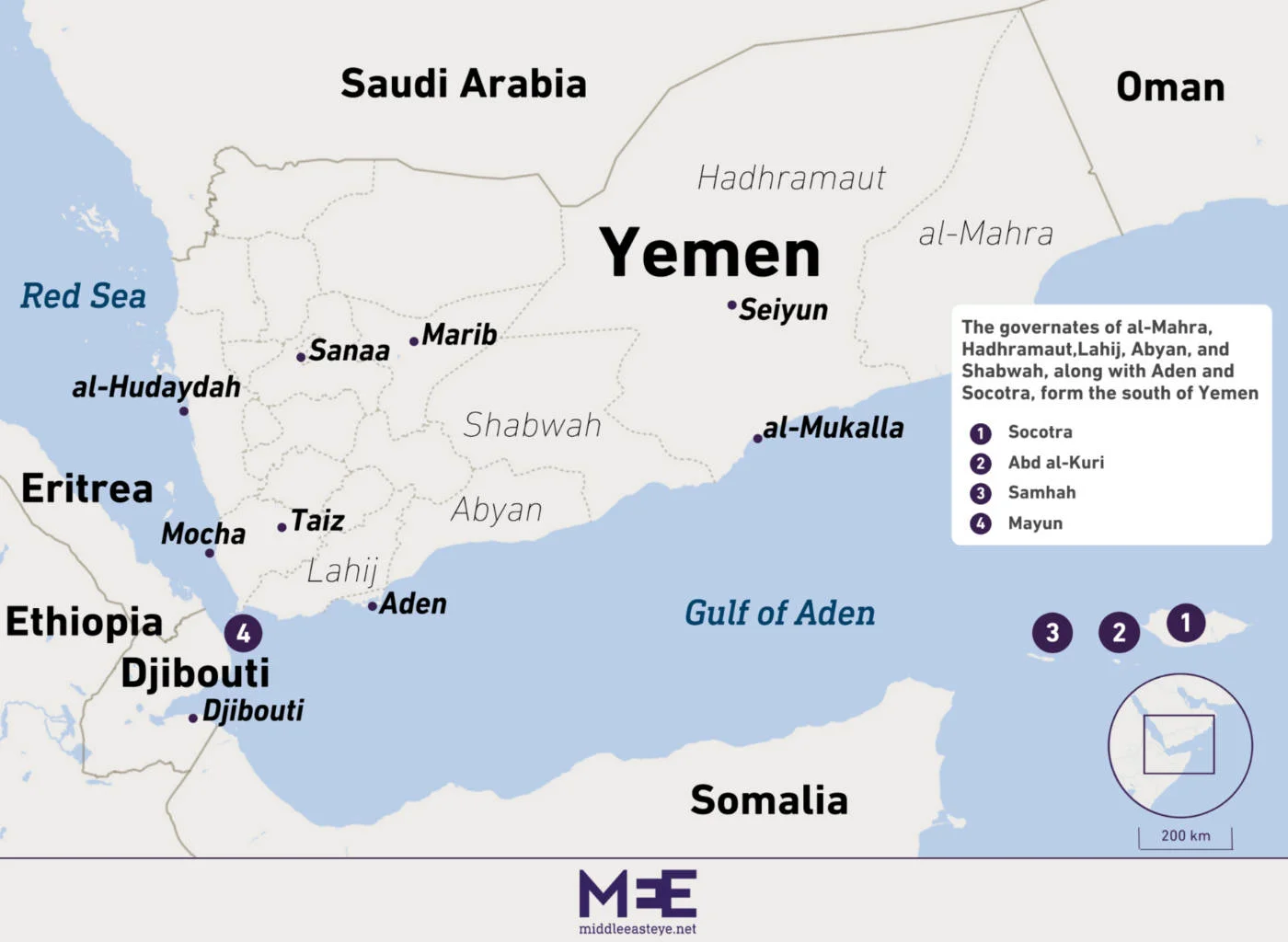
Its leader, Sheikh Amr bin Habrish, has called for greater autonomy for Hadhramaut. And on 3 December, the STC said the Hadrami Elite Forces (HEF) had taken control of Seiyun, a key city in the centre of Hadhramaut in an operation labelled “The Promising Future”.
Since then, Hadrami Elite Forces have pushed further east, taking most of the governorate, including the oil infrastructure captured by the HTA and raising the historic flag of Southern Yemen.
The HTA said in a statement on 3 December that its withdrawal had been supervised by Saudi mediators.
In a statement posted on X on 2 December, the STC said the HEF was advancing to counter “terrorist groups like the AQAP and the Muslim Brotherhood”, and cut the smuggling routes that sustained the Houthis.
And on 3 December it described the operation as a battle to “liberate all the soil of our homeland, South Arabia, and build a modern federal state”.
Why are the UAE and Saudi Arabia involved in Yemen?
Saudi Arabia shares a 1,300km-long border with Yemen.
In March 2015, six months into Yemen’s civil war, the kingdom led nine states in a bombing offensive against the Houthis, as well as an air, land and sea blockade that pushed Yemen into a devastating humanitarian crisis.
Andreas Krieg, associate professor at the Defence Studies Department of King's College London, says the main Saudi priority is its border and a political settlement with the Houthis.
Riyadh would not be against an STC-dominated south, Krieg says, if it was controlled by one stable group on the ground and stopped missile and arms smuggling.
“Riyadh has little appetite to be drawn back into full-scale fighting in the south after a decade of costly intervention,” says Krieg.
The UAE has long been part of the Saudi-led coalition in Yemen, where its strategic goals have focused on security, politics and commerce.
Its relationship with the STC in Yemen has given it a political edge over regional rivals Iran and Saudi Arabia, making it easier to influence events against trying to shape a united Yemeni state.
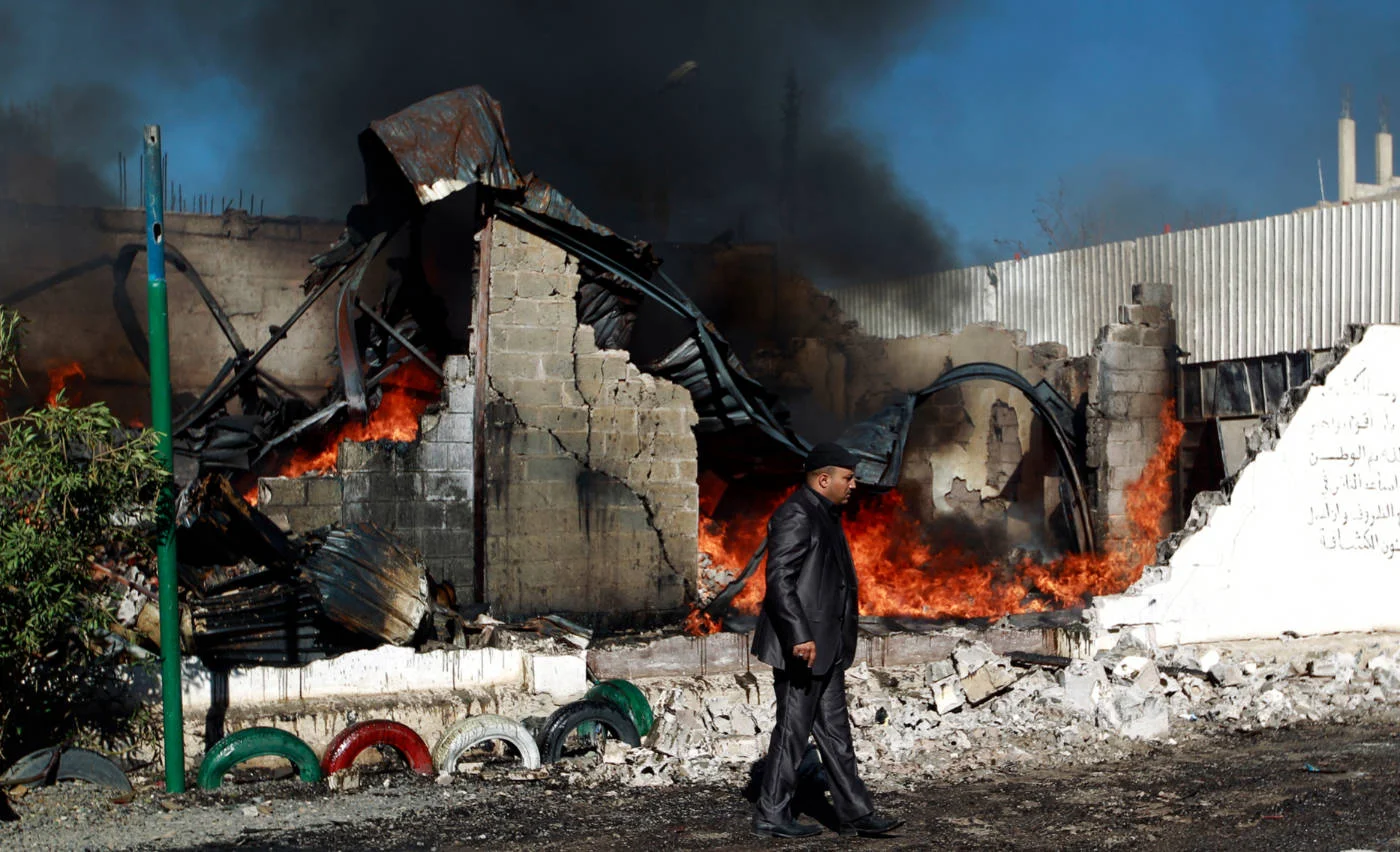
The UAE suffered its worst military disaster in September 2015, when 52 troops were killed in a Houthi air strike in the governate of Marib.
Since then, it has made limited use of its own ground forces in Yemen, contracting out ground operations to proxy groups, such as the STC, as well mercenaries mostly from Latin America and the US, plus troops from the notorious Sudanese paramilitary Rapid Support Forces.
Through its ties with the STC, the UAE has helped build coastal military bases in Mocha; and on the islands of Abd al-Kuri and Samhah, which are part of the Socotra archipelago, administered by the STC. These bases form a network alongside others in the region through which the UAE can extend its influence.
Then there is commerce: the UAE now has a base on Mayun, an island in the Bab al-Mandab strait, which links the shipping lanes of the Gulf of Aden and the Red Sea.
DP World, the UAE’s state-owned seaport operator, pursued management rights in Aden long before the outbreak of the civil war.
Krieg says that having an ally in the region makes it easier for the UAE to secure maritime routes, host its forces and its allies, and lock in long-term port and energy security.
The STC and its allies in Yemen, Krieg says, “have proved to be effective tools in sidelining rivals the UAE dislikes, particularly Islah and other Islamist-leaning elements, while also combating jihadist groups and presenting Abu Dhabi as a reliable partner on counterterrorism”.
How are relations between the STC and the Houthis?
Coverage of conflict in Yemen has often focused on the Houthis, whose insurgency in the country’s north-west first sparked the ongoing civil war.
Direct conflict between the Houthis, who are backed by Iran, and the Saudi-led coalition supporting the Yemeni government has slowed in recent years, effectively reaching a stalemate in 2022.
Since then, the Houthis have targeted Israel with missile strikes, as well as attacking shipping in the Red Sea amid the genocide on Gaza.
In March, US President Donald Trump launched a bombing campaign against the Houthis, killing hundreds of civilians before signing a ceasefire in May.
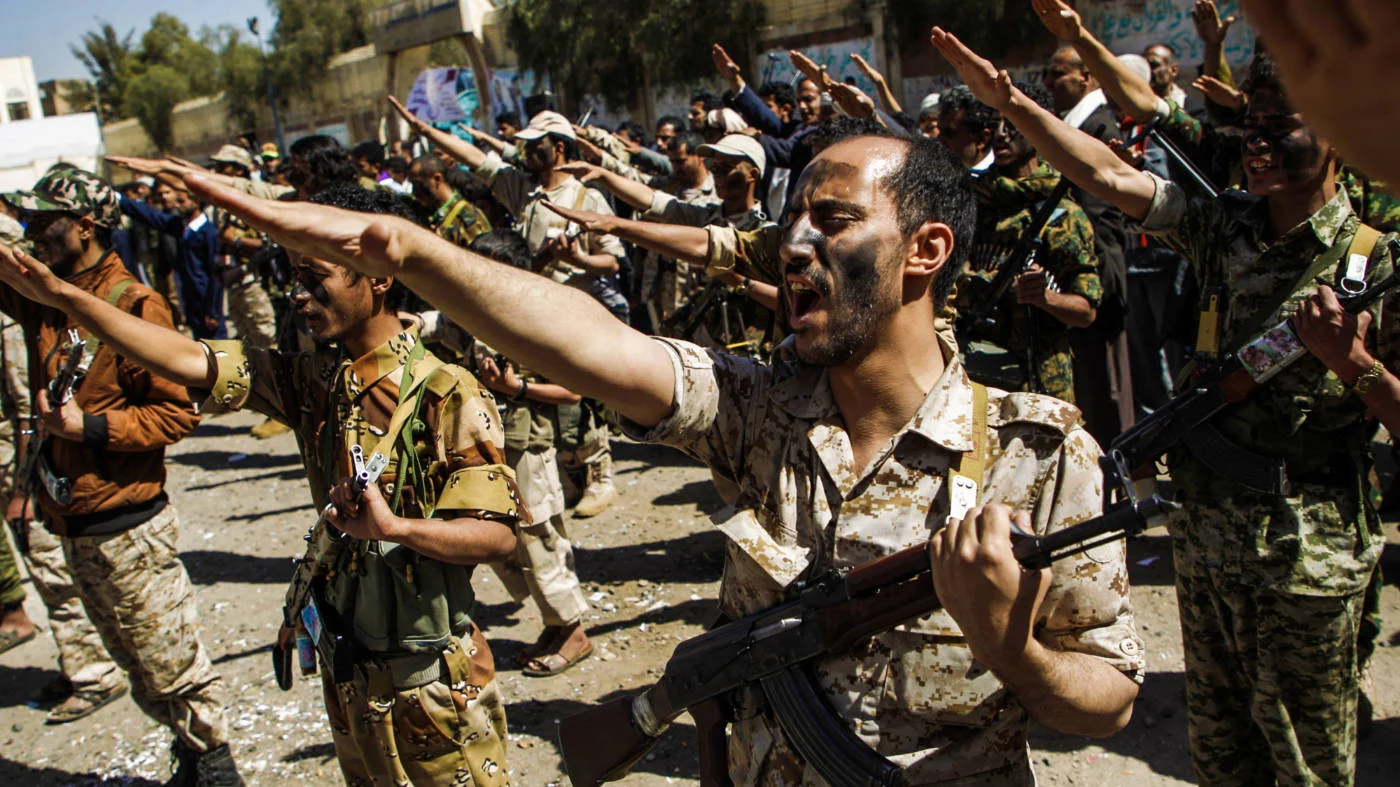
In September 2025, much of the political leadership of the Houthis was killed amid Israeli air strikes on Sanaa, which has been held by the Houthis since September 2014.
Analysts believe that the STC’s offensive is not concerned with the rebels in the north. “The STC’s broader strategy appears to be focused overwhelmingly on consolidating power within the territory of the former South Yemen, not on preparing a major new assault on Houthi-held areas in the north,” says Krieg.
He suggests that the risks the STC would face by taking on the Houthis would be huge, and that the two groups have very different goals.
“A renewed large-scale offensive against the Houthis would risk over-stretching these gains and opening multiple fronts at once.”
Instead, he says, it is more likely that the STC increases its hold on the south, including establishing its own institutions, and using the threat of future action against the Houthis for leverage with Saudi Arabia, the UAE and the West.
What’s going to happen next in south Yemen?
STC-aligned fighters have reportedly reached as far as Al-Ghaydah, the capital and only major settlement in Yemen’s easternmost Al Mahra governorate.
It’s now more likely that the separatist movement will gain full control of south-east Yemen.
Krieg says: “Over the past months, it has moved systematically to take control of key southern governorates, strategic facilities and symbols of authority: oilfields in Hadramout, airports and military bases in Wadi Hadramout, the presidential compound and security infrastructure in Aden, and positions in Mahrah.”
And the STC wants to be taken seriously on the international stage, including an improvement of its relations with Israel. This would give it and its partners in Yemen greater recognition from the US and its allies, despite a potential backlash in South Yemen.
Krieg says: “Its leaders speak consistently in the language of restoring a southern state, raising their flag over government sites and presenting themselves to foreign diplomats as the only coherent authority in the south.”
Neither Saudi Arabia nor the UAE are interested in being drawn further into a regional fight, Krieg says, although Saudi Arabia will still protect those local groups it wants to remain loyal to, such as the National Shield Forces.
If there are any issues, then Riyadh will “probably signal its displeasure through diplomatic channels and technical levers - for example, airspace restrictions, pressure on financial support and quiet warnings to STC leaders and their Emirati backers - rather than ordering its own forces into a head-on clash with southern units.
“The result is likely to be tough talk, selective support for threatened allies and continued attempts at de-confliction with Abu Dhabi,” says Krieg, “rather than a decisive military move to roll back the STC.”
Middle East Eye delivers independent and unrivalled coverage and analysis of the Middle East, North Africa and beyond. To learn more about republishing this content and the associated fees, please fill out this form. More about MEE can be found here.