
Gaza live: Gaza death toll rises to 35,80

Live Updates
A Palestine Red Crescent Society (PRCS) nurse was killed in an Israeli attack on a school in the Nuseirat refugee camp in Khan Younis on Thursday, PRCS reported on X.
The UK has delivered its first shipment of aid to Gaza via the US-built floating pier, the UK government said in a statement.
Prime Minister Rishi Sunak said that "more aid will follow in the coming weeks".
"We know the maritime route is not the only answer. We need to see more land routes open," he added.
The US military finished the pier's construction on Thursday, two months after US President Joe Biden ordered it built.
While the pier is supposed to support aid deliveries, it is not expected to replace the cheaper and more efficient land deliveries that are now largely blocked off.
The World Health Organisation said earlier today that no medical supplies had entered Gaza following the seizure earlier this month of the Rafah crossing by Israeli forces ahead of their offensive against the city.
A 20-year-old Palestinian man has died of his wounds days after he was shot by Israeli forces as they raided the town of Beit Furik, east of Nablus, Wafa news agency is reporting.
Laith Hanani died at Najah University Hospital where he was being treated for his injuries.
Over 500 Palestinians have been killed by Israeli forces or settlers across the West Bank since 7 October.
The World Health Organisation (WHO) says that it has not been able to get medical aid into Gaza since 6 May.
“The last medical supplies that we got in Gaza was before 6 May,” WHO spokesperson Tarik Jasarevic said at a UN press briefing today.
“We don’t have fuel. We have hospitals under evacuation order. We have a situation where we cannot move physically,” he said.
This comes after Israel said at the ICJ earlier today that it had been facilitating the entry of aid into Gaza.
A least one person has been killed and others injured in an Israeli strike on a house in the Bureij refugee camp in central Gaza, Al Jazeera is reporting.
This follows another attack on the nearby Nuseirat refugee camp which killed four displaced people earlier today.
Secret military documents obtained by Middle East Eye reveal the scale of Egyptian operations to destroy tunnels between the Sinai peninsula and Gaza built to circumvent the Israel-imposed blockade of the enclave.
According to the documents, more than 2,000 tunnels were destroyed by military engineers in the border city of Rafah between 2011 and 2015.
They also reveal that senior members of the armed forces ordered a feasibility study into a proposal to dig a canal along the entire border with Gaza as an alternative to destroying the tunnels.
The documents, leaked by an army insider, offer a rare insight into the military’s extensive operations in the North Sinai governorate.
The government of President Abdel Fattah el-Sisi is highly secretive about its activities in Rafah and has imposed a media blackout in the region since 2013 where it has waged a brutal and destructive operation against local militants aligned with the Islamic State (IS) group.
It has never released official details about the destruction of tunnels.
According to the documents, all the tunnels destroyed during the period they covered were designated as commercial or transport tunnels.
The revelations come to light following the closure of the Rafah crossing in southern Gaza after an Israeli operation on 7 May and raise questions about Israeli criticism of Egypt's alleged failure to eliminate smuggling tunnels used by Palestinian armed groups.
Read more: Egypt has destroyed more than 2,000 Gaza tunnels, secret files reveal

Spanish Prime Minister Pedro Sanchez said on Friday that Madrid would only recognise a Palestinian state in a joint action with other countries.
In an interview with TV channel La Sexta, Sanchez also denied reports that the recognition would occur on 21 May.
Reporting by Reuters
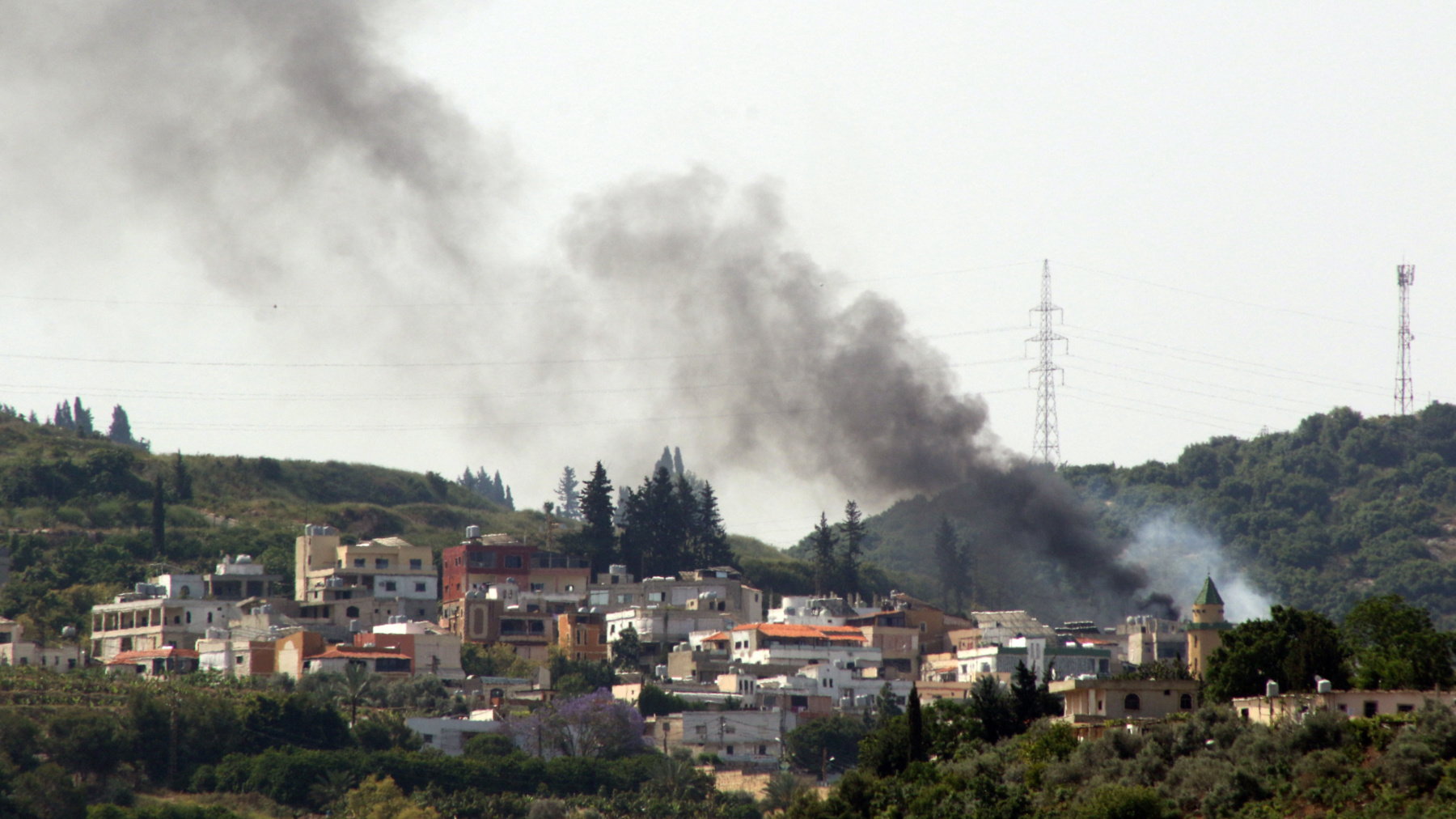
A barrage of rockets have been fired from Lebanon towards the Israeli-occupied Golan Heights.
The attack comes after Israel killed a Hezbollah member in al-Najjarieh, close to Sidon in southern Lebanon.
The Israeli army said it carried out strikes on al-Najjarieh, located on Lebanon's southern coastline, killing a Hezbollah member.
Israel claims its strikes hit facilities "used by Hezbollah’s air defense array, and posed a threat to Israeli aircraft".
Hezbollah announced the death of Hussein Khader Mahdi, from al-Najjarieh, and reports say that two Syrians were also killed in the strike.
The Israeli army said the fighting in northern Gaza's Jabalia is highly intense and some of the "most violent" in the entire war on Gaza.
The Israeli military claims to have killed over 200 gunmen in the area and says there may be several hundreds more.
Hamas says its fighters were able to cut off the Israeli army's supply line east of Jabalia after they "targeted a troop carrier there with an Al-Yassin 105 missile and rained bullets on a group of enemy soldiers with a BKC machine gun, leaving them dead and wounded".
A new YouGov poll shows that most British people think there should be an immediate ceasefire in Gaza and would support the UK ending its arms sales to Israel for the duration of the conflict.
The poll, commissioned by the UK-based charity Medical Aid for Palestinians (MAP) and the Council for Arab-British Understanding (CAABU), has found:
- 55 percent of people support the UK ending arms sales to Israel until the conflict is over
- 40 percent of those who voted for the Conservative Party in 2019 and 74 percent who voted for Labour favour the UK suspending the arms sales.
- 73 percent of people support an immediate ceasefire in Gaza, including 67 percent who voted Conservative in 2019 and 86 percent who voted Labour
- 18 percent of those polled approve of the UK government’s handling of the Gaza crisis
- 12 percent approve of Labour’s response
Rohan Talbot, MAP’s director of advocacy and campaigns, said: "The feeling among the British public reaffirms the demands of humanitarians: UK leaders must do more to end the killing in Gaza, including halting arms sales so they cannot be used in further violations of international law."
Caabu director Chris Doyle said the findings show that the government and Labour leadership “lag sluggishly behind British public opinion by failing to take the decisive actions needed to help bring the horrors we see in Gaza to a swift end, a trend also highlighted in polls across Europe”.
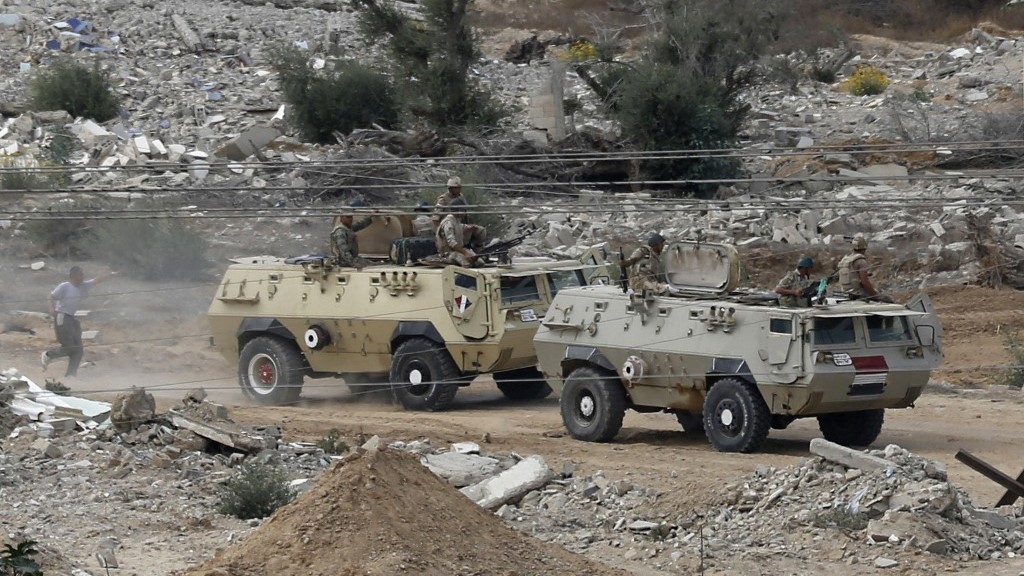
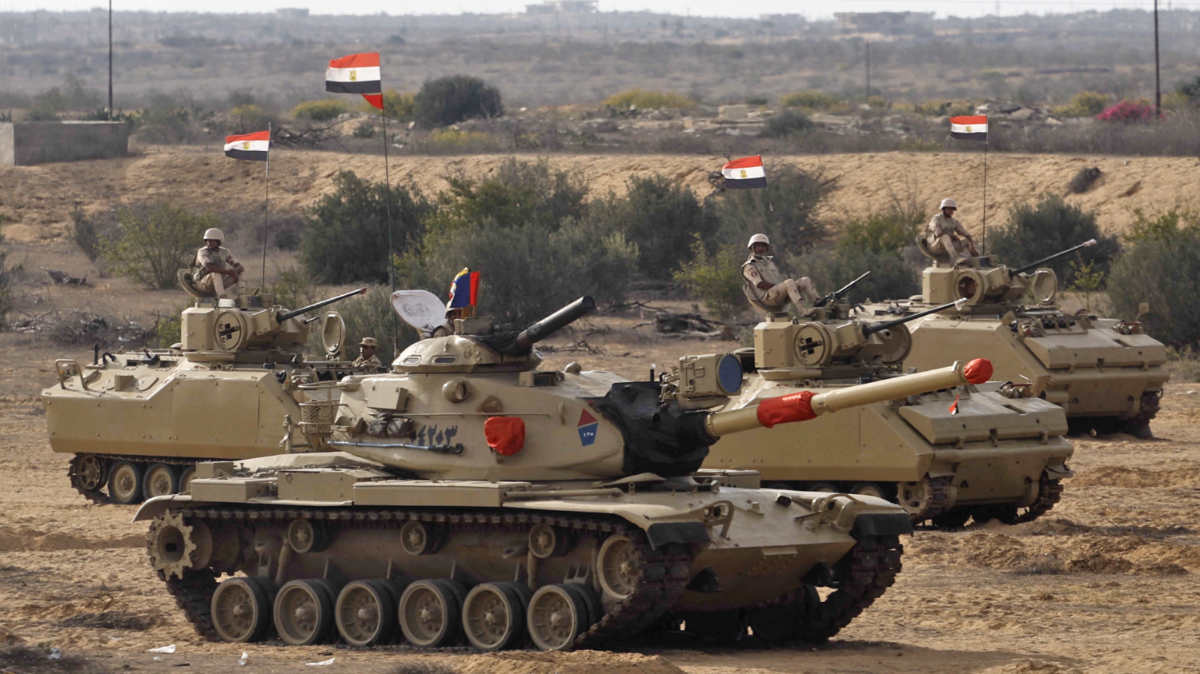
Egypt deployed additional armoured personnel carriers and soldiers to its border with Gaza in northeastern Sinai this week as an Israeli ground operation in neighbouring Rafah appears imminent, a rights group said.
Fifteen armoured personnel carriers mounted with combat gear were spotted by Sinai residents of Sheikh Zuweid travelling toward Egypt’s border with Gaza on Wednesday evening, the Sinai Foundation for Human Rights said on Thursday.
Separately, another convoy of armoured vehicles arrived in the village of Al-Joura, south of Sheikh Zuweid, the foundation said.
The deployment comes amid a deepening rift between Egypt and Israel over the latter's offensive on Rafah, the southern Gaza border city. Last week, Israel seized the Rafah border crossing with Egypt and launched military operations in the city where around 1.5 million displaced Palestinians are sheltering.
READ MORE: Egypt deploys military convoys to Gaza border as tensions with Israel flare
Israel's second co-Agent at the International Court of Justice (ICJ), Tamar-Kaplan Tourgeman, said that South Africa should "advise its ally Hamas" to stop using hospitals in Gaza as "military command centres".
Tourgeman said that Israel has not harmed any patients or medical personnel, particuarly alluding to the Israeli army's operations in al-Shifa hospital, after which hundreds of bodies were found in mass graves in the hospital.
Tourgeman said that Hamas had reused al-Shifa as a military command centre.
Israel has so far failed to provide verifiable evidence that hospitals in Gaza were used for such military purposes.
Doctors Without Borders said that Israel's March operations in al-Shifa were "endangering patients, medical staff and people trapped inside". Fleeing Palestinians said they hit by shelling while leaving, and medical staff said they were unable to operate on patients, 2 many of whom died during the siege, according to the WHO.
Israel's second co-Agent at the International Court of Justice, Tamar-Kaplan Tourgeman, accused South Africa of sharing a "blatant misrepresentation" of facts in the first day of hearings on Thursday, saying she heard "venomous accusations" from the African nation.
Tourgeman insists that Israel "allows and facilitates" the provision of humanitarian aid to the Gaza Strip, despite South Africa's accusation that Israel is blocking the continuous distribution of aid.
The representative says that Israel kept the Karem Abu Salem (Kerem Shalom) crossing open since December, with the only exception being a three-day pause at the beginning of May following a Hamas attack.
Tourgeman says that Israel allows 200 trucks of aid per day through several land crossings, which remains below what the UN calls a required minimum of 500 trucks a day.
She adds that Israel allows airdrops into Gaza, and agreed on a maritime corridor with Cyprus.
Israel's co-agent at the International Court of Justice, Gilad Noam, accused South Africa of having "ulterior motives" in its genocide case against Israel.
"South Africa purports to come before you as the guardian of humanity but it has an ulterior motive: military advantage for its ally Hamas that is does not wish to see defeated," he said at The Hague.
Noam said that South Africa met with a delegation from Hamas, where it "did not advocate for release of hostages or protection of civilians but rather their continued campaign against Israel in the Court and on the ground".