Live: Palestinian death toll in Gaza nears 26,000

Live Updates
A US-owned, Marshall Islands-flagged tanker reported that four aerial drones approached and circled the ship about 87 miles southeast off the Yemen coastal city of Mukalla, according to British maritime security firm Ambrey.
Ambrey said there were no injuries, and the tanker was not impacted by the incident.
John Kirby, the White House's national security spokesman, made the remarks aboard Air Force One.
Kirby added that the strikes took place early on Thursday and were against several anti-ship missiles that were set to be launched in the Red Sea.
The Palestine Red Crescent Society (PCRS) has issued another warning about the deteriorating humanitarian situation in Gaza amid the continued Israeli assault.
The relief organisation said that 800,000 people in the enclave are suffering from food insecurity, a lack of access to clean water, and a scarcity of basic goods, like bread, vegetables, baby formula, and medicine.
Saudi Arabia’s ambassador to the US, Reema bint Bandar, said that without a clear path to a Palestinian state and a ceasefire in Gaza, there will be no Saudi normalisation with Israel.
“The kingdom has been quite clear. While there is violence on the ground and the killing persists, we cannot talk about the next day,” she said on Thursday during remarks at the World Economic Forum in Davos.
US news outlets have reported that Washington is pushing towards a plan that would see a ceasefire in Gaza in exchange for Saudi Arabia normalising ties with Israel.
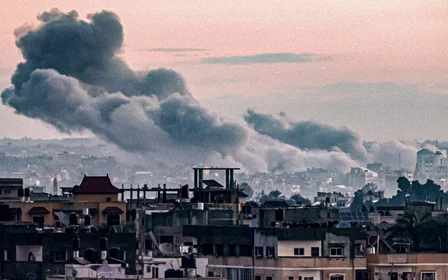
Israeli forces heavily shelled parts of Khan Younis and Rafah on Thursday.
According to Wafa, Israel’s military fired white phosphorus bombs on Qaizan al-Najjar, an area south of Khan Younis, and also were reported to be dropping bombs near al-Najjar Hospital located east of Rafah.
The Palestinian news agency reported that Israel was continuing to “completely blow up residential squares” in Khan Younis.
At least four Palestinian bodies were recovered from a bombing in the area and transported to the European Hospital in the southeastern part of Khan Younis.
In the north in Gaza City, Israeli forces killed two Palestinians and injured several others in a bombing on a residential building.
NetBlocks, a telecommunications watchdog organisation, said that the internet blackout in Gaza has now lasted for 144 hours, or six days.
The blackout has well surpassed the longest since the war in Gaza began, and is the ninth shutdown since 7 October.
“Internet shutdowns are a matter of life and death in Gaza. It is unconscionable to toy with connectivity amidst unprecedented violence and unfathomable human suffering,” Marwa Fatafta, advocacy director at Access Now, said in a statement on Thursday.
“The international community must act now to end the war and internet shutdowns. The silence so far has been glaring.”
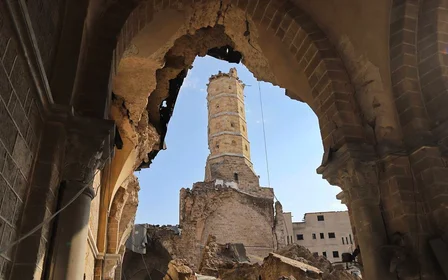
The Islamic University in Gaza, which had previously been bombed by Israeli forces early on in the war, has now been shelled again while Palestinians are sheltering inside.
“The Islamic University in Gaza was shelled by artillery a while ago. A few people were wounded, including my cousin," a Palestinian told MEE, asking not to be named.
"The university has been used as a shelter by many displaced families, along with a nearby building. The shelling was surprising and frightening."
Since being bombed in October, the university was shut down and people began to use its buildings as shelter to escape Israeli bombardment.
On Wednesday, the Israeli military detonated 315 explosives in another university in Gaza.
The Times of Israel said that Prime Minister Benjamin Netanyahu reportedly rejected a plan set by US Secretary of State Antony Blinken that would see Saudi Arabia normalise relations with Tel Aviv in exchange for Israel agreeing to pave a path for Palestinian statehood.
According to NBC, Netanyahu told Blinken he was not ready to accept a deal that would allow for the creation of a Palestinian state.
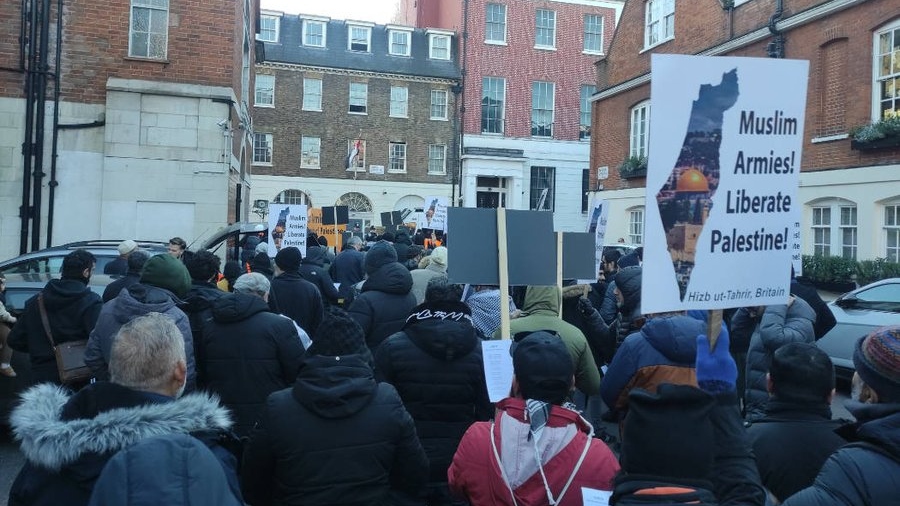
British MPs approved the proscription of Hizb ut-Tahrir as a terrorist organisation on Thursday, following Home Secretary James Cleverly's announcement earlier this week that the government would ban the Islamic political party.
Speaking in the House of Commons, Tom Tugendhat, the security minister, described Hizb ut-Tahrir as an “antisemitic” group which he said had praised the 7 October attacks by Hamas in southern Israel.
“Hizb ut-Tahrir responded to the murder of civilians with elation instead of condemnation. They lavished Hamas with praise,” said Tugendhat.
“Hizb ut-Tahrir has antisemitism at its very core. They reject democracy and engage in vile homophobia as an organisation. They don’t just reject British values. They seek to undermine them.”
READ MORE: British MPs vote to add Islamic group to terrorism list

Tunisia implemented a travel ban on lawyer Chawki Tabib, part of the team representing the Palestine Bar Association in South Africa's genocide case against Israel at the International Court of Justice (ICJ).
The Palestine Bar Association assigned the Tunisian lawyer as a legal representative among a wide team of lawyers representing Palestine and supporting South Africa's case.
Tabib was supposed to attend preparation meetings in Kuwait in early January, but was banned by the government from leaving his country "following a complaint filed against him by the Free Bloggers Network, a local organisation that 'exposes fraud and corruption', according to their Facebook page's posts," the New Arab reported.
Tunisian President Kais Saied is infamous for using travel bans against political opponents.
Israel's Coastal District police decided to allow an anti-war protest to take place in central Haifa following pressure from the High Court of Justice.
This marks the first time such a protest has been allowed since the beginning of Israel's current war on Gaza.
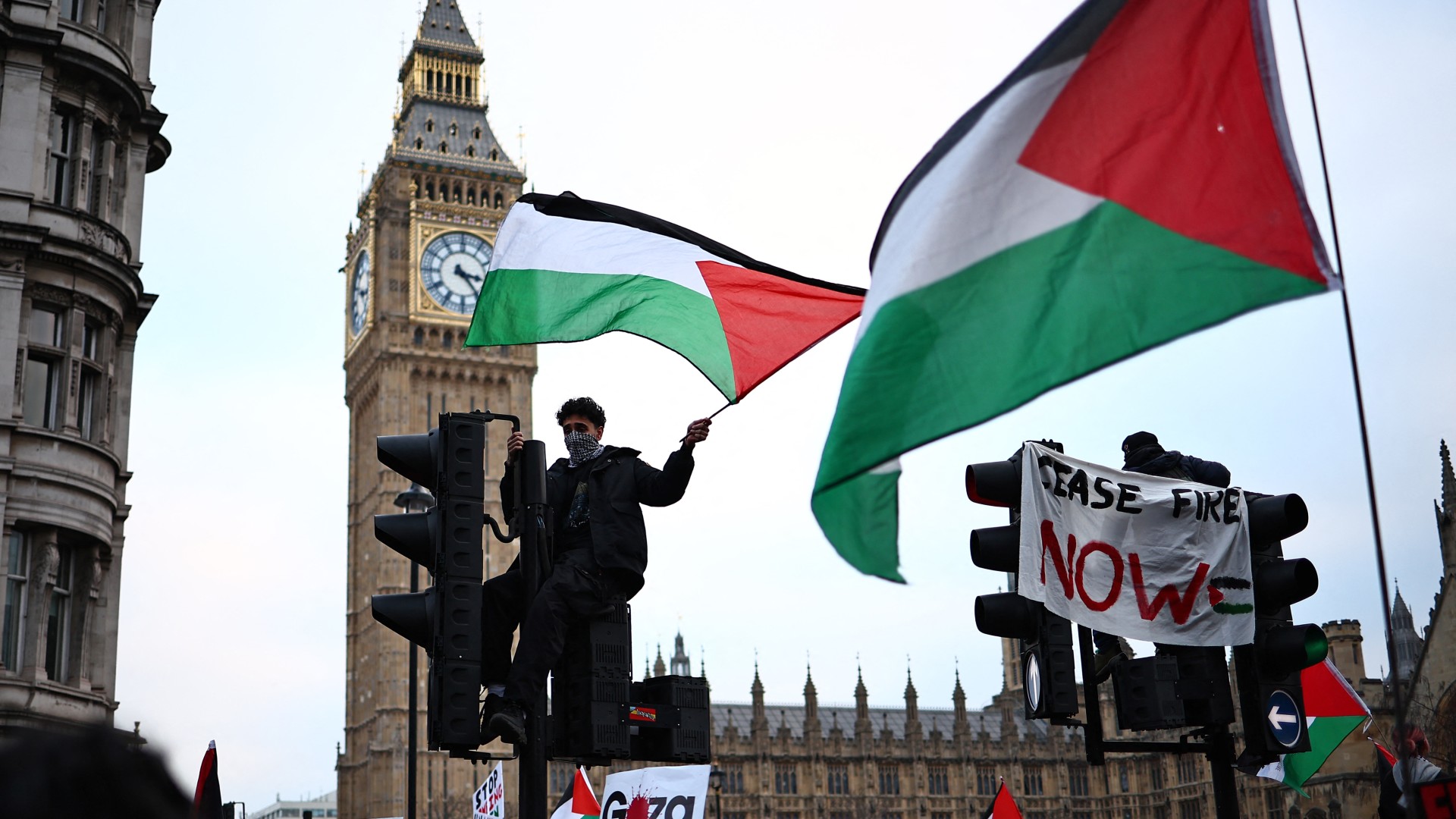
British counterterrorism police questioned a teenager wearing a Palestine flag at a UK airport, asking whether he had attended pro-Palestinian protests, according to a report in openDemocracy on Wednesday.
The outlet obtained an audio recording of a 17-year-old boy being questioned for 40 minutes alongside a family member.
The two were handed flyers which notified them they were obliged to answer questions under schedule 7 of the Terrorism Act.
"Just going back to Palestine, have you been to any of the protests that have been taking place?" one officer asks the teenager.
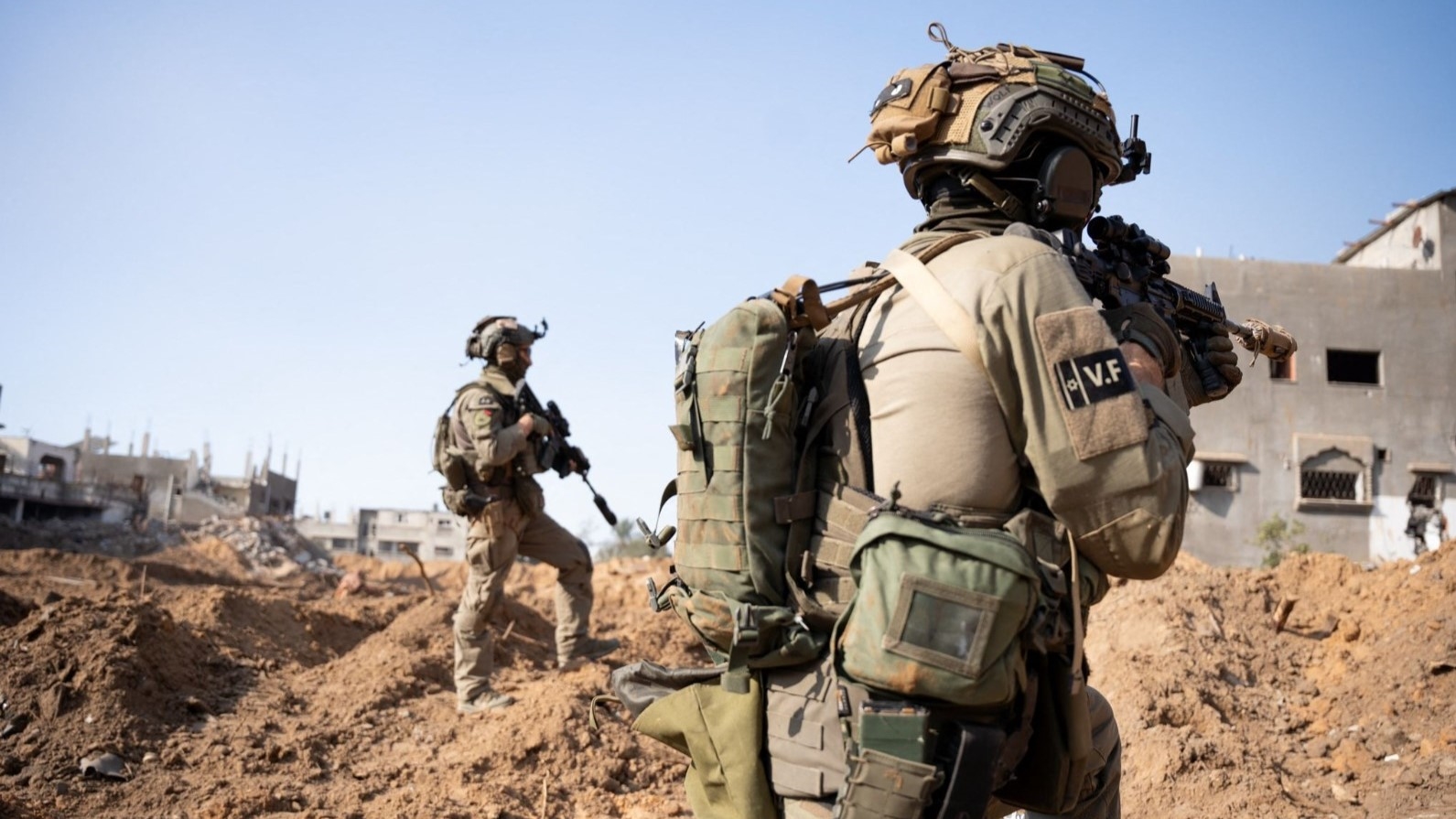
The Israeli army said it was unable to confirm the causes of the deaths of three Israeli hostages in Gaza, amid accusations by one captive's mother that he was poisoned during combat operations.
Israel repatriated the bodies of soldiers Ron Sherman and Nik Beizer, and French-Israeli civilian Elia Toledano, from Gaza in December, and initially claimed the hostages were killed by Hamas.
However, Maayan Sherman, mother of Ron, accused the Israeli army of poisoning her son.
“We were told that there is a reasonable possibility that he inhaled toxic gases from the IDF bombs,” she wrote on Facebook.
READ MORE: Hostage's mother says he was poisoned by Israeli army in tunnel
Arab nations have developed a plan to put an end to Israel's war in Gaza and create a Palestinian state, the Financial Times reports.
The plan may include normalisation of relations between Saudi Arabia and Israel if it agrees to "irreversible" steps towards the establishment of a Palestinian state.
Arab states discussed the plan with the US and European governments, as it may include a call for western states to formally recognise the Palestinian state, or vote to grant it full membership at the UN.
The plan is expected to be presented in the coming weeks.
According to Unrwa, Rafah's pre-war population of 300,000 has increased to 1.2 million since the beginning of the war on Gaza.
The surge is due to Palestinians seeking shelter after being regularly displaced by Israeli bombings and evacuation orders.