
Gaza Live: Israeli air strike takes out 25 members of same family

Live Updates
Israel launched more strikes on southern Lebanon on Thursday, saying it targeted two Hezbollah operatives who entered a rocket launching site in southern Lebanon.
Like previous strikes, there did not appear to be a Hezbollah response.
The strike underscores how Israel plans to continue hitting the group if it says it is threatened by their actions.
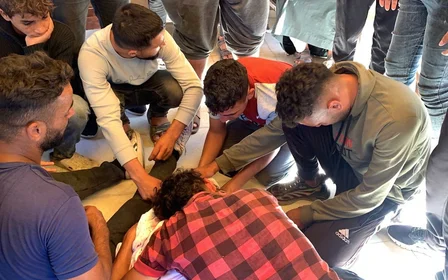
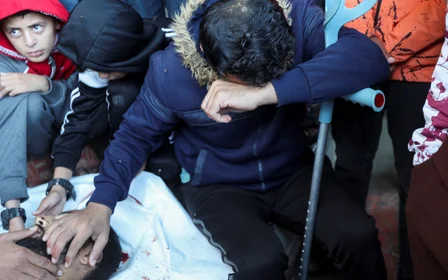
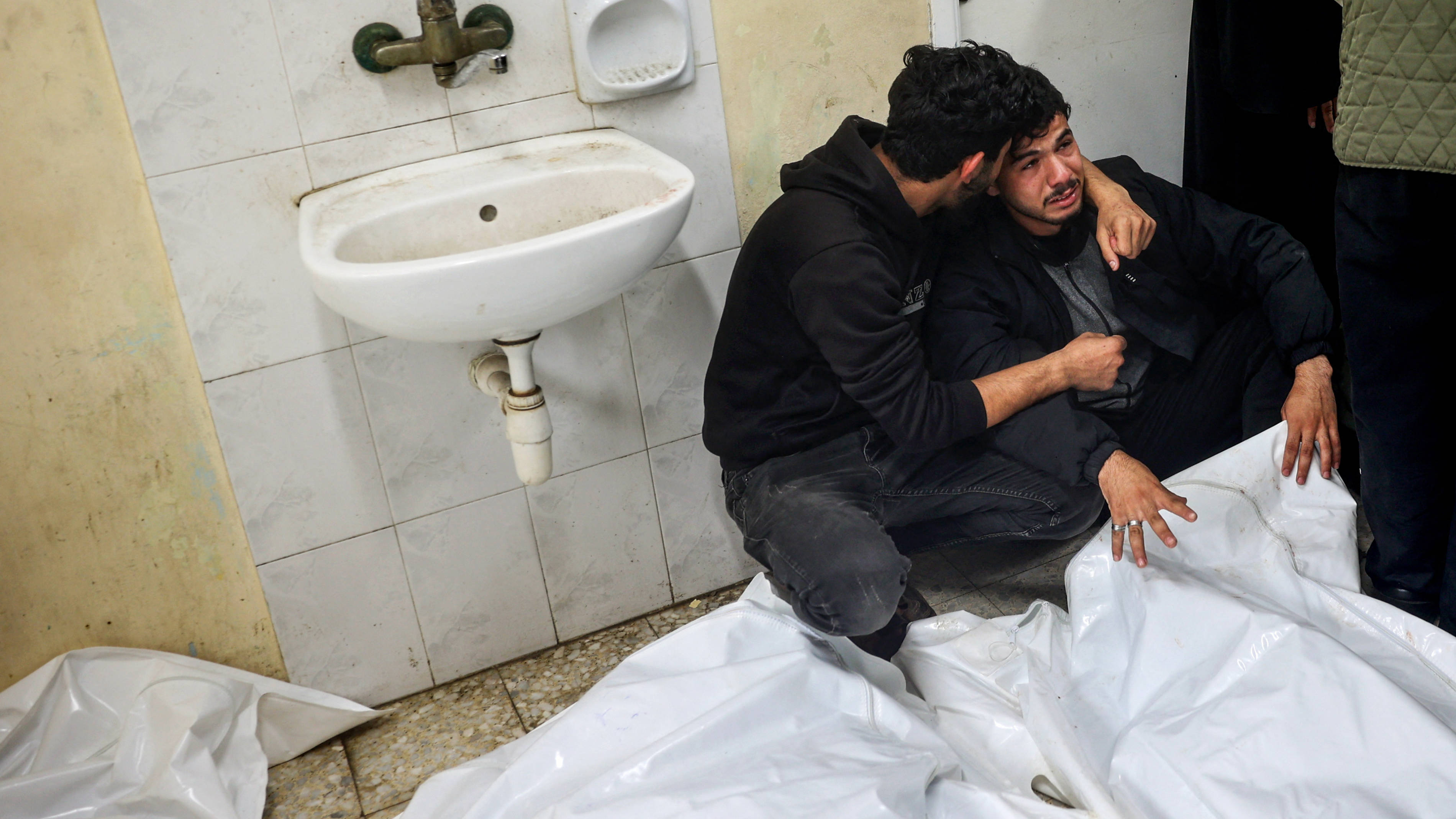
At least 26 people were killed on Thursday by Israeli strikes across the Gaza Strip, according to Palestinian health officials.
Israeli troops pounded central Gaza, and Israeli tanks were reported moving in the north and south.
The head of Iran's Islamic Revolutionary Guard Corps, Hossein Salami, said Israel was forced to agree to a ceasefire in Lebanon which marked a "defeat" for the country.
Salami phrased the agreement as a win for Hezbollah, adding, "We are witnessing the destruction of Israel. The Hezbollah truce is a very brilliant victory".
Israel's security cabinet has extended the ability of Israeli banks to transfer Shekels to Palestinian banks in the occupied West Bank for one year, according to Walla news.
Palestinian banks depend on Israeli banks to transfer money.
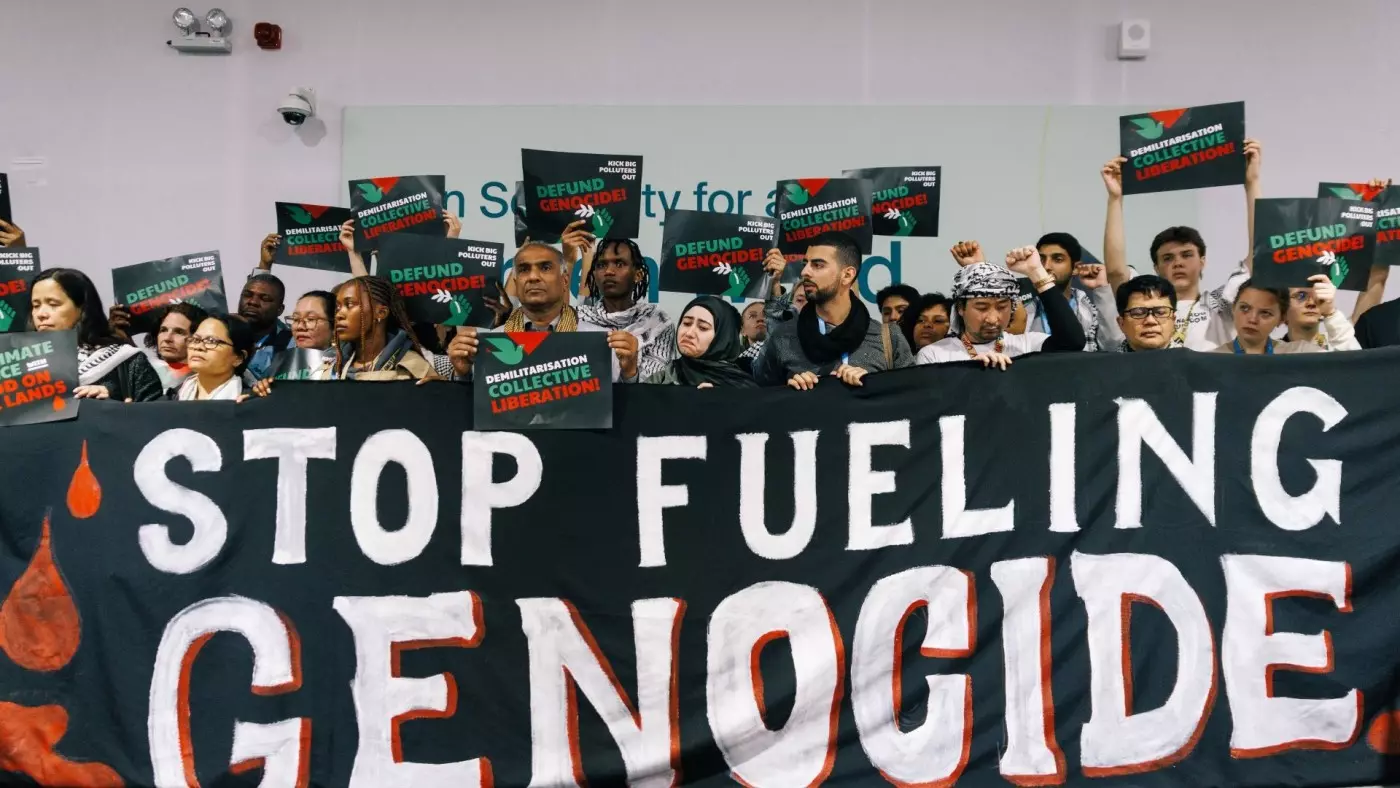
A group of pro-Palestinian protesters who briefly interrupted the Macy's Thanksgiving Day Parade in New York City were arrested by police on Thursday.
The protesters stood in front of the Ronald McDonald float.
"The demonstrators were taken into custody without incident," the New York Police Department said in a statement.
Egypt has informed Hamas that its demand that Israel fully withdraw from Gaza as part of a ceasefire is no longer realistic, according to a report by The Wall Street Journal.
According to the report, Israel plans to spend "years" in the Gaza Strip.
Egypt has also told Hamas to assume that Israel will have a veto over whoever governs the enclave after the war.
The European Union's top diplomat said Israel is being colonised from within, as its society turns away from "democracy" and "extremism" sways society.
"The colonisation of the mind of the people is the most dangerous thing that Israeli society is facing because it is undermining the foundations of their democracy," Josep Borrell, the EU's foreign envoy, said.
Borrell said a "different Israel" had risen "after what has happened in Gaza and what has happened in the West Bank".
Israel's National Security Minister Itamar Ben Gvir wrote on X that Israel must "reoccupy Gaza" and impose a "voluntary emigration" of Palestinians out of the beseiged enclave.
Ben Gvir also slammed Israel's ceasefire in Lebanon.
He said the Lebanon deal was "being violated repeatedly" since Wednesday. "We must not stop! We must continue until absolute victory."
Turning to Gaza, he wrote that Israel has "a historic opportunity" to "reoccupy the Gaza Strip, and encourage the voluntary emigration of Israel's enemies".
At least five people were killed by an Israeli strike on a camp for displaced people near Khan Younis in Gaza, according to Arabic media reports.
The Israeli strike hit the town of Abasan, east of Khan Younis.
Meanwhile, Israeli troops have been destroying homes in the southern Gaza border town of Rafah.
Lebanon's army has accused Israel of violating the ceasefire agreement "several times".
On Thursday, Israel's military said it struck a facility in southern Lebanon belonging to Hezbollah.
It didn't say whether it had notified a US-led ceasefire monitoring committee before striking.
The United Kingdom, France and Germany warned Israel against not extending a legal framework that allows Israeli banks to work with Palestinian counterparts in the occupied West Bank.
Palestinian banks are dependent on Israeli banks for Shekel transactions. Israel has not yet extended an indemnification allowing the transfers to take place. The current one expires on Sunday.
“This disappointing decision prolongs uncertainty and endangers the Palestinian economy,” the foreign ministers of the UK, Germany and France said.
“Cutting off these banking ties...would create significant economic turmoil in the West Bank, jeopardising the security of Israel and the wider region".
In a recent speech in the Bundestag to mark the anniversary of 7 October 2023, Germany's Chancellor Olaf Scholz denied that the country had decided to stop supplying arms to Israel.
The Federal Republic had made such exports and would continue to do so. However, as data published by the German government shows, there was a de facto ban on the export of weapons of war between March and August 2024.
The discrepancy between public positioning and actual practice reveals two things about German arms supply policy.
First, the German government itself assumes that Israel is breaking international humanitarian law in Gaza and has taken precautions to avoid legal liability.
Second, the debate on the legitimacy of arms exports in Germany is driven by domestic politics rather than by obligations under international law or considerations of conflict dynamics.
Read more: How Germany bends international law to continue selling arms to Israel

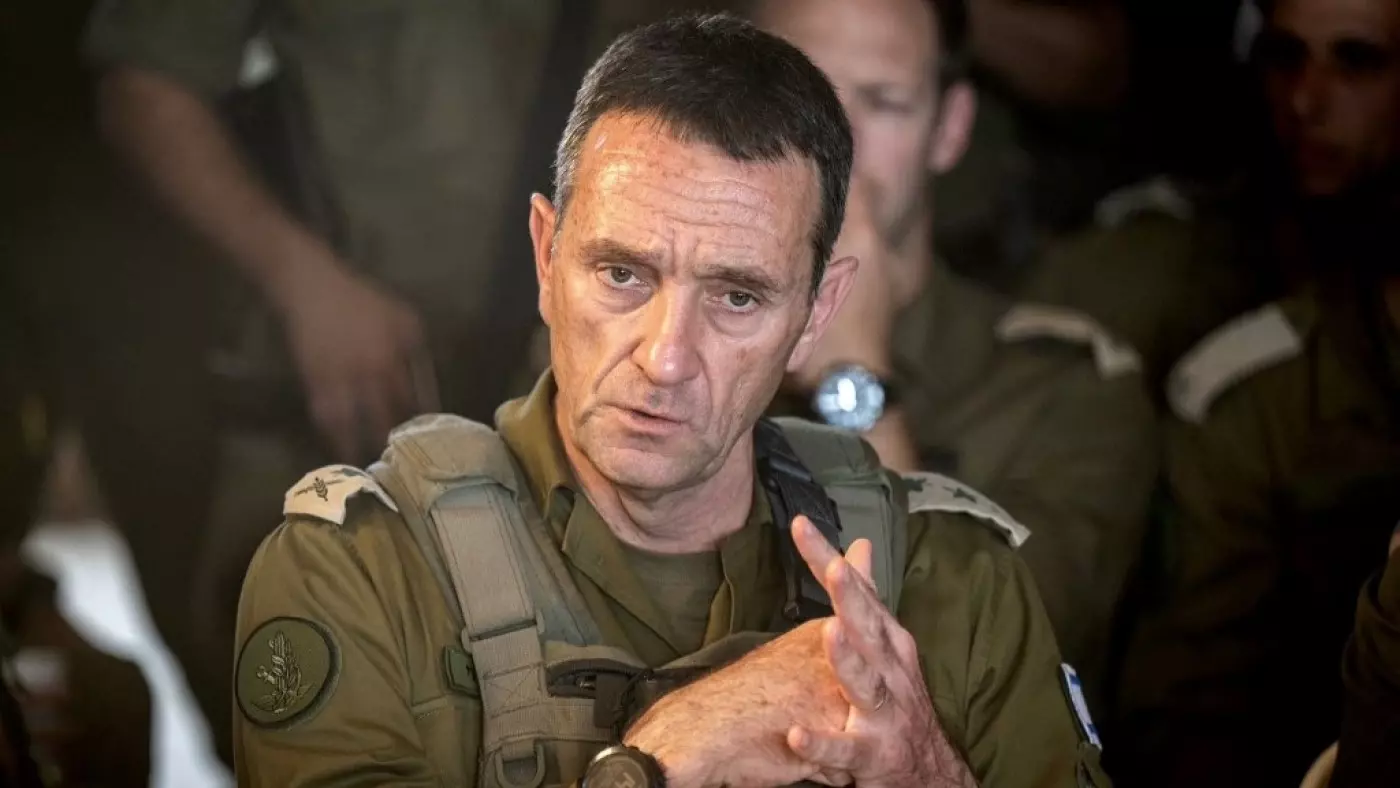
Britain has refused to confirm whether it gave Israel's military chief of staff, Herzi Halevi, special mission immunity when it hosted him last week.
Halevi's visit came amid speculation that the International Criminal Court (ICC) could issue an arrest warrant for him over human rights violations in Gaza.
The military chief visited Britain just days after the ICC issued arrest warrants for Israeli Prime Minister Benjamin Netanyahu and former defence minister Yoav Gallant for alleged war crimes.
Last Friday, the British government said it would comply with its obligations under domestic and international law if Netanyahu set foot on British soil.
Read more: UK refuses to confirm if it gave Israeli military chief special immunity on visit this week
At least 44,330 Palestinians have been killed and 104,933 wounded in Israeli attacks on Gaza since 7 October 2023, the Palestinian health ministry said in a statement on Thursday.
The toll includes 48 people killed in Israeli strikes in the previous 24 hours, according to the ministry.
The Lebanese army has started conducting operations in Beirut's Dahiyeh, southern Lebanon and the Bekaa, accompanied by an increased deployment of troops south of the Litani River, the army said in a statement.
It added that the operations include setting up temporary checkpoints, opening roads and detonating unexploded ordnance.