
Israel-Palestine live: Israel’s response to South Africa’s genocide case at the ICJ ends

Live Updates
A Middle East Eye reporter has described desperate attempts to prevent dogs from eating the corpses of Palestinians killed and trapped under rubble in Gaza City.
For weeks, Israeli siege and heavy bombardment have cut off the western part of the city from access to ambulances, civil defence teams, basic needs and media coverage.
Thousands of people have been buried under rubble after the Israeli bombing of their apartment buildings. Others have been shot dead in their homes or on the streets.
Residents have not been able to recover many of them and civil defence workers are either not able to reach them or simply do not have the tools to pull them out.
Now dogs are digging them up and eating them, a reporter in western Gaza City has told MEE. His name is withheld for safety reasons.
"A group of dogs are roaming in our neighbourhood and we have to find a solution to push them away," the reporter said.
"Every day we see them looking through the rubble and extracting body parts.
"Yesterday I saw two of them fight over the dead boy's leg. I had to step in and take it away from them before burying it. It's heartbreaking."
At least 500 people, including women and children, have been interrogated by Israeli forces in the Nur Shams refugee camp in the city of Tulkarm in the occupied West Bank, Palestinian prisoner groups said on Friday.
“The occupation transferred about 150 Palestinians to one of its military barracks and arrested 20 others,” a statement by the Palestinian Prisoners and Ex-Prisoners’ Affairs Authority and the Palestinian Prisoners Society said.
Israeli forces carried out a massive raid on the refugee camp that lasted for two days. Dozens of people were wounded and homes were bombed.
“The total number of arrests in the West Bank since October 7 reached 5,650, noting that the arrest cases include those whose detention the occupation maintained, and those who were later released,” the statement said.
Israeli police are having difficulty locating the victims of sexual assault or witnesses to such acts which allegedly occurred during the 7 October attacks on Israel by Hamas and other armed Palestinian groups, according to a report by Haaretz.
The report, published on Haaretz's Hebrew site, said that police are also unable to link the existing evidence with the victims described in it.
Adi Edri, who is in charge of investigating the alleged sexual crimes that occurred during the attack, told Haaretz police have "circumstantial indications" there are victims who are still alive that they have yet to make contact with.
The police are now appealing to the Israeli public to come forward with any evidence they may have of sexual-based violence conducted by Hamas and other groups from Gaza.
The announcement from the police comes a week after The New York Times published a lengthy investigative report detailing a pattern of sexual assault and rape allegedly committed by Palestinian fighters after they launched an attack on southern Israel on 7 October.
Read more: Israeli police having difficulty finding sexual assault victims from 7 October attack, says report
The Israeli army said it had attacked more than 100 targets across Gaza over the past 24 hours by air, land and sea.
The Israeli military alleged that it had attacked several Hamas military sites and warehouses storing weapons. This claim could not be independently verified.
Israeli officials are in secret talks with Rwanda and Chad to exile Palestinians from Gaza, the Israeli daily Zman Yisrael reported on Friday.
Both countries expressed a basic agreement to continue talks, reported Zman Yisrael, unlike many other countries that refused in principle.
On Wednesday, Zman Yisrael said "Congo" seems willing to accept thousands of Palestinian refugees, although it did not say whether it was referring to the Democratic Republic of the Congo or the Republic of Congo.
According to the Israeli outlet, the Israeli intelligence service Mossad and the Ministry of Foreign Affairs are spearheading the initiative.
"The business is very complex," a government source told Zman Yisrael. "We must promote this channel, but be very careful of the reactions in the world, and also of the fear that it will be interpreted as a transfer and not a voluntary migration. That's why we work with close legal advice," they added.
In principle, the aim is to give a generous financial grant to any Palestinian who expresses a desire to leave Gaza, along with extensive aid to the receiving country, including military aid.
The Israeli government is keen to say that Palestinians are not being ethnically cleansed from Gaza, but rather that the move would be a “voluntary immigration policy".
The distinction has been scrutinised because Israeli politicians have gone on record explicitly laying out plans to make Gaza unlivable for its inhabitants and replace the population with Israeli settlers.
In theory, Rafah in southern Gaza is meant to be a safe area, however overnight an Israeli strike killed an entire family, Al-Jazeera is reporting.
At least six were killed in the Israeli dawn strikes.
Rafah, which has been designated as a safe area, has continued to come under attack by Israel forces with as much ferocity as any other part of Gaza.
Good morning readers of Middle East Eye,
It's 91 days since the start of Israel's war in Gaza and the Palestinian death toll is officially 22,438 with 57,614 wounded and more than 7,000 missing who are believed to be dead and buried under rubble.
Overall, around four percent of Gaza's population have been killed, wounded or gone missing in less than three months of bombardment.
The majority of victims are children and women, according to health officials.
In the last 24-hours alone 125 Palestinians were killed and 318 wounded.
Here are some of the main developments from the last few hours:
- Six people killed in an Israeli attack on a house in central Rafah, an area once declared a “safety zone” for civilians
- Israeli forces shoot and kill 17-year-old during an ambush in the town of Beit Rima in the occupied West Bank
- Israeli high-level security cabinet meeting discussing post-war Gaza plans descends into shouting match as right-wing ministers and military officials clash, according to Israeli media
- Israeli Defence Minister Yoav Gallant has introduced a “day after” plan for Gaza, under which civil administration of the strip would be passed along to unnamed local “Palestinian players”, and Israel would retain the ability to carry out military activities.
Good evening MEE readers.
Two days after top Hamas official Saleh al-Arouri was assassinated in Beirut, the US military killed Mushtaq Taleb al-Saidi, known as Abu Taqwa, deputy head of operations in the paramilitary Popular Mobilisation Forces (PMF).
The killing of Arouri has sparked concerns that Washington's attempts to try to prevent a spillover from the war in Gaza have failed, and a wider regional conflict could take place. You can read more on that here.
Khaled Meshaal, the former chief of Hamas who now leads its diaspora office, said in a speech eulogising Arouri that killing the group's leadership will not put a stop to the resistance against the Israeli occupation.
"Israel has assassinated dozens – hundreds and thousands – from our people’s leaders throughout the past decades, from all the groups,” he said, citing the killing of Hamas founder Sheikh Ahmad Yassin.
"Every time a leader fell, another leader rose up. The martyrdom of one leader produces other leaders on the same road and with the same conviction and the same persistence."
Here are some more developments from Thursday:
-
US Senator Lindsey Graham took a visit to Israel and met with Prime Minister Benjamin Netanyahu. He said: "We're going to do everything we can...to push forward to make Iran's worst nightmare real".
-
A death toll from the Palestinian news agency Wafa put the number of Palestinians killed on Thursday from Israeli attacks at more than 30.
-
Israeli Defence Minister Yoav Gallant outlined new plans for the next stage of the war on Gaza, saying it will include a more targeted approach in the northern part of the besieged enclave while continuing a pursuit of Hamas leadership in the south.
-
Law for Palestine, a UK-based legal advocacy group, has published a list of more than 500 instances where Israeli officials have stated genocidal intent towards Palestinians since the war in Gaza began in October.
-
US Secretary of State Antony Blinken is travelling for a weeklong trip that includes stops in Israel and the West Bank, in addition to Turkey, Greece, Jordan, Qatar, the United Arab Emirates, Saudi Arabia and Egypt.
-
A must-read: Maha Husseini's story on Palestinian survivors recounting their experiences in Israeli field executions. To read that piece, click here.
We are going to be pausing our live coverage but will be back soon. To stay up to date on the latest news, follow us on Facebook, X, Instagram, TikTok, Telegram and YouTube.
US Senator Lindsey Graham took a visit to Israel on Thursday, where he met with Prime Minister Benjamin Netanyahu.
"We're going to do everything we can...to push forward to make Iran's worst nightmare real," Lindsey told Netanyahu.
"The Arabs and the Israelis move towards the light," Graham said, likely referring to the Arab countries that have normalised ties with Israel.
In the early hours of Friday morning, Israeli forces launched raids on the West Bank towns of Beit Rima, near Ramallah, and Azzun, near Qalqilya.
During the raids, Israeli soldiers drove through the towns in military vehicles and also raided several homes, according to the Palestinian news agency Wafa.
This week on The Big Picture, we sit down with Palestinian-American scholar and activist Dr Omar Suleiman, the founder of the Yaqeen Institute in Texas.
Dr Suleiman built a reputation as a religious voice who resonates with the growing Muslim diaspora searching for leaders, and as a millennial often on the frontlines of social issues and protest movements in the US.
He speaks to MEE about his own anger, his commitment to challenging his government and why this is a turning point for how he sees himself as an American.
At least five Palestinians have been killed in an Israeli air strike on a residential home in Rafah in southern Gaza, according to Gaza-based journalist, Maha Husseini.
Rafah, where the strike took place, is where hundreds of thousands of Palestinians have fled in recent weeks, after being forcibly displaced by Israel's military.
Pat Ryder, a Pentagon spokesperson, said US forces took “necessary and proportionate action” against Mushtaq Taleb al-Saidi, deputy head of operations in the paramilitary Popular Mobilisation Forces (PMF).
The drone strike that killed Saidi, known as Abu Taqwa, hit the headquarters of the PMF’s 12th Brigade, Harakat Hezbollah al-Nujaba, near the building of the Iraqi interior ministry.
It follows a series of attacks on US military bases in Iraq and Syria since the start of Israel’s war in Gaza on 7 October.
The Islamic Resistance in Iraq, an umbrella group of pro-Iranian Iraqi groups, has claimed responsibility for over 100 attacks. Some of them have wounded US soldiers.
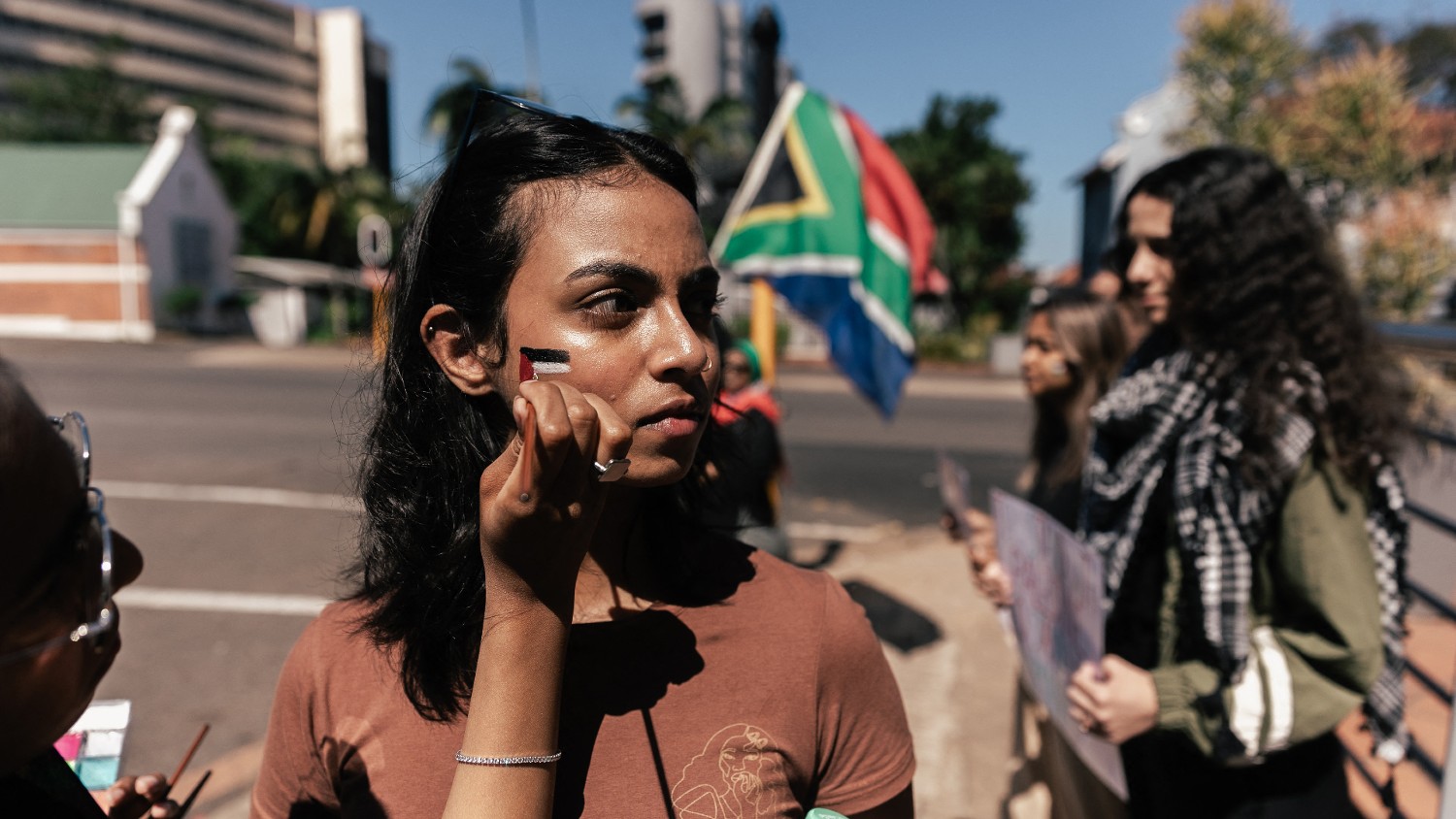
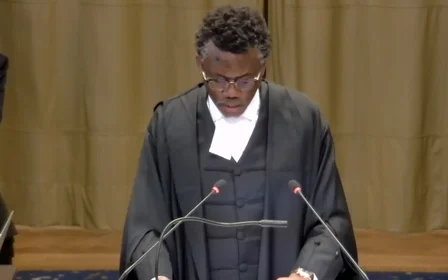
South Africa embroiled itself into a major legal battle with Israel when it filed a petition at the International Court of Justice and called on the body to investigate whether Israel was committing genocide against Palestinians since it began its latest assault on Gaza.
The 84-page application is the most significant call for Israel's actions to be labelled a genocide, and comes as the Palestinian death toll in Gaza nears 23,000, with the majority of the recorded fatalities being women and children.
Middle East Eye has broken down the application's main points and explains what impact a decision from the international court could have. Click below for the full story.
South Africa's genocide case against Israel, explained