LIVE: UN overwhelmingly votes to condemn Russian invasion of Ukraine, demands withdrawal

Live Updates
Sudanese military leader Mohamed Hamdan Dagalo, widely known as Hemeti, was in Moscow today for talks with Russian foreign minister Sergei Lavrov.
Hemeti, leader of the Rapid Support Forces militia, tweeted that he had met Lavrov to discuss "ways to develop and deepen aspects of bilateral cooperation, and the need to expand the base of cooperation in political, diplomatic, economic and commercial fields, and speed up the activation of existing agreements between the two countries."
The Sudanese military leader arrived in Russia yesterday, praising President Vladimir Putin and saying, in relation to the Ukraine crisis, that Russia had a right to "defend its interests".
The invasion of Ukraine has left thousands of Arab students stranded in the country, risking bombardment as Russia continues its advance.
Morocco alone has around 8,000 students in the country. MEE spoke to some of them about what their plans were following Ukraine's decision to close its airspace.
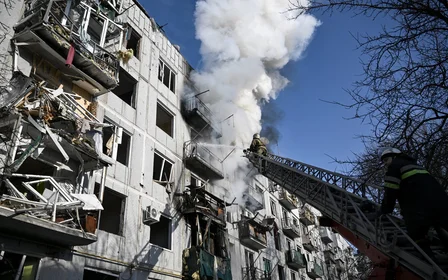
Omar Bentabjaoute, a Moroccan student in Kharkiv, a Ukrainian city bordering Russia where explosions were reported on Thursday, said the atmosphere there was chaotic.
"It's panic outside. Everyone is running. Some people are getting money from banks. Others are rushing to get gas," Bentajoute told Middle East Eye.
"I was woken up by an explosion at 5.50AM, but for the last five hours, it's been quiet. Our water has been on and off, and we lost the internet for a short period."
Earlier this week, Moroccan officials confirmed that the kingdom had launched a series of repatriation flights from Kyiv to Rabat to bring citizens back from Ukraine.
But hundreds of Moroccan students remain there, with local outlets reporting that high prices for flights are keeping them stranded.
Russia-Ukraine war: Thousands of Arab students stranded as bombs fall
More than 700 people have been arrested acro anti-war demonstrations have broken out across Russia in protest against the country's invasion of its neighbour, Ukraine.
The protests come despite a warning from the Russian authorities that demonstrators would be arrested.
Protesters in St. Petersburg, President Vladimir Putin's hometown, could be heard chanting "no to war".
As could demonstrators in Novosibirsk in southern Russia:
Speaking on Russian TV, a spokesperson from Russia's interior ministry cited the Covid-19 pandemic as a reason why protests were banned in the country.
Earlier on Thursday, the Investigative Committee of Russia had warned citizens of legal repercussions for joining unsanctioned protests related to "the tense foreign political situation".
Sources in Moscow told MEE an anti-war demonstration was planned for tonight, but that there were fears over potential police crackdowns.
The Iranian press has hailed the Russian invasion of Ukraine and argued that Nato has provoked the current crisis in Ukraine.
Iran’s foreign minister, Hossein Amir Abdollahian, said on Thursday that “Nato’s continuous provocative actions, led by the US, has caused the current situation in Eurasia.”
On Twitter, the minister added, “We don’t believe that resorting to war is a solution. Imperative to establish ceasefire & to find a political and democratic resolution.”
Farsi outlets close to policymakers in Iran have also widely celebrated Russia’s decision to send troops into Ukraine.
On Wednesday, the Iran daily which belongs to President Ebrahim Raisi’s government reported the developments in Ukraine with the headline “Russian victory without a headache.”
On the same day, the front page of the pro-conservative Kayhan daily led with the headline “Russia’s hard strike against the US.”
Iranian press review: Tehran media hail Russian invasion of Ukraine
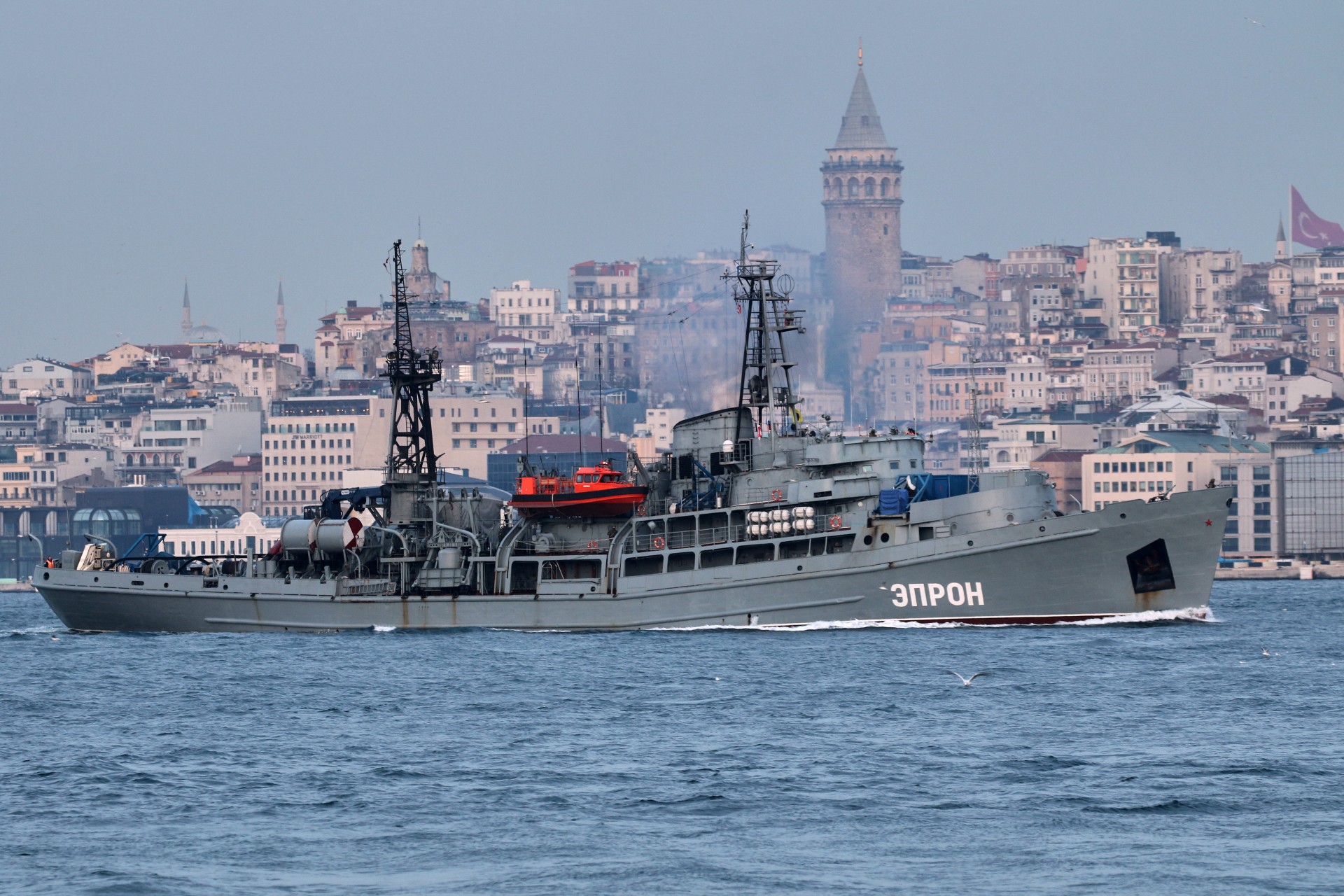
Soon after Russian troops began attacking Ukraine, Kyiv asked Turkey to close its waterways and airspace to Russia, something you shouldn't expect to see happening anytime soon.
There are a raft of legal and political reasons why Turkey is highly unlikely to respond to the Russian invasion by closing the Bosphorus and Dardanelles waterway that provides access to the Black Sea.
Ankara has complete sovereignty over the straits. Yet it is a party to a legally binding international treaty, the Montreux Convention, that regulates its decision to deny access to the crucial waterways.
Omer Celik, spokesperson for Turkey's ruling AKP, appeared to downplay suggestions that the Russians could be cut off. "Turkey will use its power over the issues that could escalate the situation to establish peace. Every application by different states is judged by their merits and criteria," he said about the Ukrainian request.
The Montreux Convention, which was signed by Turkey, the United Kingdom, the Soviet Union and six other states in 1936, clearly allows warships belonging to the Black Sea countries to sail through the straits without any intervention. The convention only limits the timing and the size of the ships.
Russia-Ukraine war: Why Turkey isn't likely to close the Bosphorus
Ukrainian President Volodymyr Zelensky said in a tweet that Ukrainian forces were fighting Russian troops for control over the Chernobyl plant located north of the capital Kyiv.
“Russian occupying forces are trying to take over the Chernobyl Nuclear Power Plant. Our soldiers are giving their lives so that the tragedy of 1986 does not happen again," Zelensky said, referring to the nuclear disaster that took place there in 1986, which has rendered the area uninhabitable for people ever since.
“This is a declaration of war against the whole of Europe,” he added, saying he had reported the developments to the Swedish prime minister.
The White House has tweeted that US President Joe Biden held a meeting with his security team in the situation room on Thursday morning to discuss the developments in Ukraine.
According to the White House accont, Biden said he would “hold Russia accountable for its unprovoked and unjustified attack on Ukraine.”
Many Middle Eastern countries, which have relationships with the US, Russia and Ukraine, may reluctantly be forced to pick a side as the conflict escalates.
From oil prices to sanctions, wheat imports to tourism, Middle East Eye has broken down how the Russian invasion of Ukraine will affect the Middle East.
Oil prices jumped to more than $105 per barrel on Thursday, shaking Middle Eastern markets as the Russian invasion imperilled the energy supply to western Europe.
Saudi Arabia, the world's top exporter of crude oil, and Qatar, one of the leading liquified natural gas (LNG) exporters, have seen high demand for their energy supplies as tensions escalate in eastern Europe.
Officials in the US and Europe had hoped that Qatar could redirect some gas exports to Europe to ease energy strains. Others have urged Saudi Arabia to pump crude oil faster and increase its production capacity.
But Qatar's energy minister, Saad al-Kaabi, has warned that no country can replace Russian gas supplies to Europe with LNG.
Russia-Ukraine war: Seven ways the invasion will affect the Middle East
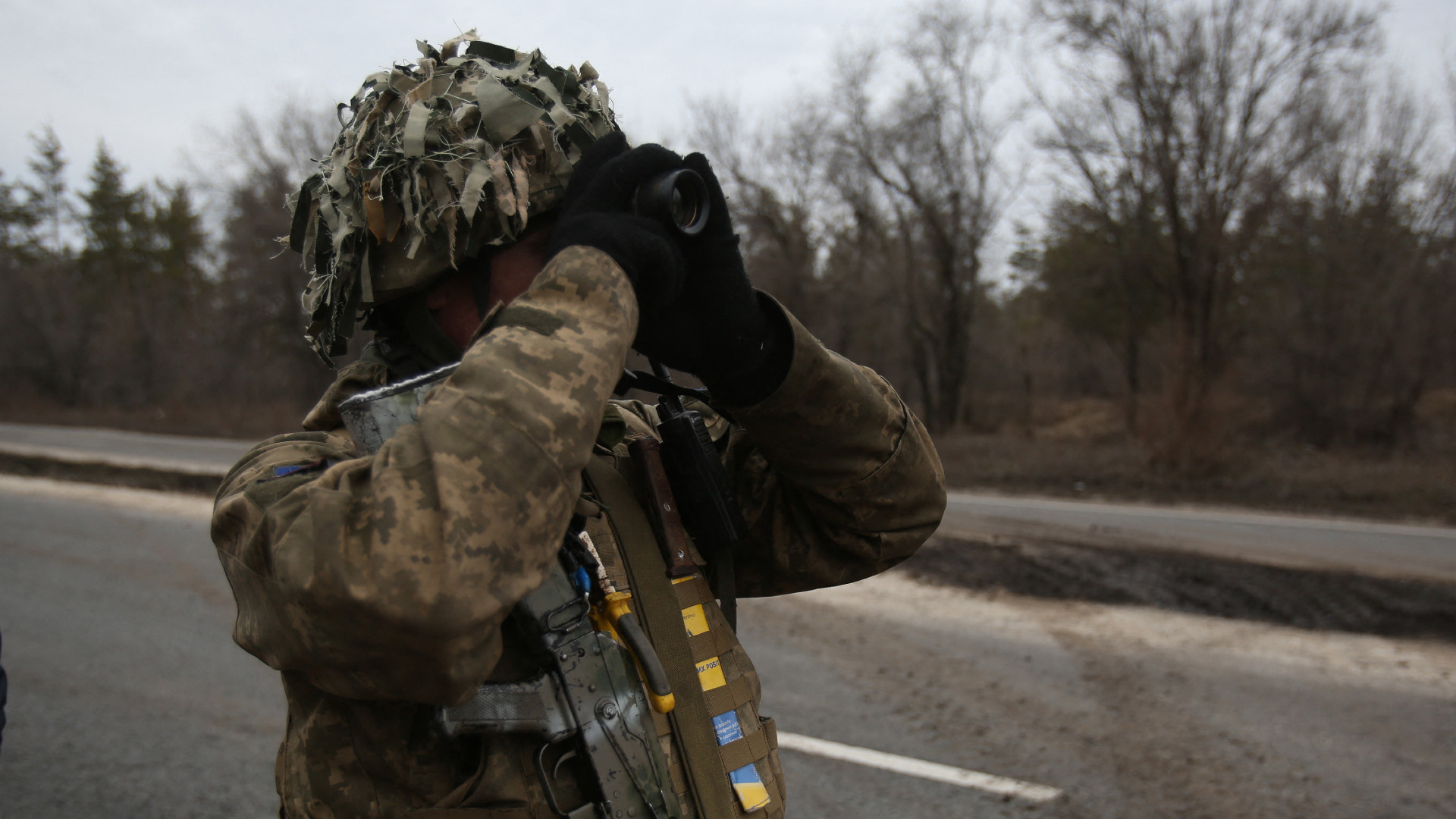
A bomb has struck a Turkish-owned ship off the coast of Ukraine's port city Odessa, as conflict continues to heat up in the country following Russia's invasion.
There were no casualties, Turkey's Maritime General Directorate said, and the ship is now heading into Romanian waters.
"Upon information that the Marshall Islands-flagged Turkish-owned Yasa Jupiter ship was struck by a bomb off the coast of Odessa, it was learned that the ship has no request for help, is en route to Romanian waters, has no casualties and is safe," the authority said on Twitter.
Turkey has called on Russia to withdraw from Ukraine and has supported the latter's territorial integrity.
Russian and Ukrainian forces are fighting for control over an airbase on the northern outskirts of the capital Kyiv, Ukraine's top military official said on Thursday.
"Fighting is underway for Gostomel airfield," armed forces chief Valeriy Zaluzhny said in a message posted on Facebook.
AFP reporters had earlier seen helicopters flying low over the city from the north, confirming video footage released on social media:
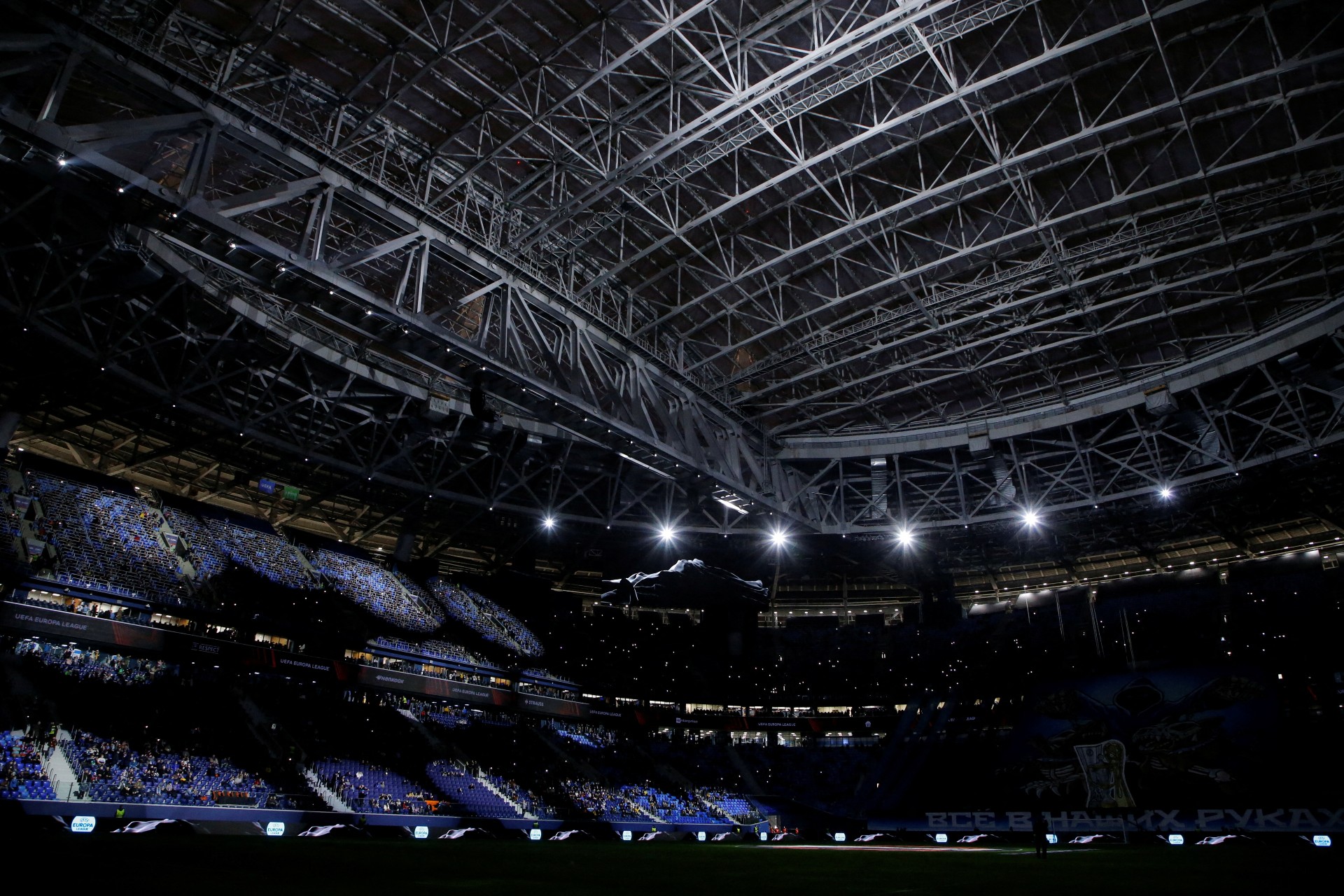
Uefa is moving the Champions League final, set to be played on 28 May, away from St Petersburg’s Gazprom Arena.
The European football governing body’s executive committee has been called for an “extraordinary meeting”, and Sky Sports News reports that the decision has been made to play the European final elsewhere because of the Ukraine crisis.
"Following the evolution of the situation between Russia and Ukraine in the last 24 hours, the UEFA President has decided to call an extraordinary meeting of the Executive Committee for Friday 25 February at 10:00 CET, in order to evaluate the situation and take all necessary decisions," Uefa tweeted.
The Russian government has warned against anti-war protesters gathering as discontent appears to grow over the country's invasion of Ukraine.
The Investigative Committee of Russia on Thursday warned citizens of legal repercussions for joining unsanctioned protests related to "the tense foreign political situation".
The warning comes after a prominent opposition activist, Marina Litvinovich, was reportedly detained after calling for demonstrations against the war.
“We will be cleaning up this mess for years to come. Not even us. But our children and grandchildren,” the Moscow-based activist wrote on Facebook earlier on Thursday.
“All we see is the agony of a dying man. Alas, Russia is in agony.”
Videos posted on social media appeared to show small scale anti-war protests already taking place in Russia, with demonstrators in the city of Yekaterinburg seen chanting "No to war":
A high profile Russian polling agency, Levada Center, said in a statement on Thursday that for the "first time in months we are seeing the beginning of an anti-war movement.”
While both Israel and Turkey have publicly condemned Russia's invasion of Ukraine - and Iran has blamed Nato but called for an end to hostilities - most Arab states have largely refrained from taking a position on the matter.
So far, Qatar and Libya appear to be the only Arab governments that have expressed any public position.
Qatar’s ruler Emir Sheikh Tamim bin Hamad Al-Thani had a phone call with Ukrainian President Volodymyr Zelenskyy on Thursday, in which he reportedly "called on all parties to exercise restraint and resolve the dispute through constructive dialogue and diplomatic methods, as well as the settlement of international disputes by peaceful means, and not to take any actions that would lead to further escalation."
Libya’s foreign minister, Najla Mangoush, also tweeted that her country strongly condemned “what happened in the Republic of Ukraine, from a military attack launched by Russia, which is a violation of international law, and we renew the call for calm and retreat.”
Although the Syrian government has, unsurprisingly, voiced support for its close ally Russia in the Ukraine crisis so far, an organising body representing Syrian opposition officials on Thursday condemned the Russian invasion.
"The Syrian National Coalition condemns Russia's attack on Ukraine and invites the world to stand firm against it," the National Coalition for Syrian Revolution and Opposition Forces said in a statement.
"As Syrian people, we stand by the friendly Ukrainian people and support their resistance against Russia."
Turkish President Recep Tayyip Erdogan said his country supported Ukraine's struggle to protect its "territorial integrity" in a tweet on Thursday.
His comments come as Russian forces moved into the Kyiv Oblast, edging ever closer to the capital.
"Turkey supports Ukraine's struggle to protect its territorial integrity," Erdogan said in a tweet.
"We sincerely regret that Russia and Ukraine, which we see as friendly countries and with whom we have close political, economic and social relations, come face to face in this way."
As the world's largest importer of wheat, Egypt expects to be severely affected by possible disruptions to wheat supplies following Russia's attack on Ukraine.
The most populous Arab country - home to 102 million - imported 12.5m tonnes of wheat in 2020-21, with almost 85 percent of it coming from Russia and Ukraine.
"Egypt will be deeply affected in case the war erupts between Russia and Ukraine," Hesham Abuldahab, a member of the grains section at the Cairo Chamber of Commerce, told Middle East Eye before the invasion. "Most of our wheat imports come from these two countries."
Once one of the world's great breadbaskets, Egypt has lost most of its farmland over the decades to urban sprawl, as its population continues to grow.
National wheat output amounted to nine million tonnes last year. But this output covers less than 50 percent of local consumption.
Most of the wheat is used in the production of bread for Egyptians. Most of that is then distributed within the nation’s food rationing system, in which the vast majority of the country is enrolled.