
Live: At least 137 people killed by Israel recovered from rubble in Rafah

Live Updates
Hamas has confirmed the transfer of three Israeli captives to representatives from the International Committee for the Red Cross (ICRC).
The three female captives returned to Israel are Romi Gonen, Emily Damari and Doron Steinbrecher.
The Israeli Army confirmed in a statement that the Red Cross has informed them it has completed the transfer of three Israeli captives.
A Hamas official told Reuters that a handover of three female Israeli captives to the International Committee of the Red Cross (ICRC) is underway.
The announcement comes after images from the Gaza Strip showed Red Cross vehicles entering the heart of the besieged enclave.
Vehicles belonging to the International Committee of the Red Cross (ICRC) have been seen entering the heart of Gaza City as the ceasefire takes effect across the besieged enclave.
The ICRC is expected to receive three Israeli captives in exchange for hundreds of Palestinian prisoners.
Images from the enclave showing Hamas fighters could deal a major blow to Israel, which has vowed to remove the group from Gaza.
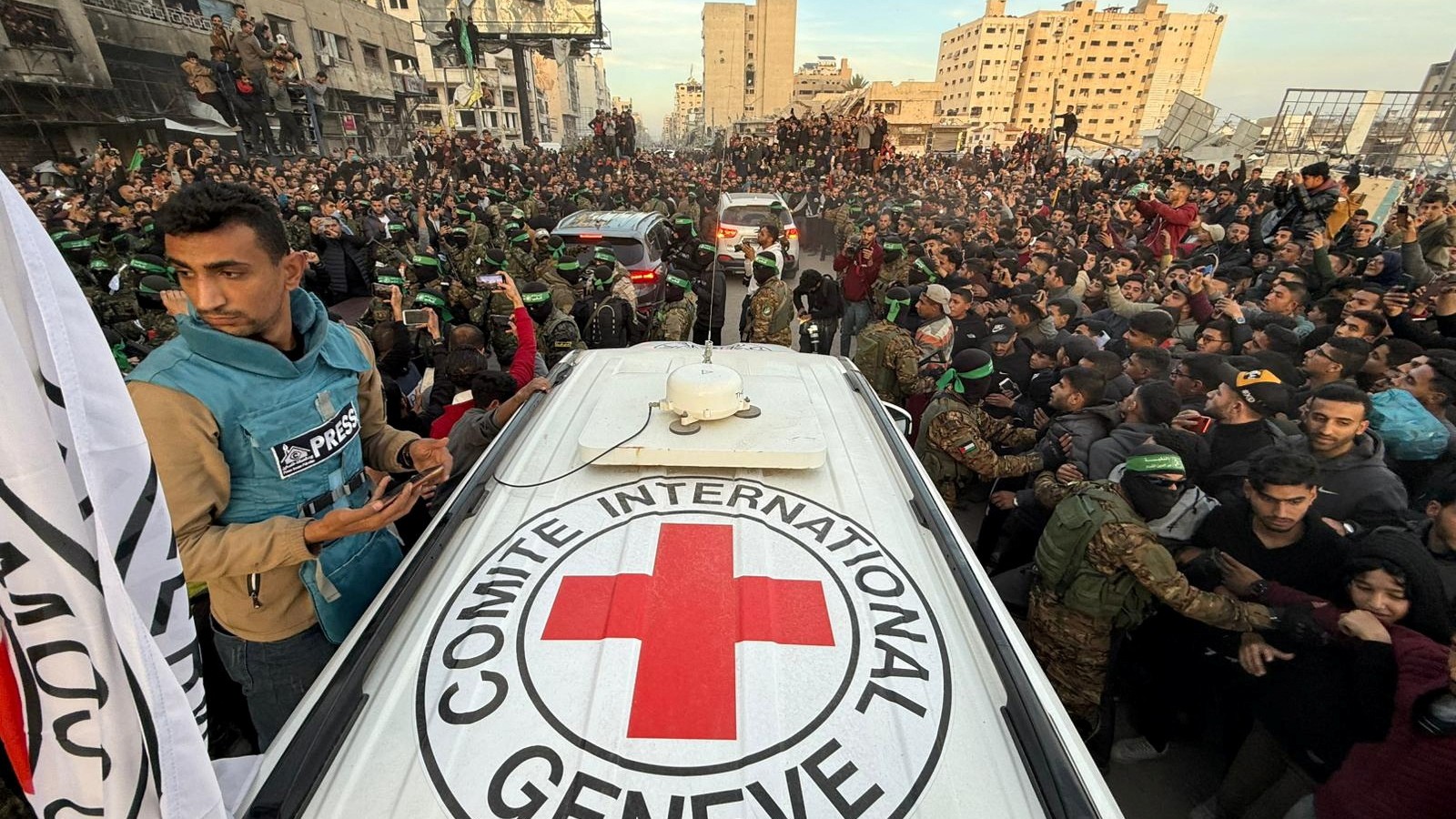

Footage shows a Red Cross envoy heading to Gaza to retrieve three female captives scheduled for release under the ceasefire agreement.
Israel's Channel 12 reported that the International Committee of the Red Cross (ICRC) has initiated the process of receiving the three captives held in the Gaza Strip.
An ICRC official also told Reuters that the Red Cross team in Gaza is on its way to collect the captives.
Various Israeli reports indicate the Red Cross will take the women to a special army unit in Gaza. From there, the female captives will be taken to a military facility in Israel for a health assessment before they are taken to a hospital to meet their families.

Mohammed Mushtaha, 29, eagerly awaited the ceasefire to return to his family home in west Gaza City’s Tal al-Hawa after nine months of displacement across various shelters.
However, the dream of going back to normalcy quickly turned into a nightmare. Now residing with his family alongside four other families in their relative’s house in Gaza City’s Shujaiya neighbourhood, Mushtaha shared the anxious moments leading up to their attempted return.
“We haven’t slept since yesterday, thinking about our house,” he told Middle East Eye. “My mother packed all our belongings to avoid wasting a moment when we could finally return.”
At 8.40am (6.40am GMT), Mushtaha and two of his brothers hurried toward their neighbourhood, their hearts racing with anticipation and homesickness. But within minutes, their hopes turned into terror as they realised Israeli tanks were still bombing.
“A dreadful sound of Israeli artillery shelling stopped us in our way,” he said. “Passers-by coming from Tal al-Hawa warned us not to proceed. The bombing was still ongoing.”
Half an hour later, when he returned to Shujaiya, Mushtaha received a devastating call from a neighbour. Their four-storey building had been reduced to rubble.
“I hid my tears because all my family members were looking at me, hoping to hear that our house was still standing,” he said. “My mother fainted when I told her the truth.”
Read more: Gaza ceasefire begins after Israel uses delay to kill Palestinians
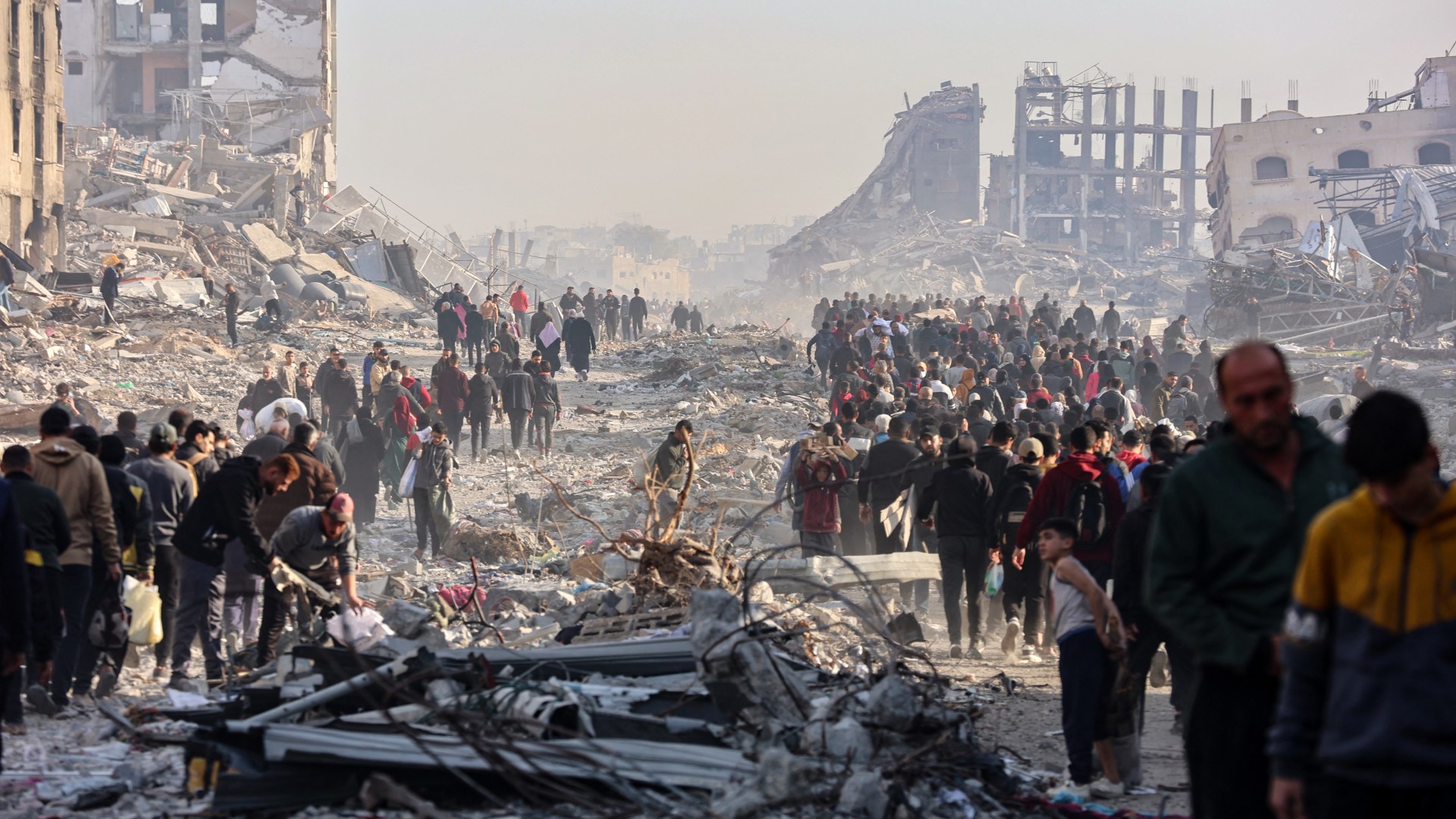
The Israeli Prison Service said it is working on how it will process the release of the Palestinian prisoners as part of the ceasefire agreement.
Earlier on Sunday, the service received a list of prisoners who will be transferred to the central reception point in Ofer prison, near Ramallah.
The Red Cross will then identify the prisoners and wait for the arrival of captives held in Gaza to be released. Once they receive the captives, the prisoners will then be taken from Ofer to the designated release points.
The Wafa news agency reports that the Palestinian Authority (PA) will host an "extraordinary meeting" on Sunday to discuss ways to streamline aid efforts in the Gaza Strip.
Key ministries involved include the Ministry of Social Development, the Ministry of Public Works, the Ministry of Local Government, the Palestinian Ministry of Health, the Water and Energy Authorities and the Palestine Red Crescent Society.
Mohammed Abu al-Rob, director of the government communications office, confirmed in a statement to Wafa that the meeting aims to enhance coordination between the government and international relief agencies, focusing on emergency response operations in the region.
He highlighted ongoing collaboration between the Ministry of Public Works and the United Nations Development Programme (UNDP) to initiate the first phase of rubble removal in vital areas of Gaza in partnership with local authorities.
Rob also discussed the critical cooperation between the Palestinian Ministry of Health and international health organisations operating in Gaza.
The Palestine Red Crescent Society will be distributing aid it receives from its international counterparts, Rob said.
US President-elect Donald Trump welcomed the expected release of three Israeli captives.
Writing on his social media app Truth Social, Trump said: "Hostages starting to come out today. Three wonderful young women will be first."
The UK's Foreign, Commonwealth and Development Office (FCDO) welcomed the release of British-Israeli captive Emily Damiri, who was named as one of the three female captives scheduled for release from Gaza.
“The UK government welcomes the reports that British national Emily Damari is on the list of hostages to be released by Hamas today,” the FCDO said in a statement.
“We stand ready to support her upon her release.”
The London Metropolitan Police arrested one of the organisers of the pro-Palestine rally on Saturday in central London after imposing restrictions banning protesters from marching towards the headquarters of the BBC.
The police said 77 arrests were made during Saturday’s protest, which organisers estimated drew 100,000 people.
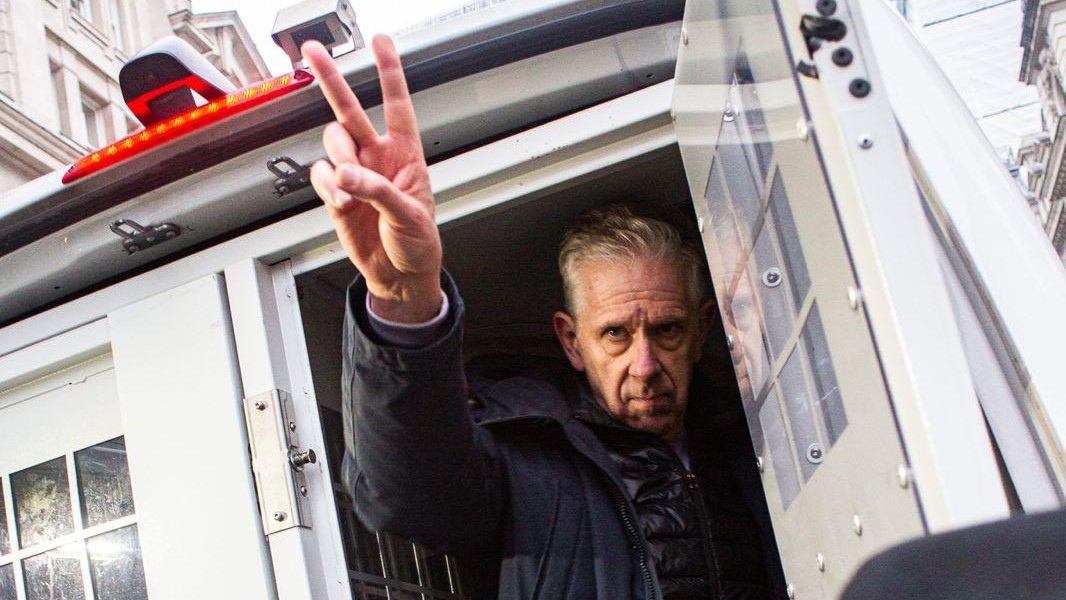
Among those arrested was Chris Nineham, the vice-chair of the Stop the War Coalition, who served as the chief steward for the national protest for Palestine.
Footage taken by Middle East Eye showed police officers in riot gear surrounding Nineham and bundling him into the back of a police van after a small group of protesters left Whitehall to lay flowers in Trafalgar Square in commemoration of the deaths of Palestinian children.
Key restrictions imposed by the police included a ban on beginning the march outside the BBC, citing concerns about its proximity to a synagogue.
On Saturday, protest organisers said coalition leaders, several speakers and members of the Jewish Bloc would walk silently towards the BBC.
The plan was to lay flowers as a symbolic gesture to condemn what they described as the BBC's complicity in its Gaza coverage.
Organisers denied claims made by the Met that protesters had forced their way through a police cordon to march towards the BBC after ending their protest in Whitehall.
The Met said it was launching an investigation and claimed there was a "coordinated effort led by the protest organisers to march out of Whitehall in a clear breach of the conditions".
“There is video footage of one of the organisers clearly inciting the crowd to join a march and one of the organisations involved has released a statement this evening confirming as much," said Commander Adam Slonecki, who led the policing operation.
Read More: London's Met Police arrests organiser of national Gaza rally
Egyptian sources told Reuters that around 200 aid trucks, including 20 carrying fuel, have started gathering at the Israeli-controlled Karem Abu Salem (Kerem Shalom) crossing.
The sources said the trucks would pass through the Karem Abu Salem crossing until the completion of the Rafah border crossing into southern Gaza from Egypt.
Hamas said it is expecting Israel to hand over a list of names of 90 Palestinian prisoners scheduled for release on Sunday in exchange for three Israeli women held captive by the group in Gaza.
In a statement to Reuters, the Palestinian group said the prisoners set to be released on the first day of the Gaza ceasefire include women and children.