Turkey-Syria earthquake: As it happened

Live Updates
China has become the latest country to announce emergency aid for Turkey, with $5.9m in emergency aid, the state broadcaster CCTV said on Tuesday.
In addition China’s Red Cross will give emergency aid of $200,000 each to Turkey and Syria.
Australian Prime Minister Anthony Albanese said that his country would provide an initial $6.94m in aid to the affected countries.
"Australia's assistance will target those in greatest need," Albanese said in a statement.
In a similar move, New Zealand's Prime Minister Chris Hipkins, also announced $0.94m in aid to Turkey and Syria.
Sheikh Mohammed bin Rashid, Vice President and Prime Minister of the UAE, announced the dispatch of urgent humanitarian aid worth $13.6m to Syria.
While Germany said it will provide Turkey with "all the help that we can mobilise", German Interior Minister Nancy Faeser said on Monday.
Germany’s Federal Agency for Technical Relief (THW) will increase its humanitarian assistance to northwest Syria by $1.1m.
Hello MEE readers. The death toll has risen again in Turkey, putting the total number of people killed in the earthquakes in that country and Syria to more than 4,000.
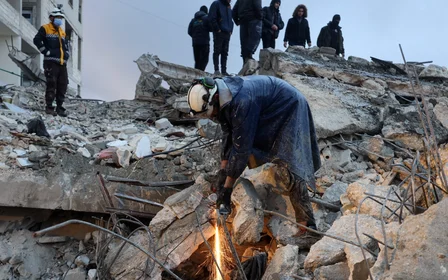
Rescue workers are continuing to work through the night and early morning to locate survivors trapped under the rubble.
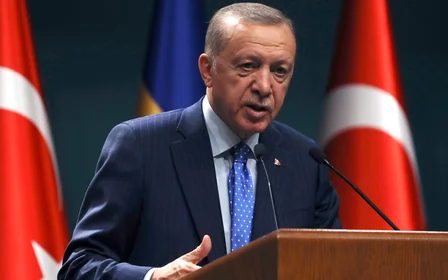
US President Joe Biden spoke on the phone with his Turkish counterpart Recep Tayyip Erdogan, both offering his condolences and support to Ankara in relief efforts. The US has already sent multiple teams to Turkey to assist the country's ongoing operations.
Among the latest countries to send support is South Korea, which announced it has issued an order to send rescue workers and emergency medical items to Turkey.
The death toll is expected to rise significantly, with the World Health Organization's senior emergency officer for Europe telling AFP that there is a "continued potential of further collapses to happen, so we do often see in the order of eight-fold increases on the initial numbers".
We will pick up our coverage of the situation in the morning, but for now make sure to follow us on Twitter, Instagram, Facebook and TikTok for the latest news.
Turkey's death toll from the earthquakes in the southern part of the country has jumped to 2,921 people, with an additional 15,834 injuries, according to the Turkish disaster agency, Afad.
The total number of deaths across Turkey and Syria has now risen to more than 4,000 people. In Syria, at least 1,444 people were killed and about 3,500 injured, according to figures from the Bashar al-Assad government and rescue workers in the rebel-held northwestern region of the country.
Iran, a close ally of the Bashar al-Assad government, has offered help to Syria and Turkey, according to Iranian official media. Fars News reported that Iranian President Ebrahim Raisi issued separate messages of condolences to Assad and Turkish President Recep Tayyip Erdogan and Bashar Assad.
Six teams are being dispatched from Iran’s Red Crescent Society, according to the Iranian news agency Press TV.
A top UN official has said that the world body's efforts in providing relief to Syria after its earthquake has been severely hampered due to damage to roads, fuel shortages and harsh winter weather.
The two 7-plus magnitude tremors, which also left more than 2,300 people dead in Turkey, sent people rushing into the streets in Syria's rebel-held northwest, where past air strikes and shelling have already traumatised the population and weakened infrastructure, particular hospitals.
"The infrastructure is damaged, the roads that we used to use for humanitarian work are damaged, we have to be creative in how to get to the people... but we are working hard," UN resident coordinator El-Mostafa Benlamlih told Reuters.
Even prior to the earthquake, the UN estimated that more than four million people in northwest Syria, many displaced by the 12-year conflict and living in camps, depended on cross-border aid.
The UN says the number of people in need of humanitarian support is greater than at any point since the war began, with 70 percent of the population requiring aid.
Now, "they are the same people - suffering more," Benlamlih said.
He added that many people whose homes had been destroyed were spending the night sleeping out in the open or in cars, often in freezing temperatures, without adequate access to basic items like jackets and mattresses.
Experts have told MEE that hypothermia is a severe danger to many of the survivors of the quake.
Turkey earthquake: Rescue efforts across region after deadliest disaster in decades
US President Joe Biden spoke with Turkish President Recep Tayyip Erdogan on Monday to offer condolences and reaffirm Washington's readiness to assist in rescue efforts after two huge earthquakes killed thousands across southern Turkey and northwest Syria.
In a White House statement, Biden "noted that U.S. teams are deploying quickly to support Turkish search and rescue efforts and coordinate other assistance that may be required by people affected by the earthquakes, including health services or basic relief items".
The US has sent multiple teams over to Turkey to assist in rescue and aid efforts.
The White House has said in another statement that "U.S.-supported humanitarian partners are also responding to the destruction in Syria".
The death toll continues to rise in both southern Turkey and Syria after two earthquakes with a magnitude of more than seven hit the countries. As of this latest update, more than 3,700 people have been killed across both countries.
In Turkey, the death toll currently stands at 2,316, while an additional 13,293 have been injured, according to the country's disaster management agency, Afad. It was the deadliest earthquake in Turkey's history since 1999.
In Syria, at least 1,444 people were killed and about 3,500 injured, according to figures from the Bashar al-Assad government and rescue workers in the rebel-held northwestern region of the country.
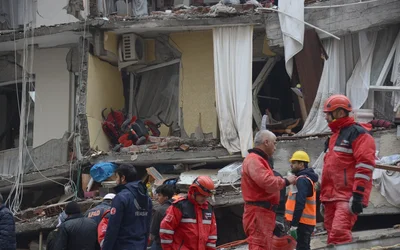
The Turkish government has deployed thousands of search and rescue workers to aid in relief efforts, however, experts told MEE that many of the survivors face several dangerous challenges, including the risk of hypothermia.
Meanwhile, international assistance has been pouring in, as many countries are sending resources to Turkey to aid people in need. The US has sent two, 79-person teams to assist Turkey in rescue efforts, and also dispatched a team of disaster response specialists.
Aid from Gulf countries is also coming to both Turkey and Syria. The UAE said it would dispatch search and rescue teams to both countries, establish a field hospital in Turkey and send emergency supplies to Syria. Dubai also pledged $13m in humanitarian aid to Syria.
Qatar has said it was sending a search and rescue team and hospital equipment to Turkey.
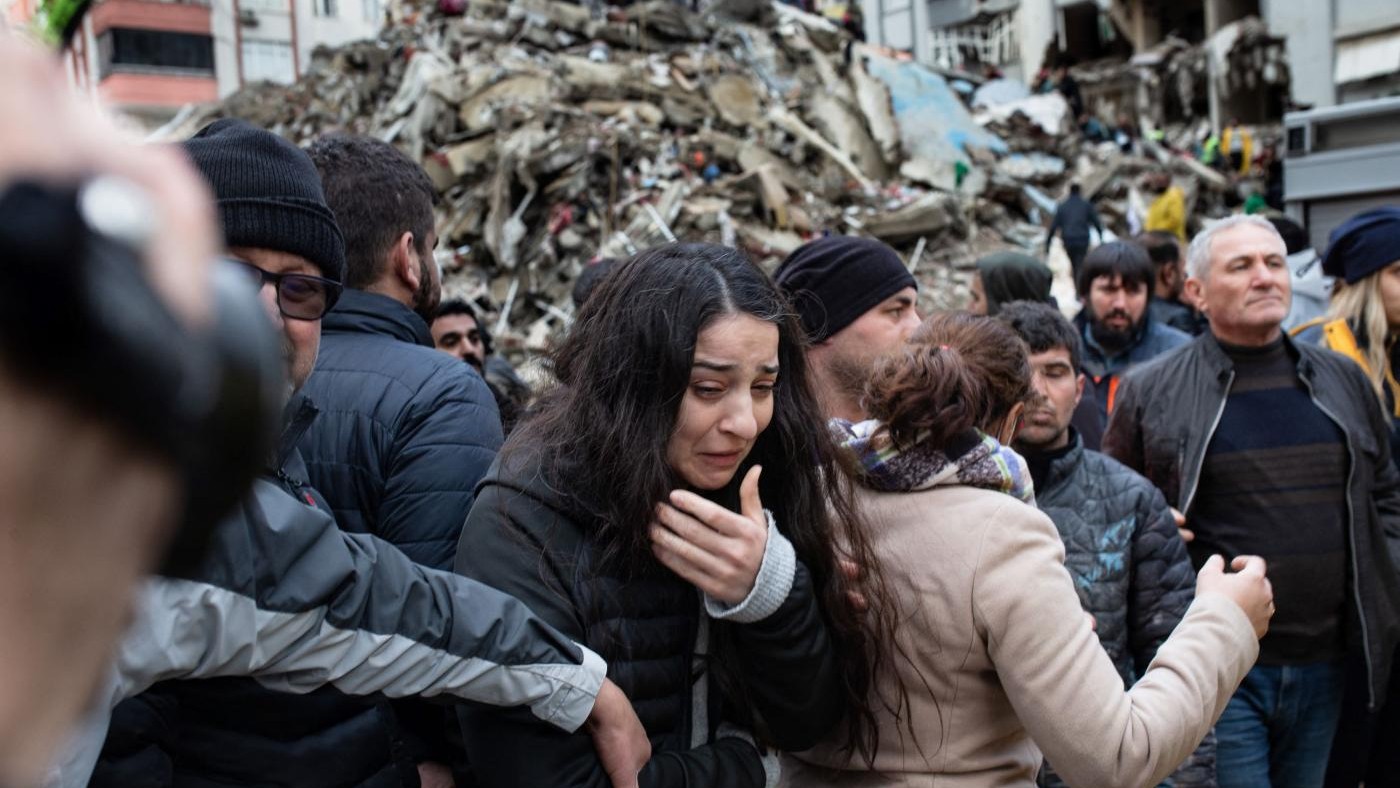
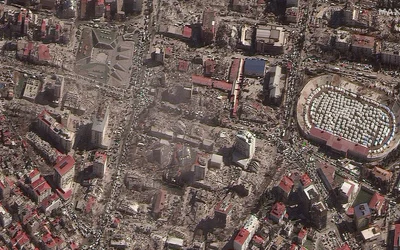
In addition to killing thousands of people, the quakes have also caused devastating damage to the area's infrastructure. In Turkey, 6,217 buildings were destroyed, according to Orhan Tatar, director general of earthquake and risk reduction at AFAD.
Homes, hospital buildings, roads, and schools have collapsed, creating an even more difficult situation for relief workers. The UN said that disruptions, including blocked roads and power cuts, were complicating efforts for the world body to provide aid to refugees and displaced people in Turkey and Syria.
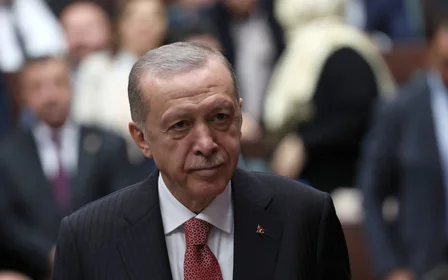
Turkish President Recep Tayyip Erdogan has declared a national week of mourning for the country.
MEE will continue to provide updates. To stay informed on the latest from the earthquakes in Syria and Turkey, follow us on Twitter, Facebook, and Instagram.
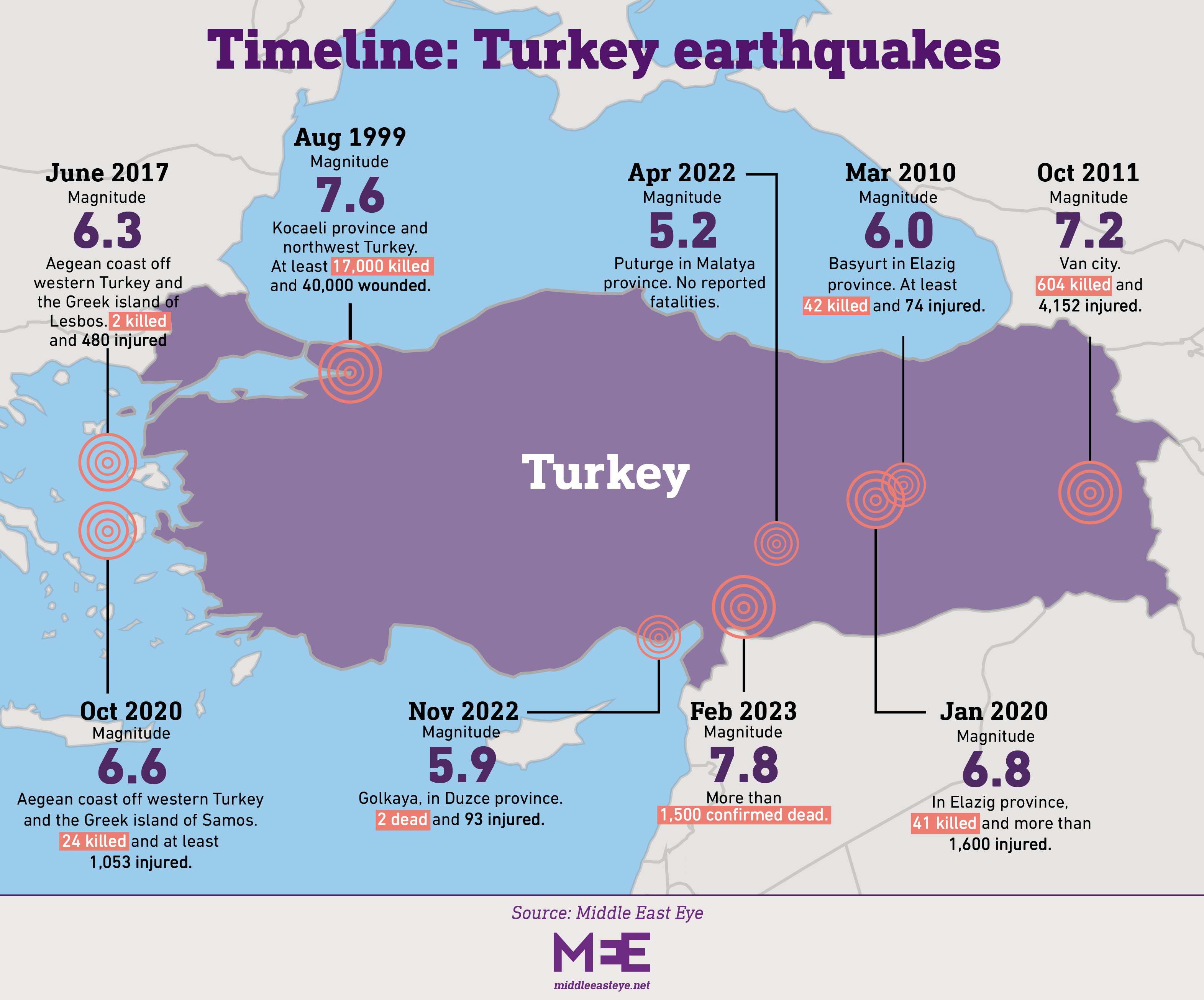
MEE takes a look at the history of earthquakes in Turkey between 1999 and 2023.
1999
In August 1999, a powerful magnitude 7.6 earthquake shook the densely populated region of Marmara, located south of Istanbul, for 45 seconds. At least 17,000 were killed, while around 40,000 people were injured. The earthquake was the deadliest in Turkey's history since 1939, and also triggered a tsunami in the Sea of Marmara.
Then, in November another magnitude major earthquake with a magnitude of 7.2 hit the town of Duzce, just 100 km (62 mi) from the quake in Marmara, causing at least 845 deaths.
2003
In May 2003, a magnitude 6.4 earthquake hit the province of Bingol, killing at least 167 people, including 83 children.
2010
In March 2010, a 6.1 magnitude earthquake killed at least 42 people in the eastern province of Elazig, and injured 74 people.
2011
Two earthquakes hit the eastern Turkish city of Van near the end of 2011. The first one, with a magnitude of 7.2, struck on 23 October and the second one, which was a magnitude of 5.6, hit on 9 November.In total, the earthquakes claimed 644 lives and led to more than 4,000 injuries.
2017
In June 2017, a 6.3 magnitude earthquake hit the Aegean coast off of western Turkey, killing two people and injuring 480.
The epicentre was just six miles south of the Turkish resort of Bodrum and 10 miles from Kos. It struck at the start of the peak tourist season for both Kos and Bodrum.
2020
In January 2020, a magnitude 6.8 earthquake struck Elazig in the eastern Anatolian region of Turkey, killing at least 41 people and injuring more than 1,000. The quake was also felt in the neighbouring countries of Syria, Georgia and Armenia.
In October that year, a magnitude 7.0 earthquake levelled buildings in eastern Greece and western Turkey on 30 October, killing at least 117 people and injuring nearly 800. Much of the damage in Turkey occurred in and around the Aegean resort city of Izmir.
2022
In April 2022, an earthquake with a magnitude of 5.2 hit the town of Puturge in the eastern province of Malatya. No deaths or injuries were reported.
The death toll continues to climb as more deaths are reported in Syria. At least 1,444 people were killed in Syria and about 3,500 injured, according to figures from the Bashar al-Assad government and rescue workers in the rebel-held northwestern region of the country.
The latest figures in Turkey from the Disaster and Emergency Management Authority (Afad) have the death toll at 2,316.
The death toll from the earthquakes in Turkey and Syria has now risen to more than 3,000 people.
In Turkey, the latest death toll is 2,316 people, according to Turkey's Disaster and Emergency Management Authority (Afad), and 13,293 people were recorded as injured. So far, 7,340 people were taken out of the rubble alive.
In Syria, at least 1,293 people were killed, according to figures from Bashar al-Assad's government and rescue workers in the rebel-held northwestern region.
Monday's casualties already mark the highest death toll from an earthquake in Turkey since 1999, when a tremor of similar magnitude devastated the heavily populated eastern Marmara Sea region near Istanbul, killing more than 17,000.
The Turkish government has dispatched thousands of search and rescue workers to southern Turkey, which was hit by two earthquakes, but they are facing a formidable enemy: hypothermia.
But rescuers and survivors face a formidable enemy: hypothermia.
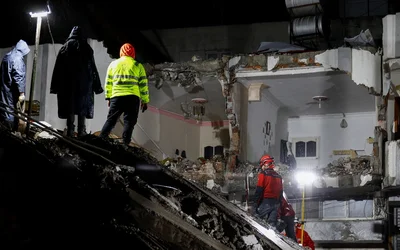
Several earthquake-hit cities like Malatya, Kahramanmaras, Gaziantep, and Diyarbakir face cold, rain and even some snow as temperatures dip near zero.
Bulent Ozmen, an academic specialising in disaster management, told Middle East Eye that the temperatures will drop further at night as the digging becomes more challenging due to darkness.
And meteorology engineer and disaster management specialist Mikdat Kadıoglu said people could be victims of hypothermia even if the temperatures stay above zero.
Dr Servar Yilmaz, the chairman of Hatay Doctors Chamber, said there was snow and rain in the city and serious cold. “We have to be fast to reach the victims,” he said. “They may just die out of cold weather rather than the actual injuries they have.”
Read more here.
The United States is sending two, 79-person search-and-rescue teams to assist Turkish officials responding to the earthquake that has killed at least 2,700 people in Turkey and Syria.
John Kirby, a spokesman for the National Security Council, announced the news on Monday, describing the earthquakes as "a very fluid situation" and saying that more conversations are happening about what else the US can do.
Washington has also deployed a team of disaster response specialists. The Disaster Assistance Response Team "will work in close coordination with Turkish authorities on the front lines, as well as with our partners on the ground and agencies across the US government," according to a statement from USAID administrator, Samantha Power.
State Department spokesperson Ned Price told reporters the US is looking at additional funding resources that are available to respond to the earthquake. He added that the US consulate in Adana, Turkey, will be able to host rescue teams.
The Turkish disaster management agency, Afad, said the death toll has now risen to 1,762, with the number of people injured also being raised to 12,068.
The Turkish government has said at least 5,000 buildings have collapsed.
Turkish President Recep Tayyip Erdogan announced on Monday a seven-day period of national mourning for the earthquakes that hit southern Turkey.
“Due to the earthquakes that took place in our country on Feb. 6, a national mourning period was declared for seven days. Our flag will be hoisted at half-mast until sunset on Sunday, Feb. 12, in all our country and foreign representations,” Erdogan said on Twitter.
The death toll in both Turkey and Syria has risen to more than 2,700 people, as rescue teams continue efforts to search for survivors in frigid temperatures.
In Turkey, Health Minister Fahrettin Koca said the death toll stood at 1,651, while another 11,119 people were recorded as injured. And at least 1,073 people were killed in Syria, according to figures from the government of Bashar al-Assad as well as rescue workers in the rebel-held northwestern region.