
Live: Trump says US not seeking to extend interim deal with Iran

Live Updates
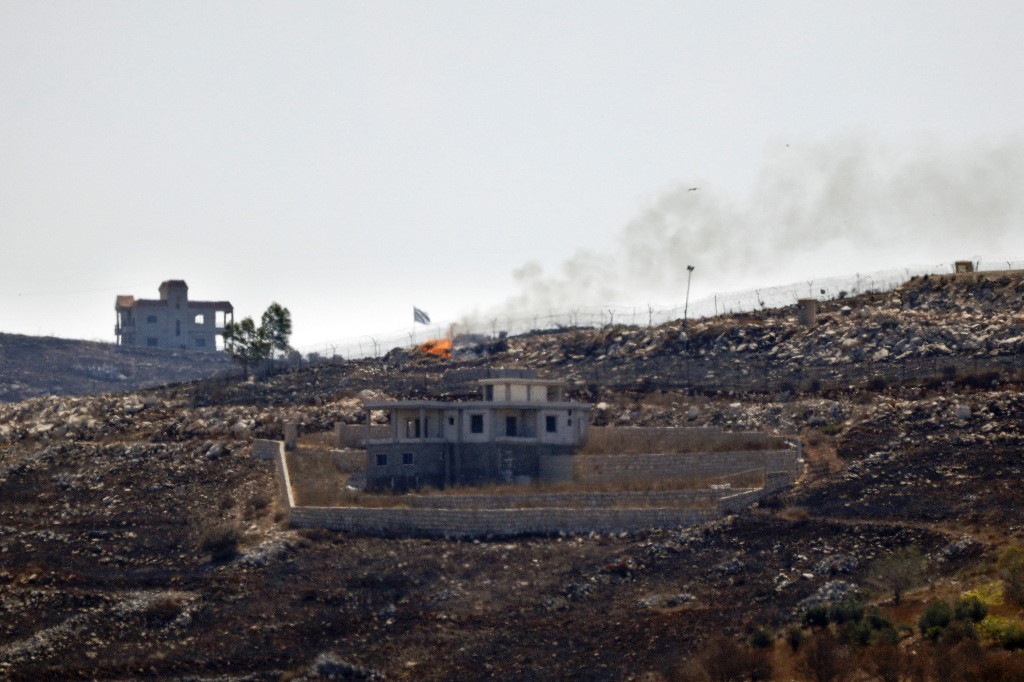
Lebanese Prime Minister Nawaf Salam on Wednesday condemned Israel's "systematic destruction" in the country's south as a violation of international law, as Israel's defence minister said its military was "destroying all the houses" there.
Salam said Israeli "attacks, incursions, demolitions and the systematic destruction of homes", infrastructure, government buildings and places of worship "represent a serious violation of the principles and rules of international law and international humanitarian law".
He also added that villages and towns "are entirely 'military facilities' does not stand up to any logic and cannot be used as an excuse for destroying them, displacing their inhabitants and preventing them from returning".

The EU and 26 countries condemned Iran's executions of protesters in a joint statement, French Foreign Minister Jean-Noel Barrot said on Wednesday.
The countries called on Iran to listen to its people, take meaningful steps towards ensuring respect for human rights, immediately end the use of the death penalty and release those detained.
An Israeli air strike targeting a three-wheeled vehicle in northern Gaza’s Beit Lahiya killed one Palestinian and wounded several others, Anadolu reported, citing a medical source.
The wounded were taken to a hospital in Gaza City.
Turkish President Recep Tayyip Erdogan on Wednesday accused Israeli Prime Minister Netanyahu's government of seeking to "remove Palestine" from the world's agenda.
"The aim of the Netanyahu government is to remove Palestine from the common agenda of humanity by profiting from chaos and new conflicts in the region," Erdogan said at a joint news conference with his Palestinian counterpart Mahmoud Abbas in Ankara.
"No matter what they do, they will not succeed. The Palestinian cause will continue to grow in people's hearts as they try to destroy it," he said, vowing Turkey would fight for the establishment of a Palestinian state.
Soon after Iranian negotiators reached a Memorandum of Understanding (MoU) with the United States in late June to end months of hostilities, Iran's Supreme National Security Council (SNSC) issued a statement endorsing the agreement.
The statement was signed by Mohammad Bagher Zolghadr, a former hardline Islamic Revolutionary Guard Corps (IRGC) general who had replaced the slain Ali Larijani, a prominent moderate figure who had supported a deal with Washington and was killed in a US-Israeli strike on 17 March.
In Iran, the SNSC secretary, who is appointed by the president, does not have a vote on the council. However, Zolghadr was also appointed simultaneously as the supreme leader’s representative on the council, a position that gives him voting authority.
Zolghadr’s endorsement caught ultraconservative principlists off guard. Apparently unprepared for his support of the agreement, they subsequently launched repeated verbal attacks against him, including spreading claims that his son lives in Austria.
Read more: Iran's new Security Council shake-up reveals growing divisions over US deal
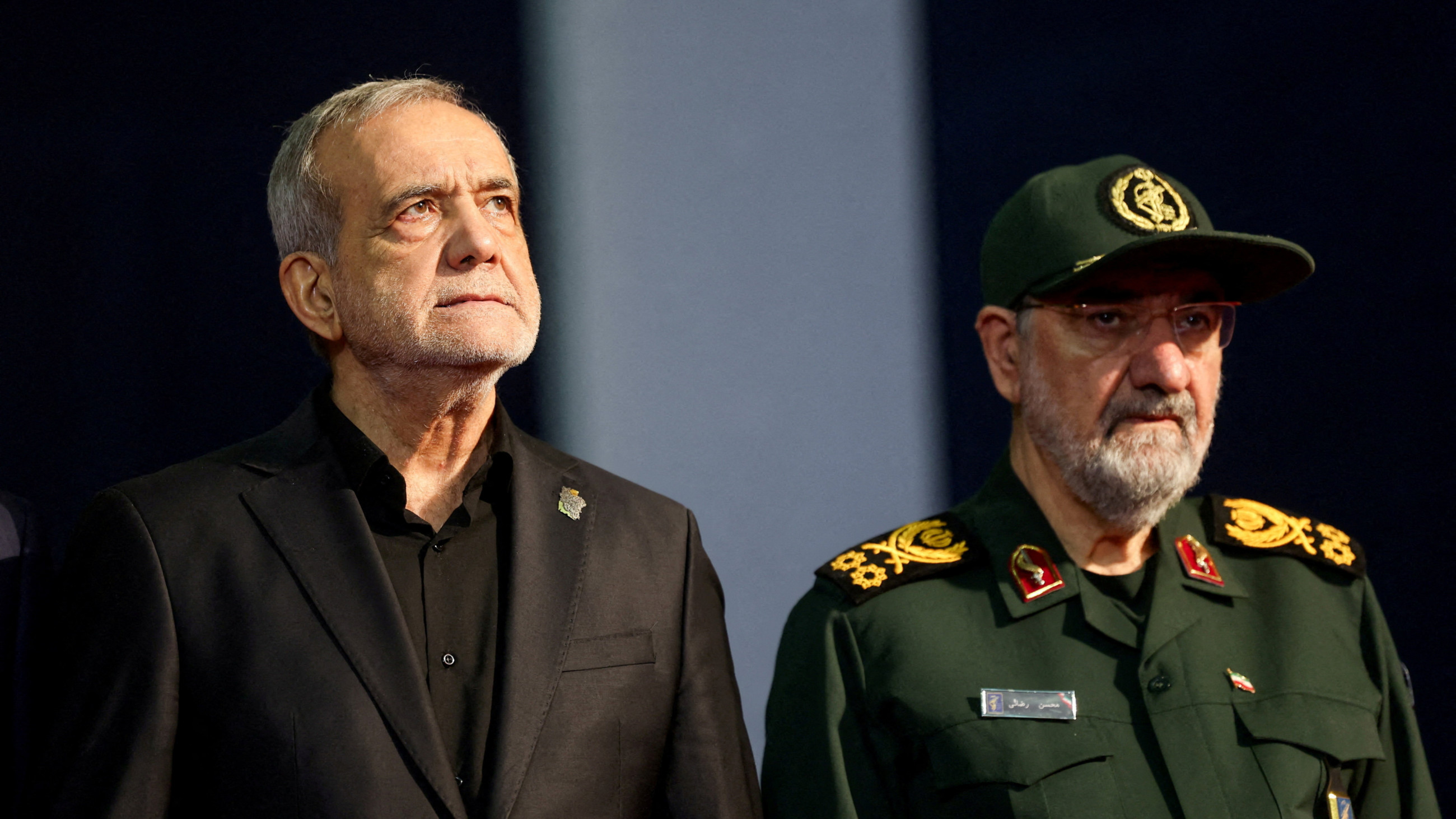
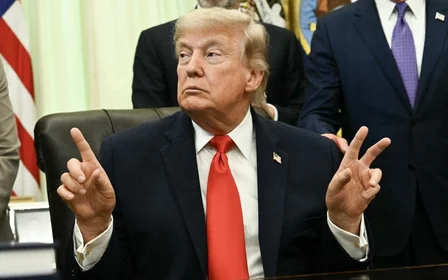
President Donald Trump on Wednesday said the United States is in control of the strategic Strait of Hormuz and will "keep it."
"The U.S.A. has total control over the Strait of Hormuz. I THINK WE WILL KEEP IT!" Trump wrote on his Truth Social platform. "Our Naval Blockade is being called, by everyone, 'A WALL OF STEEL,' and there is nothing Iran can do about it."
Twenty-six nations, including France, the UK and Canada, have condemned the use of capital punishment by Iranian authorities, saying in a joint statement the Islamic republic was executing protesters to "silence dissent".
The countries, joined by the European Union's top diplomat, "condemn in the strongest terms the ongoing executions of protesters and use of the death penalty" by Iran. "The use of capital punishment to silence dissent, intimidate communities, and punish individuals exercising their human rights can never be justified".
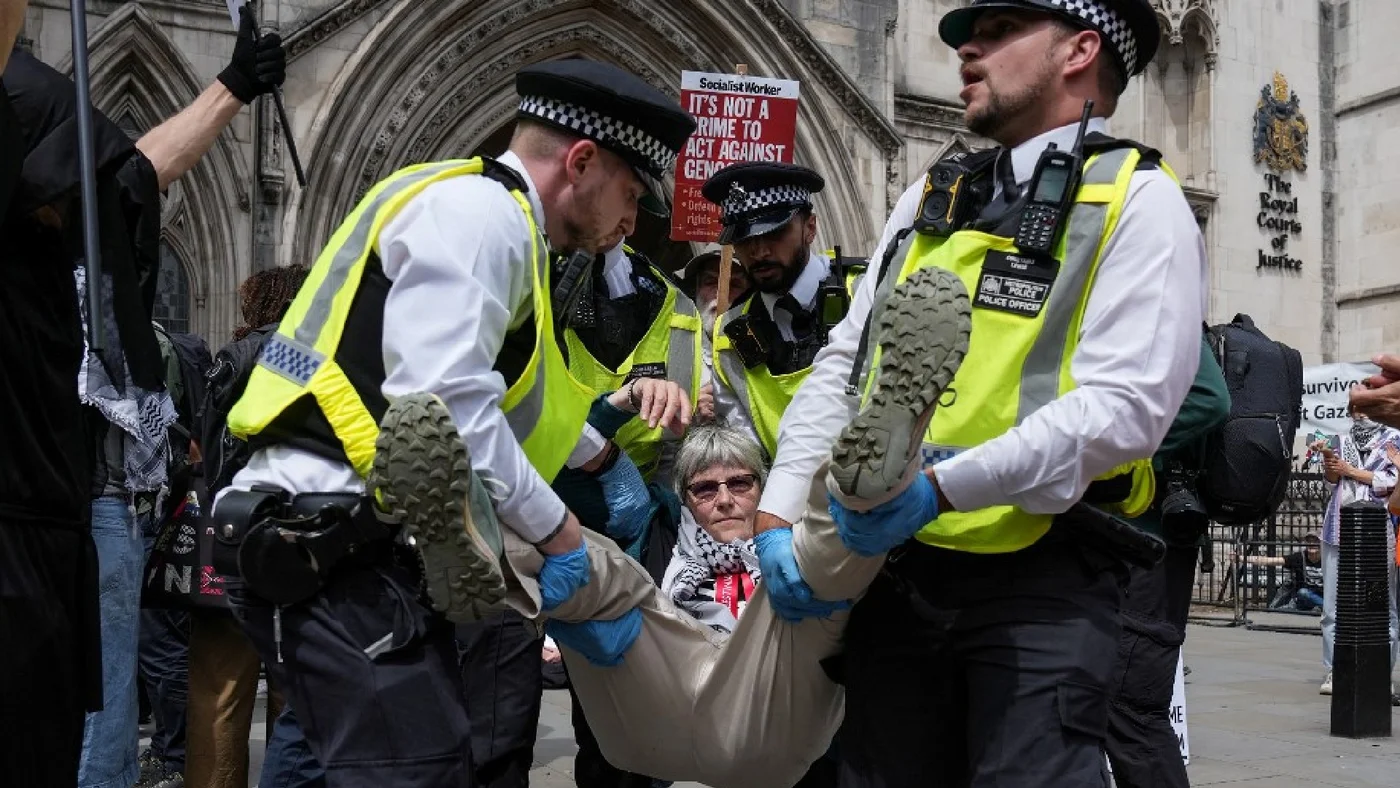
Marji Mansfield, a 70-year-old grandmother of seven, has been waiting for British counterterrorism police to show up at her door.
The anxiety sharpens between five and seven in the morning, when police usually conduct dawn raids, particularly if she has her grandchildren stay overnight.
“It’s been really, really quite scary not knowing when there's going to be the knock at the door,” Mansfield told Middle East Eye.
“This isn't the Britain that I thought I grew up in at all. We've been scared enough to go and sleep elsewhere.”
Mansfield is among scores of activists, many of them elderly, who are awaiting dawn raids from counterterrorism police after publishing videos of themselves inviting support for the banned direct action group Palestine Action.
Since the government proscribed the organisation in July 2025, over 3,000 people have been arrested under the Terrorism Act for participating in silent vigils in support of Palestine Action.
But in June, after the Court of Appeal quashed a High Court ruling and found the ban to be lawful, Defend Our Juries (DOJ) - the group helming the campaign to reverse the ban - called for an "escalation" in activism.
This involved activists inviting support for the group rather than simply expressing support, an offence that can carry a 14-year sentence under Section 12 of the Terrorism Act. So far, most activists have been arrested under the lesser charge of Section 13.
Read more: The activists raided by police over Palestine Action videos
President Recep Tayyip Erdogan has said he hoped more countries would join a defence agreement signed last week between Turkey, Saudi Arabia and Pakistan.
The Mecca Joint Defence Agreement was signed on Friday.
"Our vision for it is not limited to the three countries," the Turkish leader told Asharq Al-Awsat. "Rather we aspire for it to grow, and perhaps appropriate conditions will emerge one day for all countries of the region to gather under its umbrella."
Foreign Minister Hakan Fidan on Saturday said Turkey expected Egypt to join the pact "in the next stage", telling the Anadolu state news agency only "a few technical issues" stood in the way.
Egypt has not commented on the agreement nor on the remarks by Fidan, who will visit Cairo on Thursday and Friday.
Cairo has robust military cooperation with Ankara, but has given no indication it intends to sign up to the new security alliance, which contains a NATO-style clause saying any attack on one would be seen as an attack on all.
Middle East Eye reported on Tuesday, based on senior Saudi sources, that Riyadh opposed Egypt joining the security pact despite Ankara's push for Cairo to be included.
Erdogan said the pact emerged out of the "new circumstances" in the Middle East with regional players seeking to assume greater responsibility for their own security and stability.
"Regional issues should be resolved by regional actors, and with this action, we consider that we have taken a first step toward achieving that goal," he said.
"Resolving regional issues must be carried out away from formulas imposed from the outside. We know very well that solutions imported from abroad only bring disasters," he told the Saudi-owned newspaper.
There were no discussions between Iran and the US to extend the ceasefire because from Tehran's perspective the deal had no start date and therefore there was nothing to extend, a senior Iranian source has told Reuters.
Yemen's Houthis attacked a ship in the Bab el-Mandeb Strait, at the southern entrance to the Red Sea, on Tuesday, Houthi-run news agency Saba reported, and Pakistan said on Wednesday that three of its nationals had been killed in an attack on a ship.
Four crew members of a small cargo ship were killed when it was hit by the Houthis on Tuesday, Yemen's transport ministry said, adding the dead also included an Indonesian.
The fatalities aboard the Egyptian-owned Tihamah marked the first deaths in a Houthi strike on shipping since the Iran war began on 28 February.
The Houthis said the ship was carrying Saudi military equipment. There was no immediate comment from Saudi authorities.
The Houthis declared on 20 July they would impose a naval blockade against Saudi Arabia in the Red Sea in response to what they described as a Saudi siege on Yemen, an allegation Riyadh has denied.
Since then, they have been launching attacks against Saudi Arabia and Yemen's Mocha and Marib, which are controlled by the Saudi-backed, internationally recognised government based in Aden.
Pakistan's interior minister is visiting Iran to discuss regional security, stability and other developments, the Pakistani foreign office said on Wednesday.
Mohsin Naqvi, previously involved in mediation efforts between Iran and the US, is known to be close to the powerful head of the Pakistani army, Asim Munir.
Iranian state news agency IRNA reported late on Tuesday that Naqvi met with Iranian President Masoud Pezeshkian, Foreign Minister Abbas Araghchi and Interior Minister Eskandar Momeni.
"He is discussing bilateral relations, security, regional security and stability, and constructive engagement amongst the parties in the region and regional developments," Pakistani foreign ministry spokesman Tahir Andrabi told reporters in Islamabad.
The Iranian government's website said Naqvi conveyed to Pezeshkian "a message from the Pakistani prime minister and the chief of the army", without specifying its content.
Tehran insists on retaining control of the Strait of Hormuz after the war and wants to charge fees for passage, repeatedly striking ships it accuses of attempting to circumvent its preferred route. The US has imposed a rival blockade on Iranian ports.
Last week Iran said it had agreed a route with neighbouring Oman for ships transiting the strait and was finalising arrangements for jointly managing the strategic waterway.
On Tuesday, the US military announced that it had fired on a Panama-flagged cargo ship that attempted to break the American blockade of Iran's ports.
Good morning Middle East Eye readers,
These are some of the latest developments from across the region:
-
US President Donald Trump told reporters that he does not "trust Iran", and further claimed that the US has full control over the vital Strait of Hormuz. "I don’t trust Iran. I’m the last person to trust Iran; they’ve lied to me constantly. We have total control over the Hormuz Strait right now; they don’t have control," he said.
-
An attack on a commercial vessel in the Red Sea killed at least three Pakistani nationals and left another wounded, Islamabad's foreign minister said on Wednesday. "Pakistan strongly condemns the Houthi attack on a non-combatant commercial vessel," Ishaq Dar said in a post on X.
-
Kurdish news media is reporting that Iranian missiles and drones have targeted a number of locations in Iraq's Erbil, including attacks in the districts of Soran, Khalifan and Harir.
-
Israeli attacks on southern Lebanon remain ongoing, with one military drone targeting a gathering of people, leaving several wounded. Meanwhile, large explosions were reported in the towns of Haddatha and Beit Yahoun. Reports on the casualties or damage caused to the areas remain unclear.
-
Libya's General Electricity Company said that an attack on the South Zawiya substation caused a complete wide-scale outage and loss of power supply to a number of areas in the south of Zawiya. The company warned that the attacks may cause more delays in maintenance and restoration of electricity services.
-
Several countries, including Qatar, Syria, Saudi Arabia, Kuwait, Iraq, Palestine and Turkey, have condemned Colombia's support of Israeli claims over the occupied Syrian Golan Heights.
-
Israeli forces attacked agricultural land on Tuesday in the countryside of Syria’s Quneitra, according to local media reports. Elsewhere in the province, Israeli troops set up a temporary military checkpoint in Kudna.
-
The Pentagon confirmed to Congress that US attacks against Houthis in Yemen last year killed 153 civilians and injured 243 others, The Hill reported. In a 12-page report sent to the Senate Armed Services Committee on Monday, three incidents were detailed in the month of April last year. There are 15 more incidents that remain under review.
An attack on a commercial vessel in the Red Sea killed at least three Pakistani nationals and left another wounded, Islamabad's foreign minister said on Wednesday.
"Pakistan strongly condemns the Houthi attack on a non-combatant commercial vessel," Ishaq Dar said in a post on X.
"Such attacks endanger innocent lives, constitute a violation of international law, and pose a serious threat to freedom of navigation, maritime security, and the safety of commercial shipping in the Red Sea."
He added that Pakistan is closely following the situation and will remain in contact with relevant authorities.
I have learnt with deep concern about the unfortunate incident involving an attack on a commercial vessel in the Red Sea. According to the information available so far, three Pakistani nationals have lost their lives and one has sustained injuries in the incident. We extend our…
— Ishaq Dar (@MIshaqDar50) August 12, 2026
Kurdish news media is reporting that Iranian missiles and drones have targeted a number of locations in Iraq's Erbil, including attacks in the districts of Soran, Khalifan and Harir.