Live: Trump says US launching 'economic warfare' against Iran, warns countries not to back Tehran

Live Updates
President Recep Tayyip Erdogan has said he hoped more countries would join a defence agreement signed last week between Turkey, Saudi Arabia and Pakistan.
The Mecca Joint Defence Agreement was signed on Friday.
"Our vision for it is not limited to the three countries," the Turkish leader told Asharq Al-Awsat. "Rather we aspire for it to grow, and perhaps appropriate conditions will emerge one day for all countries of the region to gather under its umbrella."
Foreign Minister Hakan Fidan on Saturday said Turkey expected Egypt to join the pact "in the next stage", telling the Anadolu state news agency only "a few technical issues" stood in the way.
Egypt has not commented on the agreement nor on the remarks by Fidan, who will visit Cairo on Thursday and Friday.
Cairo has robust military cooperation with Ankara, but has given no indication it intends to sign up to the new security alliance, which contains a NATO-style clause saying any attack on one would be seen as an attack on all.
Middle East Eye reported on Tuesday, based on senior Saudi sources, that Riyadh opposed Egypt joining the security pact despite Ankara's push for Cairo to be included.
Erdogan said the pact emerged out of the "new circumstances" in the Middle East with regional players seeking to assume greater responsibility for their own security and stability.
"Regional issues should be resolved by regional actors, and with this action, we consider that we have taken a first step toward achieving that goal," he said.
"Resolving regional issues must be carried out away from formulas imposed from the outside. We know very well that solutions imported from abroad only bring disasters," he told the Saudi-owned newspaper.
There were no discussions between Iran and the US to extend the ceasefire because from Tehran's perspective the deal had no start date and therefore there was nothing to extend, a senior Iranian source has told Reuters.
Yemen's Houthis attacked a ship in the Bab el-Mandeb Strait, at the southern entrance to the Red Sea, on Tuesday, Houthi-run news agency Saba reported, and Pakistan said on Wednesday that three of its nationals had been killed in an attack on a ship.
Four crew members of a small cargo ship were killed when it was hit by the Houthis on Tuesday, Yemen's transport ministry said, adding the dead also included an Indonesian.
The fatalities aboard the Egyptian-owned Tihamah marked the first deaths in a Houthi strike on shipping since the Iran war began on 28 February.
The Houthis said the ship was carrying Saudi military equipment. There was no immediate comment from Saudi authorities.
The Houthis declared on 20 July they would impose a naval blockade against Saudi Arabia in the Red Sea in response to what they described as a Saudi siege on Yemen, an allegation Riyadh has denied.
Since then, they have been launching attacks against Saudi Arabia and Yemen's Mocha and Marib, which are controlled by the Saudi-backed, internationally recognised government based in Aden.
Pakistan's interior minister is visiting Iran to discuss regional security, stability and other developments, the Pakistani foreign office said on Wednesday.
Mohsin Naqvi, previously involved in mediation efforts between Iran and the US, is known to be close to the powerful head of the Pakistani army, Asim Munir.
Iranian state news agency IRNA reported late on Tuesday that Naqvi met with Iranian President Masoud Pezeshkian, Foreign Minister Abbas Araghchi and Interior Minister Eskandar Momeni.
"He is discussing bilateral relations, security, regional security and stability, and constructive engagement amongst the parties in the region and regional developments," Pakistani foreign ministry spokesman Tahir Andrabi told reporters in Islamabad.
The Iranian government's website said Naqvi conveyed to Pezeshkian "a message from the Pakistani prime minister and the chief of the army", without specifying its content.
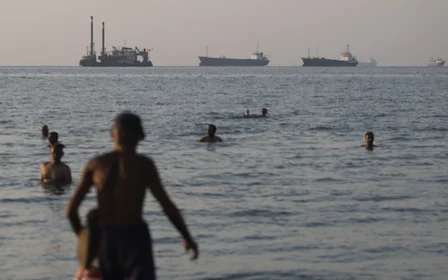
Tehran insists on retaining control of the Strait of Hormuz after the war and wants to charge fees for passage, repeatedly striking ships it accuses of attempting to circumvent its preferred route. The US has imposed a rival blockade on Iranian ports.
Last week Iran said it had agreed a route with neighbouring Oman for ships transiting the strait and was finalising arrangements for jointly managing the strategic waterway.
On Tuesday, the US military announced that it had fired on a Panama-flagged cargo ship that attempted to break the American blockade of Iran's ports.
Good morning Middle East Eye readers,
These are some of the latest developments from across the region:
-
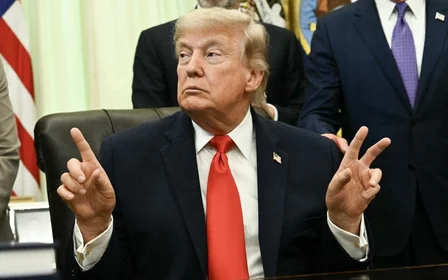
US President Donald Trump told reporters that he does not "trust Iran", and further claimed that the US has full control over the vital Strait of Hormuz. "I don’t trust Iran. I’m the last person to trust Iran; they’ve lied to me constantly. We have total control over the Hormuz Strait right now; they don’t have control," he said.
-
An attack on a commercial vessel in the Red Sea killed at least three Pakistani nationals and left another wounded, Islamabad's foreign minister said on Wednesday. "Pakistan strongly condemns the Houthi attack on a non-combatant commercial vessel," Ishaq Dar said in a post on X.
-
Kurdish news media is reporting that Iranian missiles and drones have targeted a number of locations in Iraq's Erbil, including attacks in the districts of Soran, Khalifan and Harir.
-
Israeli attacks on southern Lebanon remain ongoing, with one military drone targeting a gathering of people, leaving several wounded. Meanwhile, large explosions were reported in the towns of Haddatha and Beit Yahoun. Reports on the casualties or damage caused to the areas remain unclear.
-
Libya's General Electricity Company said that an attack on the South Zawiya substation caused a complete wide-scale outage and loss of power supply to a number of areas in the south of Zawiya. The company warned that the attacks may cause more delays in maintenance and restoration of electricity services.
-
Several countries, including Qatar, Syria, Saudi Arabia, Kuwait, Iraq, Palestine and Turkey, have condemned Colombia's support of Israeli claims over the occupied Syrian Golan Heights.
-
Israeli forces attacked agricultural land on Tuesday in the countryside of Syria’s Quneitra, according to local media reports. Elsewhere in the province, Israeli troops set up a temporary military checkpoint in Kudna.
-
The Pentagon confirmed to Congress that US attacks against Houthis in Yemen last year killed 153 civilians and injured 243 others, The Hill reported. In a 12-page report sent to the Senate Armed Services Committee on Monday, three incidents were detailed in the month of April last year. There are 15 more incidents that remain under review.
An attack on a commercial vessel in the Red Sea killed at least three Pakistani nationals and left another wounded, Islamabad's foreign minister said on Wednesday.
"Pakistan strongly condemns the Houthi attack on a non-combatant commercial vessel," Ishaq Dar said in a post on X.
"Such attacks endanger innocent lives, constitute a violation of international law, and pose a serious threat to freedom of navigation, maritime security, and the safety of commercial shipping in the Red Sea."
He added that Pakistan is closely following the situation and will remain in contact with relevant authorities.
I have learnt with deep concern about the unfortunate incident involving an attack on a commercial vessel in the Red Sea. According to the information available so far, three Pakistani nationals have lost their lives and one has sustained injuries in the incident. We extend our…
— Ishaq Dar (@MIshaqDar50) August 12, 2026
Kurdish news media is reporting that Iranian missiles and drones have targeted a number of locations in Iraq's Erbil, including attacks in the districts of Soran, Khalifan and Harir.
Israeli attacks on southern Lebanon remain ongoing, with one military drone targeting a gathering of people, leaving several wounded.
Meanwhile, large explosions were reported in the towns of Haddatha and Beit Yahoun. Reports on the casualties or damage caused to the areas have not been released.
Libya's General Electricity Company said that an attack on the South Zawiya substation caused a complete wide-scale outage and loss of power supply to a number of areas in the south of Zawiya.
The company added that repeated targeting have lead to severe damage to the Zawiya power station, and has forced it to withdraw its technical teams.
It warned that the attacks may cause more delays in maintenance and restoration of electricity services.
Houthi military spokesperson Yahya Saree said that missile and drone strikes targeting military sites in Marib and Mocha killed and injured dozens of people.
In a statement carried by the Houthi-run Saba news agency, he indicated that targets were forces linked to Saudi Arabia. The attacks left "dozens killed and injured," including Saudis.
US President Donald Trump claimed that he was "at greater risk" when boarding the plane he flew on after he secretly took a military flight from Turkey last month.
"I think actually the plane that I flew on was at greater risk," Trump told reporters. "I think it was at greater risk because that would be the plane I think that they would be more likely to go for."
Earlier, The Washington Post broke the story that Trump secretly left Ankara on the military aircraft amid an alleged Iranian assassination threat.
A drone that targeted a power station in Libya’s western city of Zawiya early on Wednesday ignited a fire at the facility, according to local media reports.
No official statement has been released regarding possible casualties or the extent of damage. Furthermore, no group has claimed responsibility for the attack.
The Pentagon confirmed to Congress that US attacks against Houthis in Yemen last year killed 153 civilians and injured 243 others, The Hill reported.
In a 12-page report sent to the Senate Armed Services Committee on Monday, three incidents were detailed in the month of April last year.
On 6 April, 2025, five civilians were killed in Sanaa. A few days afterwards on 17 April, a strike on Ras Isa port killed 80 people. Another strike in late April killed 47 others.
According to the report, the Pentagon indicated that there are 15 more incidents that remain under review.
US President Donald Trump told reporters that he does not "trust Iran", and further claimed that the US has full control over the vital Strait of Hormuz.
He said that the current situation with Tehran is "going fine – going just absolutely fine."
"We totally control the Strait of Hormuz. We have control over it; nobody else, only us," Trump added. "Our navy is unbelievable, and things going great for our country."
"I don’t trust Iran. I’m the last person to trust Iran; they’ve lied to me constantly. We have total control over the Hormuz Strait right now; they don’t have control."
Qatar’s Foreign Ministry has issued a statement condemning Colombia's support of Israeli claims over the occupied Syrian Golan Heights, joining several other countries in its criticism.
"The Ministry of Foreign Affairs reiterates Qatar's principled and unwavering position that the Golan Heights is occupied Arab territory, emphasizing the need for Israel to comply with international law and withdraw from all occupied Arab territories, including the Golan Heights," it said in a post on X.
The Ministry warned that "any unilateral decisions recognising Israeli sovereignty over the Golan Heights will constitute a major obstacle to achieving peace in the region".
Statement | Qatar Condemns Colombian Government’s Recognition of Israeli Occupation's Sovereignty over Occupied Syrian Golan Heights
— Ministry of Foreign Affairs - Qatar (@MofaQatar_EN) August 11, 2026
Doha | August 11, 2026
The State of Qatar condemns the government of the Republic of Colombia's recognition of Israeli occupation's sovereignty… pic.twitter.com/hQyJ9HeVhx