Live: US and Iran agree to halt strikes ahead of Doha talks

Live Updates
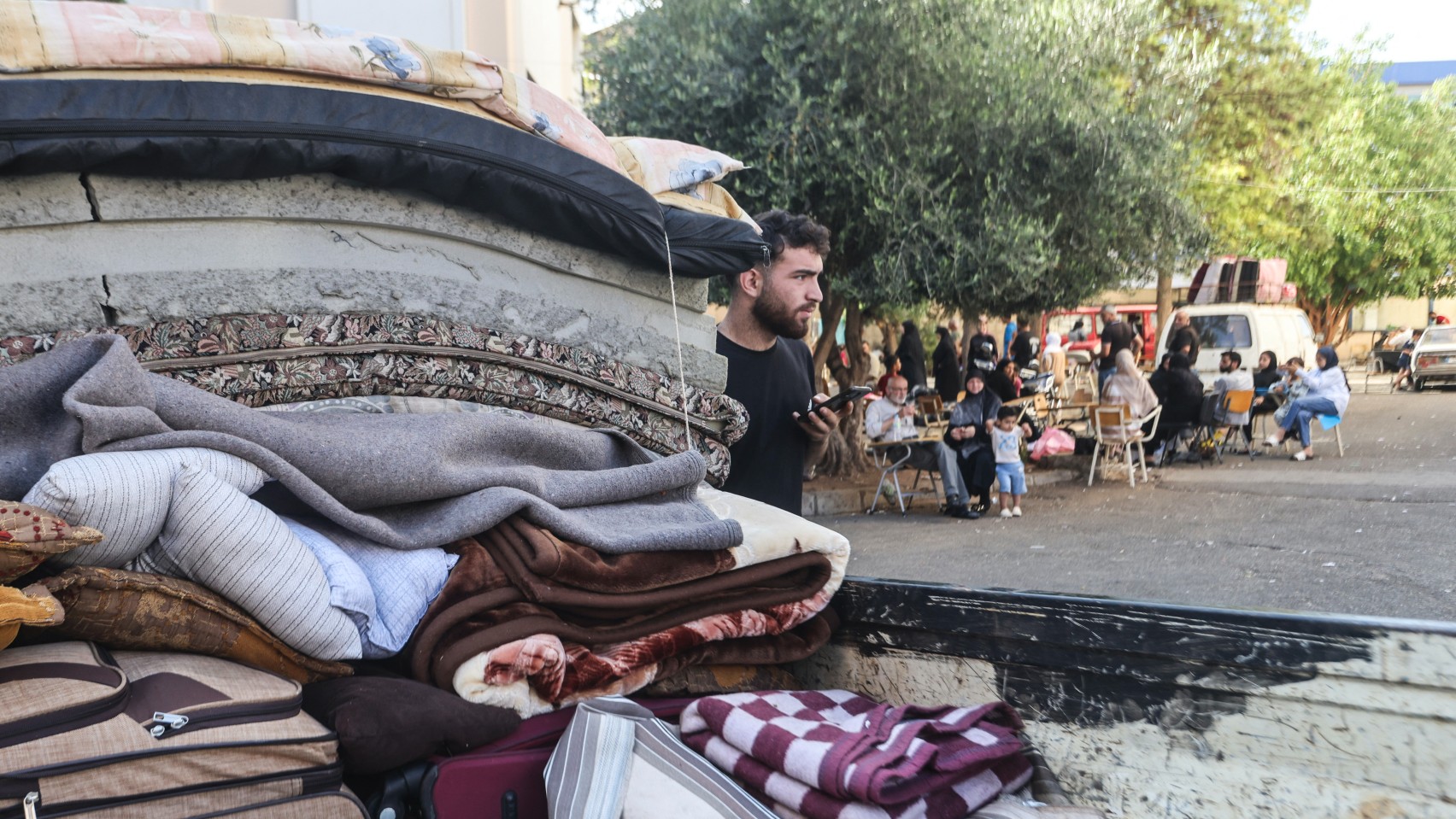
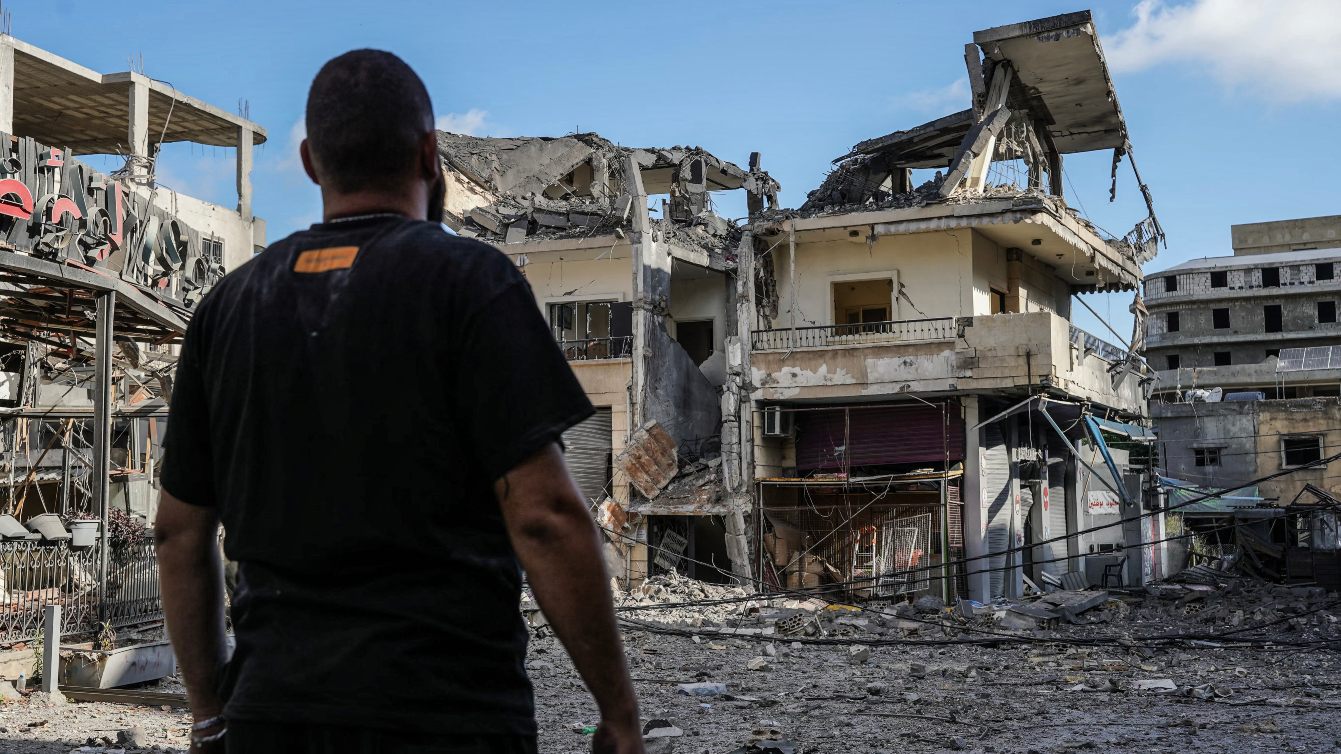
Authorities in southern Lebanon warned people displaced by three months of war against rushing home on Monday as Israel said it would not withdraw troops from the south despite the US-Iran ceasefire deal.
In south Lebanon, where Israeli forces have occupied a self-declared security zone, municipal councils issued statements calling on residents to hold off on returning, according to reports in Lebanon’s National News Agency.
In Nabatieh, a devastated city in the country’s south , Mohammed Daqdouq said he had returned on Monday morning to check on his home. "We'll need a lifetime to rebuild - to rebuild it again and bring Nabatieh back to how it was," he said.
Mona Mazeh, a displaced woman sheltering in Beirut's Hamra district, had no immediate plans to return to her village near the southern city of Tyre. "Frankly, we are hesitant; Israel cannot be trusted," she said.
When announcing the deal early on Monday, Pakistani Prime Minister Shehbaz Sharif, a key mediator between Tehran and Washington, said that the pact called for "the immediate and permanent termination of military operations on all fronts, including in Lebanon".
Meanwhile, senior Israeli officials slammed the newly announced agreement, saying it does not bind Israel.
The Israeli military has been razing villages in southern Lebanon for weeks, saying it is acting against Hezbollah militants embedded in civilian areas of the predominantly Shia Muslim region.
Lebanon’s health ministry says Israel’s war on the country has killed at least 3,783 people and wounded 11,699 others between 2 March and 14 June.

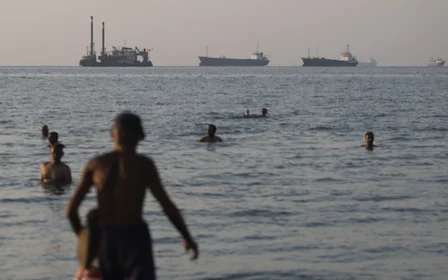
German shipowners' association VDR said on Monday it remained to be seen whether the new deal to end the war and reopen the Strait of Hormuz would lead to safe passage through the vital shipping route.
"However, we are cautiously optimistic," it said in a statement.
Shipping association Bimco said on Monday it still considers commencing transiting the Strait of Hormuz very risky for ships at this point.
It said that the security situation for the shipping industry remains volatile, and the threat of mines in the strait is a concern.
The resumption of maritime traffic should ideally be directed by a neutral body, such as the United Nations, the group added.
The United States and Iran will hold indirect talks in Doha this week ahead of the formal signing of the ceasefire deal, AFP reported.
“Separate preparatory meetings with each side will now take place in Doha this week, ahead of the official signing in Switzerland and the start of the technical talks,” a diplomatic source said.
The source added that Qatari mediators had departed Tehran after “17 hours of intensive negotiations”, which began on Sunday and culminated in an agreement.
Lebanon has not been informed of the terms or the ceasefire timing of the new US-Iran agreement, an official source told AFP on Monday on condition of anonymity.
Hezbollah has not commented on the agreement, but it has not claimed any fresh attacks on Monday on Israeli targets.
Lebanese Parliament Speaker Nabih Berri, a Hezbollah ally who acts as an intermediary between the group and the US, praised the deal, thanking the United States and Tehran for their "insistence on including... an essential and binding clause on halting the Israeli aggression on all of Lebanon".
Amid a series of fresh Israeli attacks across southern Lebanon, senior Israeli officials slammed the newly announced US-Iran agreement, signalling that Israel may reject the terms of the deal.
Israel is not a partner to the new agreement, which "does not bind us in any way," far-right National Security Minister Itamar Ben Gvir wrote on X.
Israel is not a “subordinate of the United States,” he said.
“We must not compromise on anything less than the dismantling of Hezbollah, we must not withdraw from any territory that our fighters have captured and cleared of terror infrastructure, we must not return to a situation where thousands of terrorists sit on the fences of northern settlements, and certainly we must not remain silent for a moment in the face of fire directed at the State of Israel.”
Finance Minister Bezalel Smotrich said the agreement is "bad for Israel and the entire free world".
"We will have to continue the campaign to topple the regime ourselves and in creative ways, and ensure that Iran will never have nuclear weapons," Smotrich wrote on X.
Defence Minister Israel Katz also stated that Israel is not going to withdraw from territory it has seized in Lebanon, and it will retaliate “if Iran attacks it over events in Lebanon”.
Israeli forces carried out a series of attacks across southern Lebanon on Monday, according to Lebanon’s state-run National News Agency (NNA), despite Iranian statements that the agreement between Washington and Tehran would include an immediate halt to military operations in Lebanon.
The agency reported two Israeli strikes on the town of Khiam and a drone strike targeting a vehicle in Kfar Tebnit, where injuries were reported.
NNA said Israeli artillery also shelled Kfar Tebnit and Nabatieh al-Fawqa.
The agency also reported that Israeli forces detonated a remotely controlled, booby-trapped M113 armoured vehicle on the Haris-Tibnin road leading towards the southern city of Tyre.
Israeli Prime Minister Benjamin Netanyahu told US President Donald Trump that Israel does not consider itself bound by provisions relating to Lebanon contained in the agreement between Washington and Tehran, according to a report by Yedioth Ahronoth citing Israeli sources.
Good morning Middle East Eye readers,
The United States and Iran have publicly declared that a peace agreement has been reached, marking the strongest signal yet that the 108-day conflict is nearing a formal end. The accord is expected to be signed in Geneva on Friday, while governments around the world welcomed the breakthrough.
Attention is now shifting to implementation, particularly in Lebanon, where disputes remain over ceasefire terms and Israeli military operations.
Here are the key updates:
-
President Donald Trump announced that the agreement with Iran is complete and said the US naval blockade imposed on Iran would be lifted.
-
Iran's deputy foreign minister Kazem Gharibabadi confirmed that the text of the Islamabad Memorandum of Understanding has been finalised and is scheduled to be signed in Geneva on 19 June.
-
Pakistani Prime Minister Shehbaz Sharif said a peace agreement is now in place following months of mediation between Washington and Tehran.
-
US Vice President JD Vance is expected to attend the signing ceremony in Switzerland alongside senior officials from participating countries.
-
Iran said the agreement would end hostilities on all fronts, including Lebanon, and launch a 60-day process to address nuclear issues, sanctions and related disputes.
-
The United Kingdom, France, Germany and Italy signalled readiness to lift sanctions on Iran as part of the diplomatic settlement.
-
Markets rallied and oil prices fell after news of the agreement, reflecting expectations of reduced regional instability and the eventual reopening of the Strait of Hormuz.
-
The United Nations welcomed the ceasefire framework, while Turkey, Australia, Japan, Germany and New Zealand also voiced support for the breakthrough.
-
Iran's Security Council said the agreement includes an immediate ceasefire in Lebanon, though reports indicated Israel does not consider itself bound by provisions requiring withdrawal from Lebanese territory.
-
Israeli strikes and exchanges of fire continued in Lebanon, raising concerns that implementation on the ground may prove more difficult than securing the diplomatic agreement itself.
-
Trump said the Strait of Hormuz would reopen after the agreement takes effect, although officials offered differing timelines for the restoration of normal shipping traffic.
-
US officials said frozen Iranian funds will not be released until Tehran begins implementing its commitments under the agreement.