Live: Israel says it will control bridges and area south of Lebanon’s Litani River

Live Updates
The Pentagon is seeking $200bn from Congress to cover the costs of the US's war on Iran.
The figure was first revealed by The Washington Post, citing unnamed officials, but was not disputed by either Secretary of War Pete Hegseth or President Donald Trump on Thursday.
"It takes money to kill bad guys," Hegseth told reporters.
"So we're going back to Congress and our folks there to ensure that we're properly funded for what's been done, for what we may have to do in the future, ensure that our ammunition... everything's refilled, and not just refilled, but above and beyond," he said.
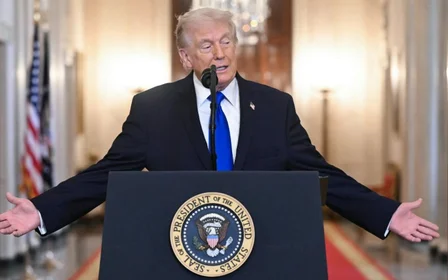
Trump, sitting alongside the Japanese prime minister at the White House, called the move a "small price to pay to make sure that we stay tippy top".
Read more: 'It takes money to kill bad guys': Pentagon requests $200bn from Congress for Iran war

Saudi Arabia reserves the right to act militarily against Iran and any trust with Tehran has been shattered, the Saudi foreign minister said early on Thursday, after Riyadh was targeted by Iranian ballistic missiles.
Saudi Foreign Minister Prince Faisal bin Farhan accused Iran of premeditated hostile actions against its neighbours, both directly and via an array of regional proxies which he urged Tehran to rein in.
An air strike has targeted the 6th Brigade of the Iraqi Popular Mobilisation Forces in the Salah al-Din province, Al Jazeera Arabic is reporting, citing a security official.
China has called for an end to the US-Israel war on Iran and says the safety of waterways should not be disturbed.
“The situation in the Middle East has disrupted global energy security,” said Lin Jian, spokesperson at the Chinese foreign ministry, during a news conference.
“The countries involved should immediately cease military operations to prevent regional instability from having a greater impact on global economic development.”
Earlier this month, Beijing banned Chinese exports of diesel, petrol and jet fuel. China is also curbing exports of fertilisers, which rely on oil and gas refining byproducts, to protect its domestic market.
The internet shutdown in Iran is now the longest in its history, according to a monitor.
Internet freedom watchdog NetBlocks said that the blackout, imposed by the state following the beginning of the US-Israel attack on the country, reached its 20th day on Thursday.
"The ongoing disruption in Iran is among the longest three internet shutdowns in our records. It's now the longest sustained nation-scale internet blackout we've tracked in a highly connected society," Alp Toker, director of NetBlocks, speaking to Middle East Eye.
He said only Sudan and Myanmar had experienced longer shutdowns, both in the context of military coups.
The Islamic Republic regularly blocks internet access in Iran during periods of unrest. The government says the move is aimed at countering misinformation, but critics say it provides cover for violent state crackdowns.
Read more: Iran's internet shutdown now longest in history: Monitor

France's Foreign Minister Jean-Noel Barrot will go to Israel on Friday, in an unscheduled visit, after visiting Beirut as part of efforts to secure a ceasefire in Lebanon.
Barrot will discuss regional security and humanitarian aid issues, and attempts to de-escalate the conflicts in the Middle East with Israeli authorities, the French foreign ministry added, as it announced Barrot's visit.
France will double its humanitarian aid to Lebanon to the value of $18.7m, France's Foreign Minister Jean-Noel Barrot said on Thursday.
Barrot made the announcement on his social media account as he visited Beirut, as part of efforts to mediate a ceasefire between Israel and Hezbollah.
Jean-Yves Le Drian, France's special envoy for Lebanon, had said earlier this week that it was unreasonable to expect the Lebanese government to disarm Iran-backed Hezbollah while the country is being bombed by Israel.
Reporting by Reuters
Iran no longer has the capacity to enrich uranium or make ballistic missiles after 20 days of US-Israeli air attacks on the Islamic Republic, Israeli Prime Minister Benjamin Netanyahu told a news conference on Thursday.
Lebanon says that the Israeli army has targeted the town of Qabrikha, and Toulene in the Marjayoun area, Al Jazeera is reporting.
US Energy Secretary Chris Wright on Thursday said in a post on X that President Donald Trump's administration has no plan to implement restrictions on oil and gas exports.
Ras Laffan, the Qatari hub responsible for a fifth of the world's liquefied natural gas (LNG), is under Iranian attack.
On Wednesday, Qatari officials said that Iranian missile strikes caused “significant damage” at Ras Laffan Industrial City, located 80km from the capital, Doha.
The site was already the subject of an attack on 2 March, which suspended production.
On Thursday, natural gas prices in Europe and Asia soared in response to the attack.
Administered by state-owned QatarEnergy, Ras Laffan spans 295 square kilometres – roughly a third of the size of New York City. It is the centrepiece of Qatar’s lucrative gas operation.
The site processes the Gulf state’s vast gas reserves from the offshore North Field, turning it into LNG, liquefied petroleum gas (LPG), liquid fuels, petrochemical feedstocks and other byproducts.
Iran’s attacks on the area have wiped out billions of dollars of Qatari revenue.
Read more: Ras Laffan: How Qatar gas hub attack is hitting Asia and beyond

US President Donald Trump on Thursday suggested he was not looking at deploying soldiers to the Middle East.
"I'm not putting troops anywhere," Trump said in response to a reporter who asked whether he was planning to send more service members to the region. "If I were, I certainly wouldn't tell you. But I'm not putting troops. We will do whatever is necessary."
Trump spoke at the White House during an Oval Office meeting with Japanese Prime Minister Sanae Takaichi.
In notices sent to Congress on Thursday, the State Department said the US would sell more than $8bn in air defence systems and related materiel, including drones, air-to-air missiles, and F-16 fighter jet munitions to the UAE, $8bn in missile defence and radar systems to Kuwait, and $70.5m of aircraft and munitions support to Jordan.
Another $6bn in sales to the three countries was approved but did not require congressional notification because they involved adjustments to previously approved packages or purely commercial sales, a State Department official said, who spoke on condition of anonymity.
Reporting by AP news
UK Prime Minister Keir Starmer told Qatari Emir Sheikh Tamim bin Hamad Al Thani the United Kingdom will “continue to stand with Qatar and all our allies in the Gulf” during a call on Thursday, Al Jazeera is reporting.
“Reckless attacks on critical infrastructure risk pushing the region further into crisis and worsening the severe economic impacts being felt globally, including in the UK,” Starmer also said.
Russia has condemned an Israeli air strike that injured a TV crew from state-run RT in Lebanon as not “accidental”.
Video agency Ruptly - a subsidiary of RT - posted footage showing an explosion and plumes of smoke rising metres behind RT’s reporter Steve Sweeney, who was wearing a bulletproof vest with a sign “Press” on it, as he delivered an on-air report.
Sweeney and his cameraman “were injured in an Israeli attack in southern Lebanon while they were reporting”, Ruptly said on Telegram, adding both were “conscious and receiving medical attention”.
“Given the killing of 200 journalists in Gaza, today’s events cannot be called accidental,” Russia’s Foreign Ministry spokesperson Maria Zakharova said on Telegram, without naming Israel.
“The rocket hit not a ‘critical strategic military facility’, but rather the location of a report,” Zakharova added.