
Live: Israel says it will control bridges and area south of Lebanon’s Litani River

Live Updates
A US fighter jet had to make an emergency landing after being struck by Iranian fire, sources have informed CNN.
Iran’s revolutionary guards claimed responsibility for the attack, which caused damage to the US aircraft on Thursday.
This is the first time Iran has hit a US aircraft since the war began.
A spokesperson for Pakistan has responded to allegations from the US Director of National Intelligence Tulsi Gabbard that Pakistani missiles could pose a future threat to the US.
In a statement posted to X, a spokesperson for the Ministry of Foreign Affairs stated that “Pakistan’s strategic capabilities are exclusively defensive in nature” and “well below intercontinental range”.
Gabbard placed Pakistan alongside Russia, China, North Korea and Iran as countries developing nuclear capabilities which could “put our homeland within range” in statements to the Senate on Wednesday.
However, Islamabad has responded that its missile programme is “firmly rooted in the doctrine of credible minimum deterrence vis-a-vis India” and that it “remains committed to constructive engagement” with the US.
The statement urged “a more measured and considered approach” from the US, one which promotes “stability across the region”.
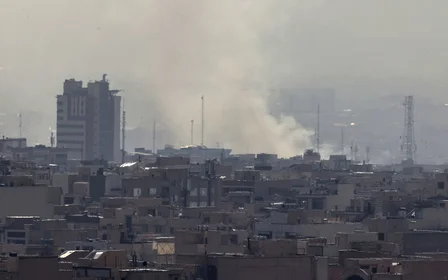
There are reports of fire and falling debris in Haifa following a strike by an Iranian missile on an oil refinery, according to Israeli media.
Israel's Energy Minister Eli Cohen said that the damage was “not significant” and no casualties have been reported.
Qatar’s prime minister, Sheikh Mohammed bin Abdulrahman Al Thani, has urged an immediate cessation of hostilities in the region and said “trust must be restored” in a press conference, alongside Turkish Foreign Minister Hakan Fidan.
He said this is a war “started by Israel, and Iran chose to attack their neighbours” in retaliation.
Turkey also called Tehran’s attacks on regional countries “unacceptable”.
Both countries labelled Israel as the initiator of the war, but said that Iran has a “historic responsibility” not to escalate regional instability.
Just ahead of the announcement, alarms went off to signal a possible missile or drone attack in the area, but the conference went ahead as planned.
Israeli attacks have killed 1,001 people in Lebanon since the latest escalation of the conflict between Israel and Hezbollah began on 2 March, according to the Lebanese Health Ministry.
A statement reported that among the dead were 79 women, 118 children and 40 healthcare workers, with 2,584 wounded by Israeli attacks.
The UK, France, Germany, Italy, the Netherlands and Japan have issued a joint statement condemning Iran’s attacks on the Gulf and say they are ready to help reopen the Strait of Hormuz to stabilise energy markets.
“We express our readiness to contribute to appropriate efforts to ensure safe passage through the Strait,” the statement says.
The nations urged Iran to comply with international law and express “deep concern about the escalating conflict”, but do not mention or condemn the Israeli attack on the Iranian gas field on Wednesday that sparked Iran's retaliatory attacks on the region.
QatarEnergy CEO Saad al-Kaabi told Reuters that the damage caused by Iran’s attack on its facilities has wiped out 17 percent of their operating capacity.
As a result, the company may need to waive liability on long-term contracts for natural gas supplies with Italy, Belgium, Korea and China for up to five years while they are repaired.
It will cost around $26bn to rebuild the damaged infrastructure, Kaabi said.
“I never in my wildest dreams would have thought that Qatar would be – Qatar and the region – in such an attack,” he added.
United Nations Secretary General Antonio Guterres called on the US and Israel to stop the war and for Iran to stop attacking neighbouring nations.
“It is high time to end this war that is risking to get completely out of control,” Guterres told reporters in Brussels, after meeting with EU leaders.
This follows the escalation of US-Israeli attacks targeting Iran’s gas facilities, which led to Iran retaliating with strikes on Qatar’s natural gas complex.
Guterres also urged a reopening of the Strait of Hormuz, which threatens the world economy.
US Director of National Intelligence Tulsi Gabbard told the intelligence committee during a hearing on Thursday that America and Israel do not share the same war aims in Iran.
“The operations that the Israeli government has been focused on [are] disabling the Iranian leadership,” Gabbard explained, whereas Trump has “stated that his objectives are to destroy Iran’s ballistic missiles launching capability, their ballistic missile production capability, and their navy”.
This comes after Gabbard's top aide and head of counterterrorism, Joseph Kent, resigned in protest over the war on Iran on Tuesday, stating that the “pressure from Israel” that was driving the US military's offensive was among his reasons for leaving.
US Treasury Secretary Scott Bessent told Fox Business that Washington may ease restrictions on Iranian oil.
Bessent said that Russian and Iranian oil tankers that have left the Strait of Hormuz and are currently on the water could be used to provide temporary relief to stabilise global markets.
“We will be using the Iranian barrels against the Iranians to keep the price down for the next 10 or 14 days as we continue this campaign,” Bessent told Fox.
The price of gas has increased significantly since Iran’s attack on Qatar’s Ras Laffan complex, which disrupted around 20 percent of global natural gas flows.
Markets in the UK and Europe saw prices rise by more than 25 percent in early trading, before easing slightly. They currently stand at more than double the level prior to the US-Israeli attacks on Iran.
Iran targeted Qatar’s gas facility in retaliation for Israeli strikes on Iran’s South Pars gas field on Wednesday.
Bloomberg Intelligence warned that European gas prices could surge by more than 30 percent later in the year as the war on Iran threatens global supply levels.
The report raised concerns for affordability and energy security due to low storage levels across Europe, with prolonged effects for markets even if tensions were to ease quickly.
US and Israeli strikes have killed several people, including four taekwondo athletes, this morning in the city of Tabriz in northwestern Iran, Iran’s Mehr news agency reported.
In a separate incident earlier today, 12 people were killed in attacks on a residential area of Dorud county in the west of the country.
UK Prime Minister Keir Starmer has condemned "in the strongest terms" Iranian strikes on Qatar's main gas hub, the world's largest liquefied natural gas facility.
"We are working towards a swift resolution to the situation in the Middle East, in the best interests of the British people," Starmer added in a post on X today.
He discussed the "egregious" strikes with Nato chief Mark Rutte and French President Emmanuel Macron in a call on Thursday, Starmer's office said in a statement.
"Attacks on critical infrastructure risked pushing the region further into crisis, the leaders agreed," said Downing Street's readout of the call.
I condemn in the strongest terms the overnight Iranian strike on a Qatari gas facility.
— Keir Starmer (@Keir_Starmer) March 19, 2026
We are working towards a swift resolution to the situation in the Middle East, in the best interests of the British people – because there is no question that ending the war is the quickest…
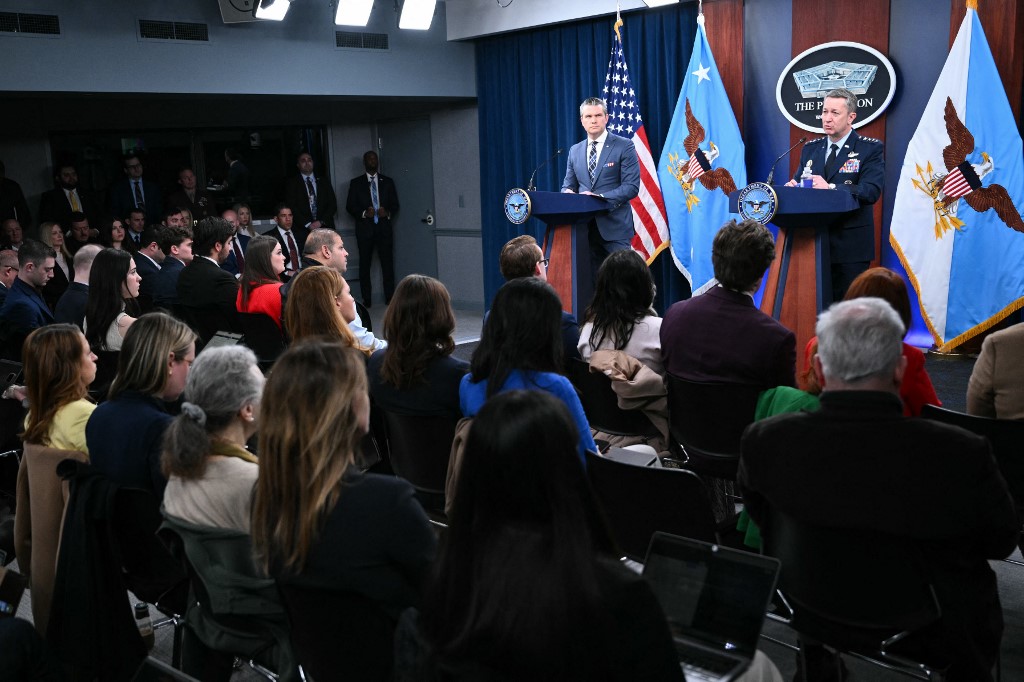
US War Secretary Pete Hegseth said on Thursday that the United States' objectives in the war against Iran have not changed since strikes started on 28 February.
Hegseth told reporters that the objectives remained to destroy Iran's missile launchers, its defence industrial base and navy, as well as never allowing Iran to obtain a nuclear weapon.

China said on Thursday that peaceful reunification with Taiwan would help ease the island’s energy supply risks stemming from the Israeli-US war on Iran, according to Al Jazeera.
Chen Binhua, a spokesperson for Beijing’s Taiwan Affairs Office, said Taiwan imports about 70 percent of its crude oil, and would benefit from the mainland’s energy capacity.
“The mainland’s abundant power supply is more than sufficient to meet the electricity needs of Taiwan’s companies and ensure households are spared power shortages during peak seasons,” he said.