China's oil imports plunge 40 percent, keeping a lid on energy prices

China’s crude oil imports in June hit their lowest level in a decade, marking a major plunge that has helped keep energy prices contained amid escalating fighting between the US and Iran in the Strait of Hormuz.
Chinese customs data released on Tuesday said crude imports hit 29.27 million tonnes year to year, marking a 41 percent drop. That is the lowest number on record since October 2016.
China is the world’s largest oil importer. Last year, it purchased an average of 11.6 million barrels per day (mb/d) of crude oil, with Russia, Saudi Arabia, Iraq, Iran, and Brazil among its largest suppliers. For comparison, China’s oil imports are larger than those of France, the UK and Germany combined.
Energy experts have attributed China’s decision to massively scale back oil imports as one of the largest factors keeping energy prices in check amid the US-Israeli war on Iran.
China is the main buyer of Iranian and Saudi Arabian oil exports. Beijing built up a large stockpile of crude before the war.
New MEE newsletter: Jerusalem Dispatch
Sign up to get the latest insights and analysis on Israel-Palestine, alongside Turkey Unpacked and other MEE newsletters
The drop in imports is due to a variety of factors, experts say, including China’s severe economic slowdown. But there are signs that China has substituted crude with coal. Imports of the latter surged 30 percent to a five-month high, according to customs data.
A band-aid solution
China provided weapons and satellite technology to Iran in the early days of the US attacks, Middle East Eye and others reported. But its slowdown in crude imports is helping keep global energy prices in check as the US and Iran escalate their fight.
The US and Iran signed a Memorandum of Understanding (MoU) to extend a spring ceasefire and begin talks on Iran’s nuclear programme and governance in the Strait of Hormuz. In exchange for stopping its attacks and permitting vessels to transit Hormuz without paying a toll, Iran was granted temporary sanctions relief.
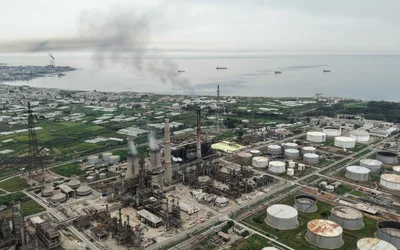
But fighting between the two sides has flared in recent weeks.
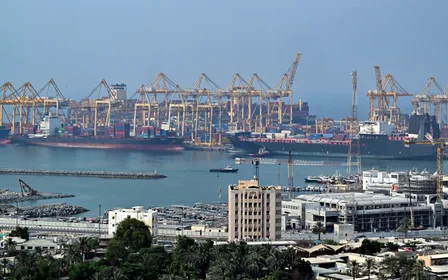
Iran has attacked Saudi Arabian, Qatari and UAE vessels transiting the Strait of Hormuz through Oman’s territorial waters.
Tehran says the vessels have not coordinated passage with it, as stipulated in the MoU. The agreement does not say vessels must transit Iran’s territorial waters.
The US has been escorting vessels in the waterway and has relaunched strikes against Iran. On Tuesday, the US reimposed a blockade against Iranian ports and shipping.
Oil prices have risen from their low of $69 per barrel to $79 amid the fighting, but even that price is relatively tame. Overall, the limited rise in oil prices prevents the war from spilling over into the global economy. This could buy time for US President Donald Trump to continue attacks, while robbing Iran of a key source of leverage.
The ink on the MoU was hardly dry last month when US inflation fell, dragged down by a plunge in American gas prices. Before the US and Israel attacked Iran in February, gas prices were at roughly $3 per gallon.
Today, they are hovering at around $3.87 per gallon on average. That is still a 30 percent surge, but gas prices fell in June 10 percent, according to a US inflation report released this week.
Middle East Eye delivers independent and unrivalled coverage and analysis of the Middle East, North Africa and beyond. To learn more about republishing this content and the associated fees, please fill out this form. More about MEE can be found here.