Riyadh rocked by explosions as Iranian strikes in Hormuz rise

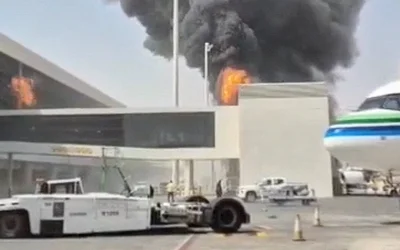
Saudi Arabia’s capital came under intense attack from the Houthis on Monday night local time after the Yemeni group claimed it targeted Riyadh’s airport, following repeated strikes on the city over the weekend.
Yemen’s Houthis said on Monday that they targeted the airport with a ballistic missile and also claimed to have targeted King Khalid Air Base near Khamis Mushait.
One western official in Riyadh confirmed to Middle East Eye multiple blasts and explosions across the capital, as video footage on social media appeared to show raging fires. MEE could not independently confirm the video.
The strikes underscore a widening of the war in Yemen and pose a serious challenge to Saudi Arabia’s economic ambitions.
The kingdom said on Monday that King Khaled International airport would remain closed until 17 October, according to an advisory note from Notice to Airmen.
New MEE newsletter: Jerusalem Dispatch
Sign up to get the latest insights and analysis on Israel-Palestine, alongside Turkey Unpacked and other MEE newsletters
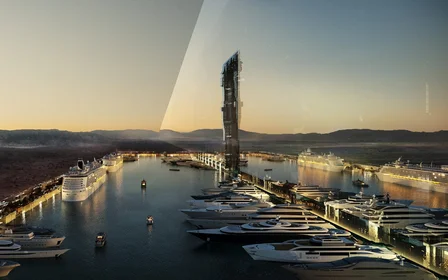
The attacks come weeks before Saudi Arabia is scheduled to host the Future Investment Initiative (FII) conference in Riyadh. FII is one of the most important platforms for promoting the kingdom’s investment potential and usually attracts prominent businesspeople from around the world.
The CEOs of ExxonMobil, Shell and TotalEnergies all skipped the opening day of a separate energy conference in Riyadh.
“To everyone who travelled to Riyadh, thank you,” Saudi Arabian Energy Minister Prince Abdulaziz bin Salman, who opened the gathering, said on Monday.
“You know this country is safe and that we hold your protection at whole heart… Our gathering here does not mean the risk is gone.”
US tech companies to be targeted, Iran says
The Houthis' attacks on Saudi Arabia come against the backdrop of rising tensions in the Middle East, with the region facing the potential of a return to US-Israeli attacks on Iran.
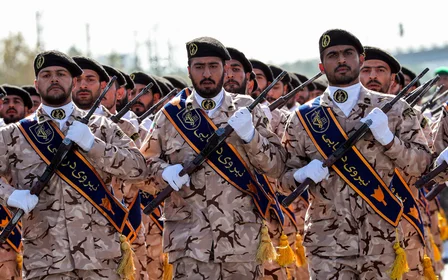
The Islamic Revolutionary Guard Corps (IRGC) said on Monday that they attacked a supertanker in the Strait of Hormuz trying to leave the waterway. The strike would mark the third attack on vessels in two days.
While the US and Iran have largely refrained from attacking each other directly, they are battling for control of the Strait of Hormuz, with each side trying to impose their own blockade.
Iranian security chief Mohsen Rezaei raised the stakes in an interview published on Monday, when he warned Tehran could attack the infrastructure of US tech companies in the region if the US and Israel resume the war.
“The United States has extremely expensive assets in the UAE and around the Strait of Hormuz,” Rezaei said.
“We have not yet included these assets among our targets. But if war breaks out, many of these cables, data centres, artificial intelligence facilities and numerous other sites will be destroyed,” he added.
Tasnim News, which is close to the IRGC, reported that Tehran should charge a “sovereignty fee” for cables passing the Strait of Hormuz.
A June ceasefire agreement the US and Iran struck broke down, at least in part, over Iran’s ability to control traffic in the waterway and impose fees on vessels.
Energy prices rise
Brent, the international oil benchmark, was trading up about two percent on Monday at $106 per barrel.
US President Donald Trump has tried to address rising prices ahead of the 3 November midterm elections. Trump has blamed Ukraine for the rise in diesel prices. Last week, he struck a deal with Russian President Vladimir Putin that waived sanctions on Russian diesel sales.
Supporters of Ukraine widely condemned that move.
Ukraine has pummelled Russia’s energy infrastructure with long-range strikes in recent months. Fuel shortages swept the country starting in May. But the rise in US diesel prices has coincided almost exactly with the onset of the US-Israeli war on Iran, which began on 28 February.
Open-source photographs appeared to show fuel trucks with Farsi script driving in Russia, with some analysts saying Moscow has had to purchase Iranian diesel because of the damage caused by Ukrainian strikes.
MEE could not immediately verify the images.
Commentators said that Trump’s waiver may allow Iranian diesel into the market.
Despite the Houthis' attacks, Salman, the Saudi energy minister, said that Riyadh was looking to boost its oil export capacity to as much as 10 million barrels per day, while avoiding the Strait of Hormuz.
He said the kingdom could add up to 1.2 million barrels per day of oil export capacity within seven to eight weeks by temporarily converting a gas pipeline that runs alongside the East-West oil Pipeline.
The Houthis’ deadly attacks on Saudi Arabia are putting more pressure on Trump to intervene in Yemen.
The US has largely abided by a ceasefire it agreed to with the Houthis in May 2025.
Houthis warn US, as Israel eyes opportunity
Asked about the attack on Riyadh airport that killed at least 13 people and wounded hundreds more, Trump said it was "not acceptable" and that he would be speaking to Crown Prince Mohammed bin Salman, telling reporters the US was "going to look at" the possibility of joining Saudi strikes.
The Houthis said such a move would mark the end of their truce with the US.
"If the US becomes involved in the aggression against Yemen, we will not deliberate over the decision to respond, rather, there will be a swift and painful response targeting the US and all its interests in the region," Houthi political bureau member Mohammed al-Bukhaiti told AFP in an interview.
Riyadh is trying to enlist its new defence partners, Turkey and Pakistan, to bolster their assistance to the kingdom under the Mecca Pact.
Haaretz reported on Monday that Saudi Arabia rejected an Israeli offer to join the war in Yemen.
Israeli Prime Minister Benjamin Netanyahu attempted to bring Saudi Arabia into closer security cooperation against the Houthis with US mediation, the report added.
Middle East Eye delivers independent and unrivalled coverage and analysis of the Middle East, North Africa and beyond. To learn more about republishing this content and the associated fees, please fill out this form. More about MEE can be found here.