Gaza’s breast cancer patients face a deadly wait for treatment amid Israel’s genocide

After six hours of cancer treatment at Gaza City’s partly destroyed al-Shifa Hospital, Najat Abu al-Sheikh waits with her husband outside for a ride home.
But the treatment the 46-year-old Palestinian needs to survive is still out of reach.
Radiotherapy, which she should have received in February, is unavailable in the war-ravaged enclave, raising the risk of her cancer returning and reducing her chances of recovery.
“I was diagnosed with stage two breast cancer on 5 January 2026. About three weeks later, I received my first dose of chemotherapy at al-Helou International Hospital,” Abu al-Sheikh told Middle East Eye.
“The shock was overwhelming, especially because I knew how difficult it had become to access hospital care and treatment in Gaza after the war,” she added.
New MEE newsletter: Jerusalem Dispatch
Sign up to get the latest insights and analysis on Israel-Palestine, alongside Turkey Unpacked and other MEE newsletters
Abu al-Sheikh underwent eight rounds of chemotherapy and a mastectomy. But her treatment remains incomplete.
“I am now receiving preventive targeted therapy at al-Shifa Hospital to reduce the risk of the cancer returning. But I urgently need to travel abroad to complete my radiotherapy, which is unavailable here," she explained.
Inside the hospital’s oncology department, dozens of women wait for treatment. Some receive chemotherapy; others, like Abu al-Sheikh, undergo targeted therapy.
Abu al-Sheikh is among about 11,000 cancer patients in Gaza struggling to access the care they need, according to the Palestinian health ministry.
The World Health Organization (WHO) says 94 percent of hospitals in Gaza have been fully or partially destroyed during Israel’s genocide. Al-Shifa Hospital was raided twice by Israeli forces, leaving it out of service. It resumed limited operations only in December 2025.
'Beyond all the suffering related to our health and treatment, life after the war makes us even more exhausted'
- Tahrir Atallah, breast cancer patient
Despite registering with the health ministry for medical evacuation, Abu al-Sheikh has yet to secure a place abroad.
“I registered to travel in April 2026, but my turn still hasn’t come. My doctors said I should have left for radiotherapy in February 2026. I am still waiting for my chance to travel,” she said.
Around 21,000 patients have been waiting for months to leave Gaza for medical care. Amid Israeli restrictions on departures, at least 1,570 patients have died while waiting, including 505 cancer patients and 264 children, according to Physicians for Human Rights Israel.
Lack of services
The Palestinian Ministry of Health recorded more than 500 breast cancer diagnoses among women in Gaza in 2024 and 2025, a figure Dr Mohammed Abu Nada, director of the Gaza Cancer Centre, described as “significant”.
But the true number is likely higher.
“These figures do not necessarily reflect the actual number of cases due to the disruption of diagnostic services, the difficulty of accessing medical services and hospitals, as well as the existence of cases that may not have been diagnosed or recorded,” Abu Nada told Middle East Eye.
Israel’s war has disrupted every stage of breast cancer care, from early diagnosis and identifying tumour characteristics to treatment and follow-up, he said. Only a handful of hospitals can still provide these services.
'Services are not fully available across all hospitals in the territory'
- Dr Mohammed Abu Nada, director of the Gaza Cancer Centre
“Services are not fully available across all hospitals in the territory. Some facilities provide diagnostic services, biopsies, pathology tests and consultations, while treatment is available at al-Shifa Medical Complex in Gaza City and Nasser Medical Complex in Khan Younis,” he said.
Some diagnostic services remain available at facilities such as Arab Ahli Hospital in Gaza City, but resources are unevenly distributed.
After the ground invasion of Gaza in late October 2023, Israel's army seized Gaza’s only hospital specialising in cancer care, the Turkish-Palestinian Friendship Hospital. Israeli forces turned it into a military barracks before demolishing it months later.
In June 2025, Israeli forces also took control of the European Gaza Hospital, a major referral centre for cancer patients in southern Gaza.
A ceasefire last year was intended to end Israel’s genocide and lift restrictions on the entry of medicines and supplies needed to restore Gaza’s hospitals. But Israel has continued to violate the agreement through daily bombardments and severe restrictions on aid.
More than three years since the genocide began, patients in Gaza continue to face acute shortages of diagnostic equipment, laboratory supplies and medicines.

“Not all advanced imaging services are available, including magnetic resonance imaging, computed tomography, nuclear scans and even mammography. Before the war, we had around 15 mammography machines. Now, there are only three across Gaza,” Abu Nada said.
In October, the WHO decried the ongoing restrictions on the entry of medicines and medical equipment.
It said obtaining an entry permit takes at least two and a half months, and the requirements change periodically.
The shortages have forced doctors to alter or delay treatment plans.
“The biggest challenge we face is the shortage of medicines, including chemotherapy drugs, supportive medicines, biological therapies and targeted treatments. Radiotherapy is also unavailable,” Abu Nada said.
“This forces us to modify or postpone some treatment plans, depending on each patient's condition and the medicines available.”
In some cases, he added, doctors had been forced to administer expired chemotherapy drugs because no alternatives were available.
Daily struggles
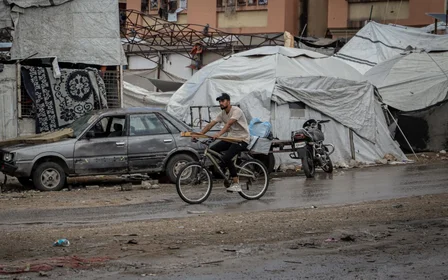
For cancer patients in Gaza, the struggle extends far beyond hospital walls.
Displacement, poverty and the collapse of basic services make an already gruelling battle with the disease even harder.
“The harsh living conditions, repeated displacement, difficulties with transportation, high travel costs, instability and poverty all have a significant impact on patients,” Abu Nada said.
Abu al-Sheikh has struggled to obtain the vitamins she needs to recover.
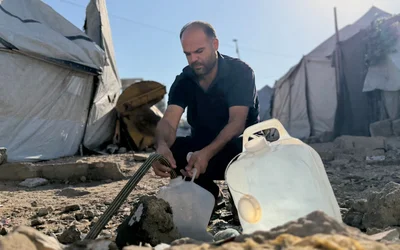
“I need a lot of vitamins, but unfortunately, hospitals do not provide them, and they are very expensive in pharmacies,” she said.
The loss of her breast has also taken a psychological toll.
“I wish I could find cosmetic creams to improve the appearance of the area after my breast was removed, but unfortunately, these creams are completely unavailable.”
Tahrir Atallah, 34, is also living with stage two breast cancer. She is undergoing chemotherapy while waiting for her application for treatment abroad to be approved.
“Beyond all the suffering related to our health and treatment, life after the war makes us even more exhausted. For example, I have to walk long distances to and from treatment sessions because transportation is unavailable,” she told MEE.
Atallah must also care for her family while enduring the physical effects of treatment and the collapse of basic services.
Despite support from her husband and family, even routine household tasks have become a struggle.
“Imagine having to do the laundry by hand when there is no electricity, or cook over a wood fire because gas supplies are limited,” she said.
Middle East Eye delivers independent and unrivalled coverage and analysis of the Middle East, North Africa and beyond. To learn more about republishing this content and the associated fees, please fill out this form. More about MEE can be found here.