How a Gaza-bound aid convoy unravelled attempting to enter Haftar-controlled eastern Libya

Israeli forces’ seizure of activists aboard the Global Sumud Flotilla en route to Gaza and the mistreatment they endured made headlines last week.
But around 2,000km to the west, the land-based affiliate of the pro-Palestinian aid movement also ran into trouble on its journey to the besieged enclave.
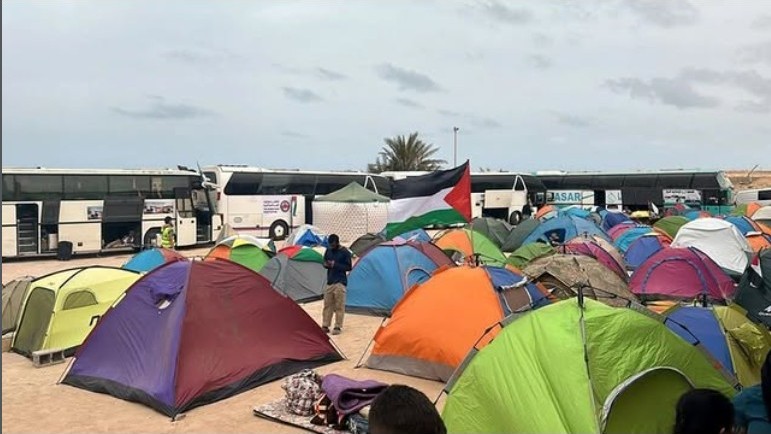
More than 200 activists with the Global Sumud Convoy entered the 5+5 security zone near the Libyan city of Sirte, a contested area established under the country’s October 2020 ceasefire agreement, hoping to negotiate safe passage onwards to Gaza.
After days encamped inside the zone, armed forces arrived at the site and dismantled the convoy.
Most participants were forcibly escorted back to Tripoli under armed guard. Ten international activists, however, were detained and remain in Libyan custody. The detainees are from Spain, Poland, the United States, Argentina, Uruguay, Portugal, Tunisia and Italy.
New MEE newsletter: Jerusalem Dispatch
Sign up to get the latest insights and analysis on Israel-Palestine, alongside Turkey Unpacked and other MEE newsletters
Speaking to Middle East Eye shortly after returning to her home in Johannesburg, South Africa, activist Jessica Breakey said the group found it difficult to leave while fellow convoy members remained in detention.
"We just didn't want to leave without them," she said.
"It was always like we were in this together, like this convoy was moving together - and I think the worst part about the camp being dismantled and us having to go back was that we were going back without them."

On Tuesday, the eastern Libyan government’s foreign ministry announced that non-Libyans and non-Egyptians would no longer be permitted to travel onwards to Egypt.
“The relevant authorities in the eastern region dealt with the matter within the framework of legal and humanitarian responsibility,” the ministry said.
It added that all those involved “are receiving the necessary care and medical and humanitarian follow-up".
The ministry said that while it reaffirmed Libya’s support for the Palestinian cause, “respect for national sovereignty and the legal regulations governing the movement of individuals across borders is non-negotiable".
While many activists praised the committment of the organisers and their drive to break the siege of Gaza, others said the trip was flawed from the start.
Felipe, a 29-year-old Chilean-Palestinian activist and veteran of previous sea-based flotillas, said the convoy itself bore some responsibility for the outcome.
He told MEE that during a two-week stay in Tripoli, it became increasingly clear there had been little planning for the possibility of detentions or for a confrontation with the Libyan Arab Armed Forces (LAAF), led by military commander Khalifa Haftar, which controls eastern Libya.
"If we were not able to go through east Libya, we should not have kept pressuring them because we were going to shift the narrative from Israel to Libya," he said.
"We were waiting in the desert for nine days doing nothing."
Organisational breakdown
Libya has been largely divided since the Nato-backed overthrow of long-time ruler Muammar Gaddafi in 2011.
Eastern Libya is controlled by Haftar and his allies, and is backed by the United Arab Emirates and Egypt, while a UN-backed government in Tripoli governs the west of the country.
The convoy's progress from its origins in Mauritania through North Africa had largely been uneventful.
Launched by North African activists and later joined by international participants, the convoy included seven ambulances, 20 mobile homes, 10 aid trucks, as well as medical professionals, engineers, educators and legal observers.
Those involved argued they wanted to bring something more substantial and practically useful to the people of Gaza than the usually largely symbolic aid deliveries associated with the sea-based flotillas.
Their attempts to enter eastern Libya saw those plans grind to a halt.
Attempts to negotiate onward passage on Sunday led to the negotiating team's arrest.
The next day, security officials arrived at the convoy's camp and forced the remaining activists at gunpoint on to buses, at one point firing tear gas into a nearby mosque where a number had been sheltering.
It is unclear which authority the security officials were affiliated with.
"We were sort of told that there was never so much a red light or a green light from Haftar, but sort of just this continuous open negotiation," said Breakey.
"But the Libyan Red Crescent was involved, and the organisers were constantly trying to keep communication open."
Breakey said the experience they had in Sirte stood in stark contrast to the warmth and hospitality the convoy had encountered on its journey from Tripoli, with locals showing staunch support for their campaign.
She also echoed criticisms from other convoy organisers of the Red Crescent, which, after publicly proclaiming its support for the convoy, went "missing in action" and failed to attend negotiations with Haftar's people.
"It's crazy looking back at a time when we actually were very, very hopeful," she said.
Human rights abuses
LAAF has been accused of widespread human rights abuses and war crimes by monitoring groups.
Amnesty International said the coalition of armed forces and its allied armed groups in Libya have severely restricted the rights to freedom of expression and association while targeting actual or suspected critics and opponents of Haftar.
"Libyans, as well as refugees and migrants, detained by LAAF, which exercises government-like functions in areas under its control, risk torture and other ill-treatment, as well as prolonged detention amid flagrant due process violations," said Sara Hashash, Amnesty International’s deputy director for the Middle East and North Africa.
Despite reassurances from the eastern Libyan authorities, friends of the detained activists have grown increasingly concerned about the conditions and length of their detention. Coinciding with the Islamic holiday of Eid al-Adha has also reportedly slowed progress and limited communication.
'We came here and we risked our lives for nothing'
- Felipe, Global Sumud Convoy activist
On Thursday, Filippo Colombo, Italy’s consul general in Benghazi, said he had visited the two Italian citizens being held at a police barracks in eastern Libya.
Following discussions, the eastern Libyan authorities said they had agreed to improve some conditions - allowing detainees to shower, change clothes and receive better accommodation - but had not yet provided information on procedures for a possible deportation.
Felipe said that participants had lost sight of their original goals in Gaza.
He pointed out that they had been camped out in an abandoned gas station riddled with bullet holes that had once been used by the Islamic State group, and that a number of those involved simply did not understand where they were or the seriousness of the situation.
He said that after the activists were detained, the convoy should have left the area and headed to the city of Misrata, as it had neither the resources nor the leverage to influence events.
"The day before [the raid], when they decided to go to the [eastern Libyan] border, I was not invited to the meeting because I was being critical. Their plan was basically to have a permanent camp or to do a hunger strike on the border," he said.
The whole experience has soured him on land-based aid convoys.
"Our people risked their lives to end the siege on Gaza... we came here and we risked our lives for nothing," he said.
After the events of the past weeks, it is hard to see any future convoys being allowed safe passage through Libya to reach the Rafah crossing in Egypt.
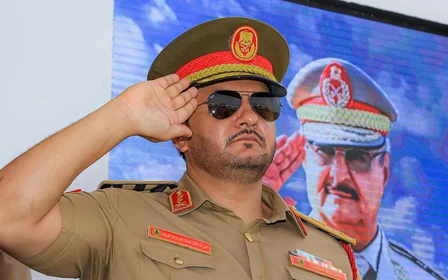
In recent years, Haftar has repeatedly indicated a willingness to build ties with Israel and has made secret visits to meet Israeli officials.
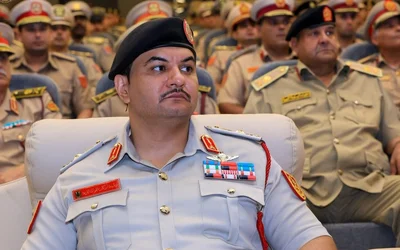
It is not known if any of this has influenced his attitude towards the Gaza aid activists.
Estelle Allemann, a legal researcher at the Mena Rights Group, said the new restrictions imposed by Haftar would "represent a deeply troubling attempt to weaponise border control against humanitarian solidarity with Palestinians".
"Restricting the movement of aid convoy activists under the guise of travel policy raises serious concerns about the criminalisation of civilian support for Gaza, and would fit a broader regional pattern of suppressing pro-Palestinian activism," she told MEE.
MEE contacted the foreign ministry of the eastern Libyan government, but had not received a response by the time of publication.
In a statement released on Thursday, the Maghreb Sumud Organisation, one of the key organisers of the convoy, issued what it described as a "clarification" on the events of the past week.
"After a comprehensive assessment of the field, humanitarian, and security realities, it was decided that all delegations and participants would return to their countries, with a limited number of convoy officials remaining to follow up on the delivery of humanitarian aid and to continue legal and diplomatic efforts concerning the ten detainees," it wrote.
"The Global [Sumud] Convoy, since its inception, has never been a project of confrontation with any party - rather, it has been an independent, civilian, humanitarian initiative carrying a moral message of solidarity with the Palestinian people in Gaza, in the face of siege, starvation, and humanitarian collapse."
Middle East Eye delivers independent and unrivalled coverage and analysis of the Middle East, North Africa and beyond. To learn more about republishing this content and the associated fees, please fill out this form. More about MEE can be found here.