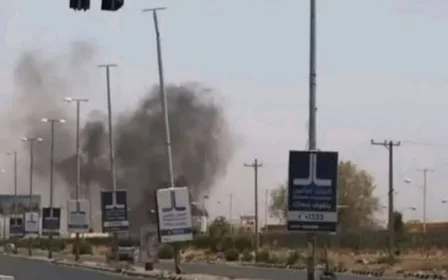
How the Red Sea came to the brink of a new regional war

Overconfident.
That is how best to describe the mood in the capitals of Ethiopia and Eritrea as the two neighbours slide to the verge of an all-out war that risks dragging in outside powers and destabilising the Red Sea, which is already convulsed by wars in Sudan and Yemen.
The chances of a regional war are higher than containing the conflict because people close to decision-makers on both sides are making calculations based on their foes' perceived weaknesses and discounting their own vulnerabilities.
“All the leaders in the region say ‘we don’t want a regional war’, but that doesn’t prevent us from walking backwards into one,” Cameron Hudson, an Africa analyst and former CIA official, told Middle East Eye.
There are three levels to this conflict: Ethiopia's internal fissures, historic tensions with Eritrea, and the enabling role Middle Eastern powers are playing.
New MEE newsletter: Jerusalem Dispatch
Sign up to get the latest insights and analysis on Israel-Palestine, alongside Turkey Unpacked and other MEE newsletters
From Ethiopia, to Eritrea and the Middle East
The core issue is a fight among Ethiopia’s ethnic groups over their country’s government. This is complex because Ethiopia has 80 ethnic groups. The main ones are Oromo, Amhara, Tigrayan, Somali, and Afar. Some of them have their own well-armed militias.
President Abiy Ahmed is trying to change Ethiopia's government from one based on ethnic federalism to a more centralised system of rule.
The hostilities began after the Tigray People’s Liberation Front (TPLF), an Ethiopian rebel group, went on the offensive in September, vowing to topple President Ahmed's government. The TPLF’s early gains included taking control of the Tigray capital Mekelle. But they were quickly reversed by Ethiopia's government forces.
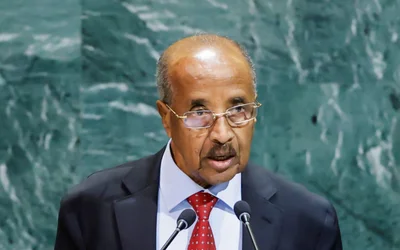
The second level of the conflict is a longstanding rivalry between Eritrea and Ethiopia.
After WWII, Eritrea, once an Italian colony, was federated with Ethiopia, and in 1962, it was unilaterally annexed by Addis Ababa. After a three-decade-long insurgency, Eritrea became independent in 1993 under a United Nations referendum.
The two neighbours actually joined forces to fight against the TPLF in Ethiopia’s 2020-2022 civil war, but have generally had hostile relations. Ethiopia has made revisionist claims about acquiring Eritrea’s Red Sea coast, and Eritrea has supported militias inside Ethiopia opposed to the federal government.
Addis Ababa this week accused Eritrea of sending thousands of troops across the border to support the TPLF.
Multiple current and former US, EU and African officials tell MEE that Eritrean troops have entered Tigray where they are partaking in fighting. Ethiopia launched drone strikes on the Eritrean troops on Wednesday and Thursday, according to monitoring group ACLED.
Eritrea and Ethiopia last fought a war from 1998 to 2000. The conflict was bloody, but largely contained. Now, a war between the two would likely pull in regional powers that did not have a stake in the fighting two decades ago.
Ethiopia is close to the United Arab Emirates and Israel. Addis Ababa has received drones and weapons systems from the UAE. Eritrea suspects Israel and the UAE would back a push by Addis Ababa to take its Red Sea coastline, hoping to gain access to a strategic sliver of that territory.
Eritrea has forged close ties with Somalia, Egypt and the Sudanese Armed Forces. All these countries oppose Abiy Ahmed’s government. Eritrea has also been moving closer to Saudi Arabia, which has diverged with the UAE over African hotspots such as Sudan and Somaliland.
Formal declaration of war anticipated
Ethiopia and Eritrea have shuttered their respective embassies this week.
Ethiopia may issue a formal declaration of war against Eritrea in the coming days, a former senior European official with knowledge of the matter told MEE.
In a letter sent to the UN on Thursday, Ethiopia accused Eritrea of “a blatant act of aggression that engages Ethiopia’s inherent right to self-defense”.
“Eritrea is the aggressor, Ethiopia is the victim. Eritrea is violating Ethiopia’s sovereignty and territorial integrity,” Addis Ababa said.
For its part, Eritrea has shot back.
“Ethiopia has in essence declared a war of aggression against Eritrea when its prime minister announced to his Parliament on 13 October 2023 that his regime will acquire ‘sovereign access to the sea’, through negotiations if possible and by force if necessary,” Eritrean Information Minister Yemane Gebremeskel said on Friday.
Tekeda Alemu, a career Ethiopian diplomat and former ambassador to the UN, told MEE that the two countries were already effectively at war.
“It’s very clear Eritreans have penetrated deep into Ethiopian territory. We are in the midst of war, even though it hasn’t been declared. The war is going on,” he said.
So far, Ethiopian Federal troops have performed well in the conflict. But the TPLF has shown it has the ability to regenerate, as it effectively forced federal forces out of Tigray in 2020 after being driven into the mountains by them.
'Formidable alliance'
One twist to the conflict is the internal situation in Ethiopia. In September, the TPLF announced an alliance with six other armed Ethiopian groups that say their goal is to overthrow Abiy’s Ahmed government.
This alliance includes Fano, a militia made up of Amharas. This group has long seen themselves as the custodians of Ethiopia’s multi-ethnic state. The last emperor of Ethiopia, US-ally Haile Selassie, was Amhara, as were the main leaders of the Derg, the Soviet Union-backed Marxist junta that ruled Ethiopia from 1975-1991. The TPLF ruled Ethiopia from the collapse of the Derg until 2018, when Abiy Ahmed took office.
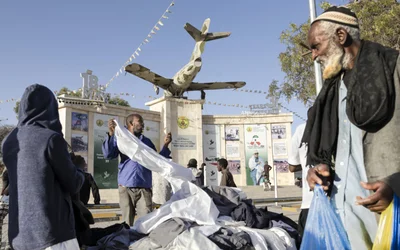
Not all members of these ethnic groups back the alliance to overthrow Abiy Ahmed, who has tapped into Oromo nationalism, his own ethnic group. But Oromos also oppose Abiy Ahmed. The Oromo Liberation Army is part of the alliance to topple his government.
Alemu said that this alliance can’t be discounted.
“What is not clear is what the alliance is intending to do. They haven’t begun to start a full-scale war. The alliance can not be brushed aside. It is formidable, as is the government side,” he told MEE.
Addis Ababa has accused Eritrea of orchestrating the alliance to oust Abiy Ahmed. While Asmara denies this, Eritrean officials who spoke to MEE warned of the dangers the alliance poses to Abiy Ahmed.
But analysts say the alliance might be over-hyped.
“The TPLF has overestimated themselves. They also overestimated the support they’d receive from Amharas and Oromos in this alliance,” an analyst in Addis Ababa, who spoke with MEE on condition of anonymity, said.
The former senior western official told MEE that Abiy Ahmed may have welcomed the TPLF’s uprising in September because it brought simmering tensions with Eritrea to a head, giving him the opportunity to finally push towards the Red Sea. A US official in the region familiar with the decision-making in the Horn of Africa concurred with that assessment.
“The Eritreans have moved preemptively. The question is, have they fallen into a trap?” The former western official said. “Ethiopia will not only confront the Eritreans with ground forces, but they will launch aerial attacks on Eritrea. If the Ethiopian army moves, it will be in order to go to Asmara and Assab. They will not stop at the frontier."
Sirak Kifle, an Eritrean analyst who regularly speaks with officials in Asmara, told MEE that Ethiopia has long wanted an excuse to push towards the Red Sea. “Abiy is aiming at the ports of Eritrea,” he told MEE.
He added that the TPLF was still an effective fighting force that can’t be discounted. “Addis Ababa has brought around 400,000 soldiers into Tigray. So it’s not difficult to fight the TPLF in the short term, but is that sustainable?” he asked.
Cameron Hudson said Ethiopian federal forces are in better condition now than they were during the last conflict.
“Ethiopia has a ripping economy, a ton of money and deep-pocketed allies in the UAE and Israel. Abiy Ahmed has learned from the last war in Tigray and the numbers are on his side,” he said.
The regional actors
This is where the regional alliances come back into play. If Ethiopia moves out of Tigray and attempts to capture Eritrea’s Red Sea coastline, it will hit the Horn of Africa like a tsunami.
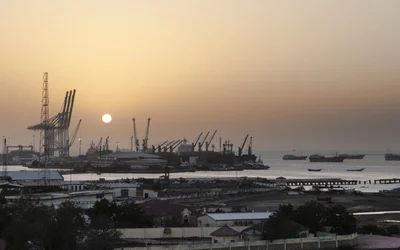
Ethiopia and Egypt are long-time rivals. Cairo has grown more concerned about Ethiopia since it completed the Grand Ethiopian Renaissance Dam. Addis Ababa is now moving to build new dams on the Nile River that Cairo says threaten its national security. Egypt is also wary of Ethiopia acquiring a naval presence in the Red Sea.
Somalia and Ethiopia also have a difficult relationship. Mogadishu was unnerved by Ethiopia’s flirtation with recognising the Republic of Somaliland, a breakaway state acknowledged only by Israel.
Ethiopia is also deeply intertwined in Sudan’s civil war. Addis Ababa supports the Rapid Support Forces (RSF), a militia backed by the UAE that has been accused of committing genocide. Eritrea and Ethiopia both back the Sudanese Armed Forces. The TPLF is also fighting alongside the Sudanese army against the RSF.
The network of states that would oppose an Ethiopian advance towards the Red Sea - Egypt, Sudan, Somalia and Eritrea - all met in the Egyptian city of El Alamein on Sunday. The countries agreed to coordinate military and intelligence efforts if the war in Tigray expands, Reuters reported.
“This war is still a tussle over Tigray. It is one step away from becoming a war over the Red Sea,” the former senior western official said.
Middle East Eye delivers independent and unrivalled coverage and analysis of the Middle East, North Africa and beyond. To learn more about republishing this content and the associated fees, please fill out this form. More about MEE can be found here.