Inside the UAE-backed RSF siege of Sudan's el-Obeid

On Friday morning, Abdullah, a lawyer in the Sudanese city of el-Obeid, had a moment of peace to reflect on two weeks of drone strikes and over three years of war.
“The suffering endured by the citizens of el-Obeid due to the war is beyond comprehension,” he told Middle East Eye.
“Loss of life, hunger, and insecurity perfectly reflect the catastrophes caused by the conflict between the army and the Rapid Support Forces,” he said.
“These forces continue to bombard civilians, vital and strategic centres, service facilities, and the very foundations of life, aiming to displace citizens and force them from their lands and cities.”
As Abdullah and other residents of North Kordofan’s capital spoke to MEE, the UN Human Rights Council was holding an urgent debate on the situation in Sudan, with the paramilitary RSF, which is backed by the United Arab Emirates, besieging el-Obeid from the west, north and south.
New MEE newsletter: Jerusalem Dispatch
Sign up to get the latest insights and analysis on Israel-Palestine, alongside Turkey Unpacked and other MEE newsletters
People in the strategically vital city, which sits at the intersection of several roads connecting the capital Khartoum to Kordofan and Darfur, the RSF’s stronghold in western Sudan, have lived with the fear of an RSF takeover for much of the war.
Almost 600,000 people are now living in el-Obeid, including more than 105,000 who have sought refuge in the city after fleeing violence and famine elsewhere.
Shortly after the war between the Sudanese Armed Forces (SAF) and the RSF began in April 2023, el-Obeid became a contested site, with the SAF’s 5th Infantry Division continuing to maintain its headquarters in the city.
'Everyone here knows that the UAE supports the RSF'
- Abdullah, lawyer in el-Obeid
In the last three weeks, the RSF, whose fighters are present in the surrounding countryside and in the town of Barah, about 30km north of el-Obeid, has launched a wave of intense drone strikes targeting petrol stations and oil tankers.
The main electricity substation, water facilities, the main market and fuel depots have all been hit. Civilians have been killed and injured. The price of basic goods has shot up.
Satellite imagery analysed by Yale’s Humanitarian Research Lab (HRL) has shown visible damage “consistent with intentional bombardment of civilian infrastructure for the sustainment of life”.
Between 25 May and 25 June, “at least eight gas stations in el-Obeid have sustained targeted damage consistent with bombardment”, the HRL said in a report earlier this week.
The satellite imagery analysis has also shown that the Sudanese army has established at least 14 checkpoints and a 51-kilometre network of defensive berms and trenches around el-Obeid.
International powers, including the UK and US, have issued dire warnings about the situation in North Kordofan, but have not publicly called out the role played by the UAE in supporting and supplying the RSF, which is widely accused of committing genocide across Darfur, where it has massacred tens of thousands of civilians.
The Emirati foreign ministry did not respond to a request for comment. The UAE continues to deny backing the RSF. “Everyone here knows that the UAE supports the RSF,” Abdullah said, of how the people of el-Obeid view the situation.
RSF drone strikes hit vital infrastructure
On 18 June, RSF drones targeted al-Abyad power substation, which serves as the primary electricity hub for el-Obeid. The bombing caused significant damage and resulted in power outages across the city.
“This blackout exacerbated existing crises, disrupting water supplies and forcing many hospitals to shut down,” Abdullah said.
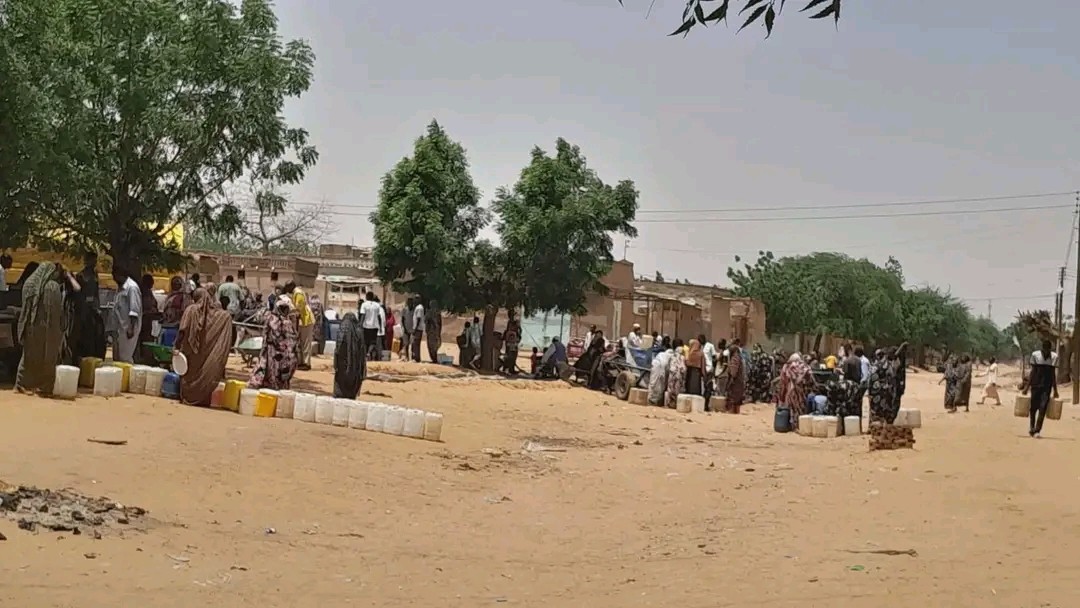
“City residents are facing severe water shortages due to the complete cessation of public water sources. The city is now reliant on internal wells and water tankers transporting water from outside the city.”

Abdullah said that until the middle of this week, RSF drones were attacking the city at a rate of two to six strikes per day. “They targeted vital centres and the necessities of life in the city: the army command, combat vehicles, fuel tankers, drinking water and sewage trucks.”
He also said civilian homes had been hit, as well as trucks on the national road linking el-Obeid to the rest of the country. “Many trucks, tankers and vehicles were burned on the road because of the drones,” Abdullah said.
A large proportion of the city’s fuel pumps are now out of service. They have also been shut down due to the constant presence of drones within the city’s airspace, following orders from military intelligence in el-Obeid.
'This blackout exacerbated existing crises, disrupting water supplies and forcing many hospitals to shut down'
- Abdullah, el-Obeid resident
Because drone attacks have targeted cargo trucks on the national highway into el-Obeid – and because of the lack of fuel – the movement of goods into the city has been severely hampered, with the price of food, bread and medicine shooting up as a result.
“The fuel shortage has led to a deterioration of the situation in the city, bringing public transportation to a standstill,” another source in the city, who could not be named, said. The price of transport has skyrocketed.
“A four-gallon can of fuel can now cost 800,000 pounds or more ($1,332). Travel fares to local areas and other states have also increased and are expected to rise further as the crisis continues.”
The price of a barrel of water has quadrupled from 5,000 to 25,000 Sudanese pounds ($8-41), and a jerrycan of water now costs 3,000 pounds.
“This water is brackish and unfit for drinking,” Abdullah said, with other residents confirming that it was very hard to find clean drinking water.
The water tankers, which used to transport potable water from sources outside the city, are no longer operation because of the drone attacks.
Parents in el-Obeid are afraid to send their children to school. Schools are still open, but when parents hear the bombing, they go to collect their children from school, just so they know they are safe.
Is the army and government doing enough?
Despite the drone strikes and the nearby presence of the RSF, “the city is not in general afraid of attack from the Rapid Support Forces,” Abdullah said.
“They are lying. They can’t attack the city because the army is here, and they are still strong. Because of that, the RSF is bombing us by air because we don’t have air defences.
“Regardless of the military situation, the RSF militia continues to target and kill civilians, while the government army continues to defend them,” Amgad Fareid Eltayeb, advisor to Sudan’s army-backed Transitional Sovereignty Council, told MEE.
“At present, government control of el-Obeid is the only barrier preventing a repeat of the massacres witnessed in el-Fasher as the RSF advanced on the city.”
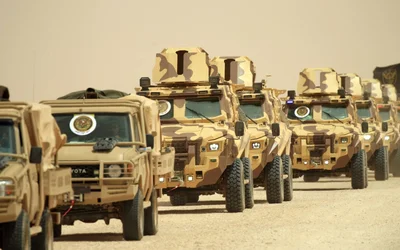
In October last year, the RSF captured el-Fasher, the capital of North Darfur, raping, killing and extorting thousands of civilians in the process. For months, international governments had been warned of this possibility, but no action was taken.
“We feel as though the SAF is protecting us, but we also feel like it’s not enough,” Abdullah said of how citizens in el-Obeid view the army. “For a long time, we are seeing these drones that are bombing everywhere, and the army can’t do anything about it. People feel disappointed about that.”
Civilians in the city regularly ask soldiers why they can’t be protected from the bombing and complain about a lack of air defence and protection.
“Were it not for the humanitarian organisations and the services they provide to the displaced people, the situation would have exploded long ago,” Abdullah said.
“The city and state governments are completely incapable of providing security and safety for the citizens, protecting them from the daily drone attacks and the recurring security lapses that have plagued the city since the beginning of the war.”
These lapses include assassinations, injuries and the looting of civilian property by military forces stationed within the city, often using weapons, local sources said.
“Children walk long distances to school, and workers reach their workplaces without electricity, drinking water, or even a source of income due to poverty, unemployment, and the scarcity of cash in the city,” Abdullah said.
“The city is going through a difficult period; we hope it will overcome it peacefully and that security and peace will prevail in Sudan.”
Middle East Eye delivers independent and unrivalled coverage and analysis of the Middle East, North Africa and beyond. To learn more about republishing this content and the associated fees, please fill out this form. More about MEE can be found here.