Iran says it is not concerned by new 'Mecca Joint Defence Agreement'

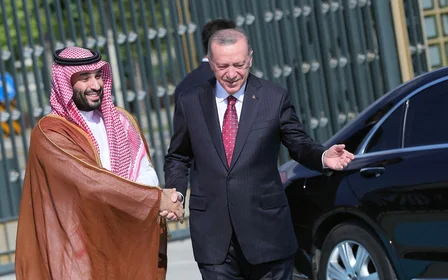
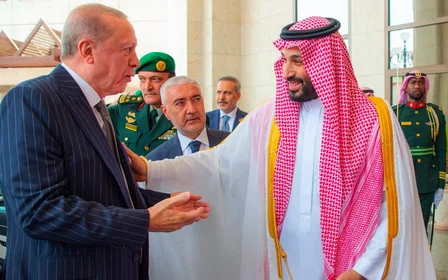
Iran has played down the mutual security agreement signed between the leaders of Saudi Arabia, Pakistan and Turkey in the Muslim holy city of Mecca on Friday.
Esmaeil Baghaei, Iran's foreign ministry spokesperson, said on Monday that Tehran saw no reason to be concerned that a new security pact is directed against Iran.
Baghaei said the pact showed a "change in perception" towards the US, as well as a shift in the regional approach to security.
He added that the agreement represented a shift towards greater reliance on the states' own capabilities rather than outside powers.
"Any plan that is based on the geopolitical and historical realities of the region, is comprehensive and inclusive, and correctly identifies the enemy and the threat, has a chance of helping to strengthen security and prevent instability and abuses by the Zionist enemy and its allies," Baghaei said.
New MEE newsletter: Jerusalem Dispatch
Sign up to get the latest insights and analysis on Israel-Palestine, alongside Turkey Unpacked and other MEE newsletters
Many analysts have suggested that the alliance between Ankara, Riyadh and Islamabad is targeted at Tehran.
The three states have largely Sunni populations, but while Saudi Arabia has had frosty relations with Iran, Turkey and Pakistan have remained relatively cordial with Tehran.
Islamabad has been a key conduit for negotiations between the US and Iran as they engage in a prolonged conflict over the Strait of Hormuz, which Tehran has blockaded in response to the US and Israeli war on the country, which was initially aimed at toppling its government.
Saudi Arabia, on the other hand, has been the subject of Iranian retaliatory action primarily aimed at US military assets within its borders.
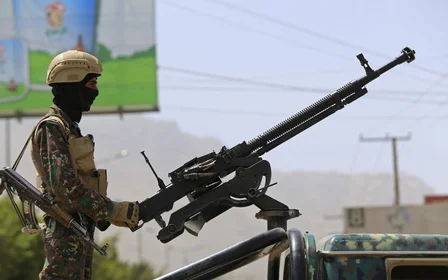
As the conflict has dragged on, hostilities have reignited between Saudi Arabia and its neighbours to the south, the Houthi-led administration in Sanaa, which controls most of northern Yemen.
The Houthis have responded to Saudi air strikes and attacks by its allies in the internationally recognised Yemeni government with attacks on Riyadh's energy facilities.
Most recently, a Saudi Aramco refinery suffered widespread fires after a drone struck its facilities in the province of Jizan early on Sunday.
Turkish and Saudi relations have been on the mend in recent years due to a rapprochement that followed soured relations over the murder of the journalist Jamal Khashoggi in the Saudi consulate in Istanbul, as well as the backing of rival factions in conflicts in Libya.
Pakistan has been a long-time military backer of the government in Riyadh, albeit one that tries to maintain amiable relations with other Muslim-majority states, including Iran.
Middle East Eye delivers independent and unrivalled coverage and analysis of the Middle East, North Africa and beyond. To learn more about republishing this content and the associated fees, please fill out this form. More about MEE can be found here.