Turkey and Saudi Arabia's rocky relations: A brief history

In a highly symbolic move, the leaders of Saudi Arabia and Turkey were pictured performing Friday prayers together this week in the holy city of Mecca.
Turkish President Recep Tayyip Erdogan and Saudi Crown Prince Mohammed bin Salman were joined at the holiest site in Islam by Pakistani Prime Minister Shehbaz Sharif.
For years, Ankara and Riyadh have been moving closer together and mending previously turbulent relations.
That process was further solidified in recent days after Turkey, Saudi Arabia and Pakistan signed a historic joint defence agreement.
The agreement brings the three Muslim powers under a single security umbrella for the first time as part of a trilateral framework.
New MEE newsletter: Jerusalem Dispatch
Sign up to get the latest insights and analysis on Israel-Palestine, alongside Turkey Unpacked and other MEE newsletters
While Pakistan has maintained close ties with both countries for decades, Turkey and Saudi Arabia have not always seen eye to eye.
From historical rivalries over territory and religious sites to periods of cordial relations and a rupture over the killing of a journalist, Middle East Eye takes a brief look at the history of relations between the two countries.
Sunni Muslim powers
There has long been low-level tension between Riyadh and Ankara over their competing claims to leadership of the Sunni Muslim world, dating back to the establishment of both states in the early 20th century.
The House of Saud fought the Ottoman Empire during the Ottoman-Saudi war in the 19th century, with the Saudis taking control of swathes of territory before a brutal crackdown by the Ottoman rulers.
After the fall of the Ottoman dynasty following the Arab revolt in 1916, the Saudis defeated local rivals and took control of the holy cities of Mecca and Medina by 1924.
Footage: Saudi Crown Prince MbS, Erdogan and Sharif together perform Friday prayers in Mecca pic.twitter.com/tsVx6yV5Nt
— Ragıp Soylu (@ragipsoylu) August 7, 2026
The Ottomans had controlled Islam's two holiest sites almost continuously for more than 350 years.
The nascent states of Saudi Arabia and Turkey formally established relations in the 1930s, and the two countries remained cordial for many decades.
Both supported Iraq during the Iran-Iraq war, though Riyadh did so more openly, and both supported the US during the Gulf war.
Tensions occasionally simmered over Islamic cultural heritage, with Turkey long criticising the demolition of Ottoman sites, including fortresses, cemeteries and railways, in Saudi Arabia.
In 2002, the Turkish culture ministry condemned the Saudi demolition of the then 220-year-old al-Ajyad fortress, which overlooks the Grand Mosque in Mecca.
Murat Sokmenoglu, then Turkey’s parliament speaker, called it “sinful behaviour in breach of the moral values of Islam”.
Riyadh defended the decision, stating that it was exercising its sovereignty and using the site to house pilgrims in Mecca. The Clock Tower in Mecca, one of the world’s tallest buildings, was later built where the fortress once stood.
Arab Spring divergence
Cordial relations, punctuated by occasional minor disputes, gave way to much deeper disagreements following the Arab Spring in 2010.
Although both countries supported the overthrow of longtime ruler Bashar al-Assad in Syria, their wider approach to revolutionary movements in the region diverged.
In Egypt, Turkey supported Mohamed Morsi - the first democratically elected president - and strongly opposed the 2013 military coup led by Abdel Fattah el-Sisi, a friend and ally of Riyadh.
Following the coup, Turkey was welcoming of Egypt’s opposition, allowing dissenting media platforms to base themselves on Turkish soil.
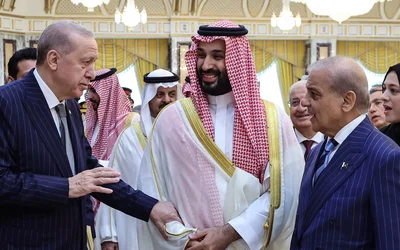
For years, Erdogan refused to recognise Sisi’s rule and called for the release of 65,000 political prisoners.
Ankara and Riyadh diverged in other arenas too.
In 2017, when Saudi Arabia (alongside the United Arab Emirates, Bahrain and Egypt) imposed a blockade on Qatar, accusing it of meddling in regional countries and supporting terrorism, Turkey sided with Doha.
Meanwhile, in Libya, following the fragmentation of power after the 2011 revolution, Ankara supported the internationally recognised government in Tripoli, while Riyadh initially aligned itself with eastern-based warlord Khalifa Haftar.
A war of words between Riyadh and Ankara came to a head in early 2018, when Mohammed bin Salman said Turkey was part of a “triangle of evil” alongside Iran and extremist religious groups.
Khashoggi killing
Ties between the two hit their lowest in modern times later that year following the killing of Saudi journalist Jamal Khashoggi.
Khashoggi, a former MEE journalist, was murdered by Saudi agents at the country's consulate in Istanbul in October 2018.
Turkish prosecutors later indicted 20 Saudis over the killing, based on an analysis of the suspects’ mobile phone records, records of their entry into and exit from Turkey, their presence at the consulate, witness statements, and an examination of Khashoggi's phone, laptop and iPad.
Erdogan said the killing was ordered at the "highest levels" of the Saudi government.
Turkey’s state broadcaster and news agency were blocked in Saudi Arabia in 2010, and Ankara responded by blocking Saudi and Emirati news websites.
Riyadh also launched an unofficial boycott of Turkish goods, causing Turkey’s exports to the Gulf kingdom to drop 92 percent year on year in 2021.
The Saudi government had systematically pressured local businesses not to trade with Turkish companies and to drop their goods from their shelves.
Regional rapprochement
The two countries ended their years-long rift in 2022 as part of a wider period of rapprochement in the region.
Mohammed bin Salman visited Ankara in June that year for the first time since Khashoggi’s killing.
He met Erdogan at the presidential palace, where the two countries agreed to deepen cooperation on monetary policy, defence, energy and tourism.
The meeting came after a Turkish court transferred the Khashoggi murder case to Saudi Arabia, meeting a key demand from the Gulf kingdom for mending ties.
The reconciliation came amid a wider regional shift towards rapprochement led by the Saudi crown prince.
That included ending the three and a half year rift with Qatar, seeking to engage with the Houthis in Yemen, as well as restoring diplomatic relations with Iran following a China-brokered agreement.
At the same time, Ankara, for its part, restored fractured relations with Egypt and the UAE.
At a time when Turkey was dealing with a fragile economy and a massive slump in its currency, ending its rifts with oil-rich Gulf states was seen as key to economic stabilisation.
Since patching up ties, Turkey and Saudi Arabia have signed deals on technology, defence and renewable energy.
In the summer of 2023, Saudi Arabia agreed to buy Turkish drones in the biggest defence contract in Turkey's history.
Aligning goals
More recently, Turkey and Saudi Arabia appear to be coming closer together due to a shared understanding over events in neighbouring countries.
In Syria, both Riyadh and Ankara support the new government led by Ahmed al-Sharaa and are among Damascus’ closest allies.
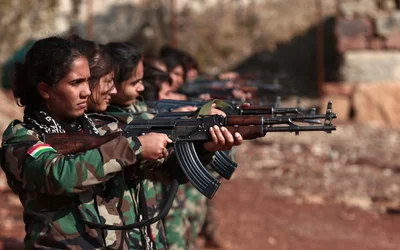
Both countries were involved in lobbying for the US to lift sanctions on Syria.
In Libya, while they had at times backed rival camps, they now both appear to support the internationally recognised government.
Meanwhile in war-torn Sudan, Riyadh and Ankara both support the Sudanese Armed Forces, led by Abdel Fattah al-Burhan.
The UAE is the main backer of the paramilitary Rapid Support Forces.
Somalia is another arena where Turkey and Saudi Arabia find themselves on one side and Abu Dhabi on the other.
Ankara and Riyadh stand firmly behind the central government, while the UAE has steadily supported Somaliland’s efforts to gain international recognition.
Rather than Qatar or Turkey, it now seems that Saudi Arabia's growing rift is with its erstwhile Gulf ally, the UAE. That came to a head publicly for the first time in Yemen in late December.
Ankara appears increasingly aligned with Riyadh amid those tensions, although it is unlikely to take sides publicly because of its strong financial ties with Abu Dhabi.
Middle East Eye delivers independent and unrivalled coverage and analysis of the Middle East, North Africa and beyond. To learn more about republishing this content and the associated fees, please fill out this form. More about MEE can be found here.