Iran threatens South Korean assets if Seoul joins Hormuz mission

Iranian academic Mohammad Marandi has warned that Tehran would consider South Korea an enemy and could strike its economic and military interests across the Persian Gulf if Seoul joins the US-led war on Iran.
Speaking on Al Mayadeen’s The Grand Standoff, Marandi said South Korea’s involvement in efforts to secure freedom of navigation through the Strait of Hormuz would expose its interests in the region to Iranian retaliation.
“If the South Koreans participate in this war against Iran, Iran will see it as the enemy,” Marandi said, adding that Tehran would seek to “destroy whatever assets South Korea has in this region”.
Those targets would not necessarily be military installations, he said, and Iranian strikes could include South Korean assets in Saudi Arabia, Bahrain, Kuwait, the United Arab Emirates and Qatar.
“So the Koreans are very vulnerable to Iran,” said Marandi. “Iran can hurt them very badly.”
New MEE newsletter: Jerusalem Dispatch
Sign up to get the latest insights and analysis on Israel-Palestine, alongside Turkey Unpacked and other MEE newsletters
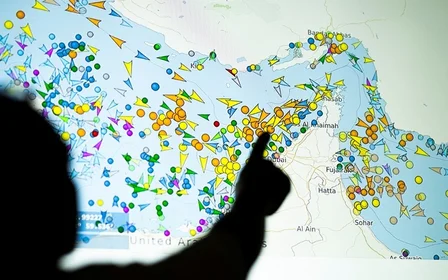
His comments came as South Korea considers potential naval contributions to efforts to restore freedom of navigation through the Strait of Hormuz, a vital waterway for global energy supplies.
Various options are under consideration, but no decision has been made, South Korea’s presidential office said on Friday.
The office said general options had been discussed on possible military contributions, including combat participation, noncombat roles and search operations, Al Jazeera reported.
“Please be advised that nothing has been decided yet concerning actual contributions,” the presidential office said.
Seoul was considering sending military assets to the region and seeking approval from parliament, South Korean media reported.

Options under consideration included a P-8 Poseidon maritime patrol aircraft and a naval logistics support ship, a report by The Guardian said.
South Korean broadcasters also reported that a navy explosive ordnance disposal team could be included.
Any new deployment of military personnel would have to be reviewed by South Korea’s National Security Council, passed by a resolution of the cabinet and approved by the National Assembly, the presidential office said.
The debate comes as South Korea faces mounting pressure from Washington to join efforts around the Strait of Hormuz.
US President Donald Trump has blasted Seoul for not backing the US war on Iran and tied the spat to wider strains in the US-South Korea alliance.
South Korea also depends heavily on the waterway for its energy supplies.
Last year, the country depended on shipments traversing Hormuz for 61 percent of its crude oil imports and 54 percent of its naphtha imports.
Marandi said the potential contribution was not likely to be a game-changer in the conflict and said South Korea had little military capability to contribute to the US.
“What is a ship or two from South Korea going to do? It’s foolish,” he said.
But he warned that any participation could have economic implications far beyond military assets.
“Iran will not only target the South Korean military assets, but Iran could easily destroy their economic assets across the Persian Gulf region,” Marandi said.
Under pressure from Washington, South Korea expanded the deployment of an anti-piracy naval unit from Somalia to waters around the Strait of Hormuz in 2019.
However, South Korea’s defence minister said in March that any substantially different mission in the strait would require parliamentary consent.
Middle East Eye delivers independent and unrivalled coverage and analysis of the Middle East, North Africa and beyond. To learn more about republishing this content and the associated fees, please fill out this form. More about MEE can be found here.