Iranian press review: Rouhani calls for regional bloc against Israeli air power

Former president warns of airspace weakness
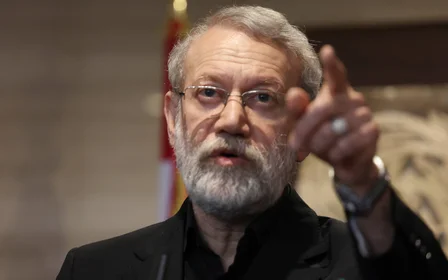
Former Iranian president Hassan Rouhani warned that Iran’s airspace has become dangerously exposed following the recent 12-day war, stressing that the country needs to work with regional neighbours to build a joint defence system against Israel.
Rouhani, who previously spent 16 years as secretary of the Supreme National Security Council, criticised current officials for downplaying Iran’s defence problems. He said one of the country's main vulnerabilities is how easily Israel can enter its airspace.
“The skies over Iran have become completely safe for the enemy. We no longer have a real deterrence. Our neighbouring countries - Iraq, Syria, Lebanon, Jordan - all have airspace controlled by the United States and Israel,” Rouhani said.
He added that Iran needs stronger ties in the region to push back against Israel. “If we can help the independence of countries in the region, we are helping ourselves… We need relationships where neighbours feel closer to Iran and see our interests and risks as shared.”
New MEE newsletter: Jerusalem Dispatch
Sign up to get the latest insights and analysis on Israel-Palestine, alongside Turkey Unpacked and other MEE newsletters
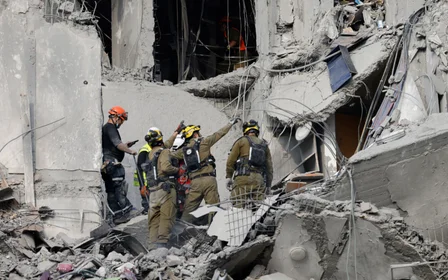
During the war, Israel reportedly first struck Iran’s air defence systems, then sent F-35s into Iranian airspace to hit several targets.
Arrest of artists at private gathering backlashes
The police raid on a villa in Lavasan, north of Tehran, and the arrest of several well-known Iranian actors at a private party have sparked strong criticism. Lawyers say the operation violates both Iran’s legal standards and religious rules.
Local media reported that more than 20 people, including seven famous film stars, were detained on charges such as “illegal assembly”, “offending public modesty”, “drinking alcohol” and “possessing alcoholic drinks”.

While police have long entered private gatherings without permission to enforce hijab rules or alcohol laws, the involvement of famous artists in this case has drawn a wider public reaction.
Lawyer Kambiz Norouzi criticised the police and judiciary in the Shargh daily, saying they had violated people’s privacy. “Only an unaccountable system believes it can do anything without following the law, including invading privacy, to expand its own power,” he wrote.
The website Rouydad24 described the arrests as a return to the early years after the 1979 revolution, when personal freedoms were far more restricted.
“These arrests come at a time when society expects more freedom in both public and private life,” the outlet wrote. “Detaining citizens at private parties brings back memories of past decades, when artists, journalists, and cultural figures were often targeted by security and judicial forces.”
Fuel price rise seen as smartly implemented
The Masoud Pezeshkian government’s decision to raise petrol prices has been criticised as contradicting his campaign promises, but experts and even political rivals say the way it was implemented was smart.
Under the new policy, starting 12 December, anyone who needs more than the monthly quota of 160 litres must buy the extra fuel at 50,000 rials per litre. The government allocation remains 60 litres at 15,000 rials and 100 litres at 30,000 rials each month.
Parliament speaker Mohammad Baqer Qalibaf, one of Pezeshkian's political opponents, said lawmakers do not oppose the plan and will work with the government. But he noted that the price increase will not reduce petrol use or stop fuel smuggling to neighbouring countries.
Energy experts also say the adjustment was needed to bring fuel prices closer to real market levels in the oil-rich country.
One of the experts, Mohsen Mohammadi, pointed to the failures of past governments, saying they tested many models to identify the approach that caused the least social and economic damage. He argued that the current plan, compared with costly and stressful past options, has fewer adverse effects and is better suited to launching long-term reforms in the energy sector.
Raising petrol prices remains a sensitive issue in Iran. The last increase, in 2019, led to nationwide protests in which more than 321 people were killed during the crackdown.
Back-to-back Tehran meetings signal regional calculations
The simultaneous visit to Tehran by Saudi Deputy Foreign Minister Saud bin Mohammed al-Sati and Turkish Foreign Minister Hakan Fidan has fuelled speculation in Farsi media about regional efforts to contain a new war.
International relations expert Hassan Beheshtipour suggested that both Riyadh and Ankara are increasingly worried about Israel’s growing power in the region. While he dismissed the idea of full Iranian cooperation with Saudi Arabia and Turkey because of their long-standing rivalries, he said both countries “have clearly felt the serious threat Israel poses in the region”.
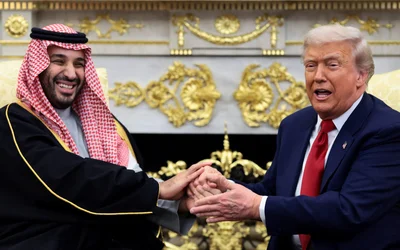
He added that this is why they may now see limited cooperation with Iran as useful for creating balance and containing Israel.
Ali Bigdali, a professor of international relations, also linked the meetings to concerns about another possible war between Iran and Israel. He said that, aside from Israel, no country in the region wants a new conflict to erupt nearby.
“Turkey and Saudi Arabia are moving with different goals but in the same direction, aiming for a more peaceful and predictable Middle East,” he wrote.
“Both countries want to reduce tensions in the region and also hope to act as mediators between Iran and the United States.”
*Iranian press review is a digest of news reports not independently verified as accurate by Middle East Eye.
Middle East Eye delivers independent and unrivalled coverage and analysis of the Middle East, North Africa and beyond. To learn more about republishing this content and the associated fees, please fill out this form. More about MEE can be found here.