Iranians backed the state against Israel. Will it now reward them?

After Israel’s 12-day war against Iran in June, a sense of cautious hope has emerged both within and beyond the country that the Islamic Republic might use this moment of national unity to ease internal tensions and address long-standing domestic grievances.
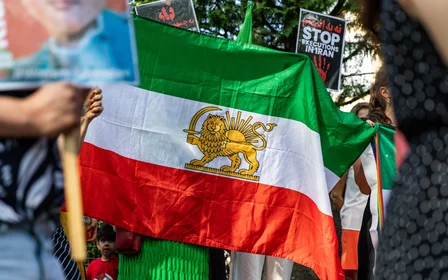
During the conflict, a rare moment of unanimity swept across the political spectrum in Iran. From principlists to reformists, and from the far right to the nationalist left, there was no visible sign of political infighting or factional disputes. In a striking display of solidarity, the public rallied around the flag and the Islamic Republic - even as only days prior, public anger towards it was at a boiling point over endemic corruption, economic mismanagement, the suppression of civil society and the relentless tightening of restrictions on freedom of speech.
The rallying of public support came as a surprise to many observers, especially in light of the recent political apathy that had gripped the country. In the last two presidential elections, fewer than half of eligible voters turned out, with many deliberately abstaining to register their protest against the Islamic Republic.
"It’s widely believed that Israel was emboldened to attack precisely because it assumed the Islamic Republic lacked popular support," said a reformist political activist, speaking to Middle East Eye on condition of anonymity.
"[Benjamin] Netanyahu’s government was counting on a domestic uprising - or at least a deeply fractured society - and exile-based regime-change advocates did their best to amplify that narrative. However, Bibi was proved wrong and he clearly underestimated the intelligence of Iranians."
New MEE newsletter: Jerusalem Dispatch
Sign up to get the latest insights and analysis on Israel-Palestine, alongside Turkey Unpacked and other MEE newsletters
The activist said that while the war has rallied people behind the Islamic Republic, this show of unity must not be misread.
"People didn’t suddenly become supporters of the Islamic Republic; they stood up for their sovereignty more than anything. They didn’t want a foreign state to dictate their future," he said.
"Many also feared that Israel’s real aim wasn’t just military pressure, but the fragmentation of Iran itself. A weakened, divided Iran would never pose a serious threat to Israel - neither as a regional rival nor as an ideological adversary."
Has the Islamic Republic understood the message?
In the aftermath of the war, the Islamic Republic finds itself at a crossroads.
On one hand, the war revealed a deep reservoir of national cohesion and resilience. On the other hand, it laid bare the urgency of internal reform. So far, however, the signals from Tehran have been mixed, if not discouraging.
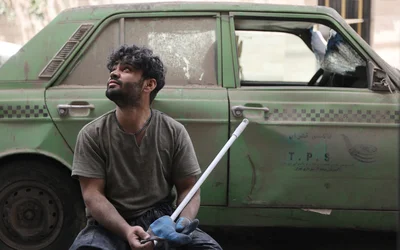
Contrary to expectations, the establishment has not announced any major changes to its domestic policies. The public’s hopes that the post-war unity might translate into a more open political atmosphere have, for now, gone unanswered.
Key demands - such as the release of political prisoners, lifting of internet censorship and ending the house arrest of 2009 opposition figure Mir Hossein Mousavi - could have been fulfilled with the stroke of a pen. Instead, many fear that hard-line instincts are once again prevailing within the Islamic Republic.
In a particularly symbolic move, two ageing figures returned to public life. Ahmad Jannati, now 99 years old and long seen as a symbol of political repression, was reinstated as secretary of the Guardian Council, the powerful body that vets election candidates and oversees legislation for conformity with Islamic law.
Meanwhile, Kazem Seddiqi, a cleric notorious for his ultra-conservative sermons, was once again seen leading Friday prayers in Tehran. These developments have fuelled public scepticism that any meaningful change is on the horizon.
And yet, subtle signs suggest a quiet debate may be taking shape within the corridors of the Islamic Republic.
A shift in rhetoric and tone?
A senior editor at a reformist newspaper in Tehran told MEE: "One of the most notable changes we’re seeing is in the establishment’s language. For the first time in years, top officials are speaking of Iranian nationalism - not Islamic ummah-ism [Pan-Islamism] - as the basis of unity. That shift is no small matter."
He explained that for decades, Iran has tried to dilute Iranian national identity in favour of a pan-Islamic worldview. "This created constant tension with the public, who held tightly to their cultural and national roots. But that seems to be changing now."
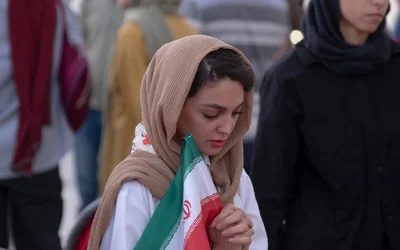
The editor also pointed to a shift in the Islamic Republic’s posture towards women.
"The pressure on women for not wearing the hijab appears to be easing - quietly, but clearly. I believe the leadership has realised that it cannot fight a war with half of its population. Perhaps, they’ve finally understood that coercion only breeds resistance," he added.
More tellingly, he said: "I believe the police and security forces have been instructed to act more respectfully. There’s an observable change in the way people are being treated.
"But the real challenge lies in reining in the Islamic Republic’s traditional social base: the hard-liners who have long thrived on cultural enforcement and ideological control."
Conservatives step in
In an unexpected development, some prominent conservative figures have begun calling for internal reform, arguing that ignoring the public’s message after the war would be a grave mistake.
Ezzatollah Zarghami, former head of state TV and a close confidant of the supreme leader, appeared on a televised programme and said: "We must not go back to factory settings. We need to change our behaviour. Sometimes, the restrictions we impose insult the intelligence of the Iranian people. In too many areas, we deny them the right to choose.
'People didn’t suddenly become supporters of the Islamic Republic; they stood up for their sovereignty more than anything'
- Reformist activist
"Now that the people have sounded the alarm, it’s time for us to change course."
Meanwhile, Ali Akbar Velayati, senior foreign policy adviser to the supreme leader, wrote: "Maintaining national unity, as emphasised by the [supreme] leader, must include tangible reforms in social policy. The people have done their part. It’s now time for the officials to respond. Outdated methods are no longer sufficient in a post-war Iran."
In this carefully worded statement, Velayati seemed to acknowledge the need for change that is not cosmetic, but one that is "felt" by ordinary citizens.
What comes next?
A conservative politician, speaking to MEE on condition of anonymity, said: "I’ve heard promising news that there are serious discussions about releasing political prisoners, possibly even Mir Hossein Mousavi, who has been under house arrest since 2011."
'There’s a recognition that the post-war era demands a different kind of leadership'
- Conservative official
A reformist source also shared the same news with MEE, but clarified: "I’m not holding my breath. There have been promises before. We’ve learned to wait and see."
At the same time, speaking to MEE, a conservative official suggested that internal shifts are underway to sideline hard-liners from key political arenas gradually.
"There’s a recognition that the post-war era demands a different kind of leadership - one that is more responsive to people’s needs and more in tune with today’s realities," he said.
Middle East Eye delivers independent and unrivalled coverage and analysis of the Middle East, North Africa and beyond. To learn more about republishing this content and the associated fees, please fill out this form. More about MEE can be found here.