Israel-Palestine war: First week ends with over 2,500 Palestinians, 1,400 Israelis killed

Live Updates
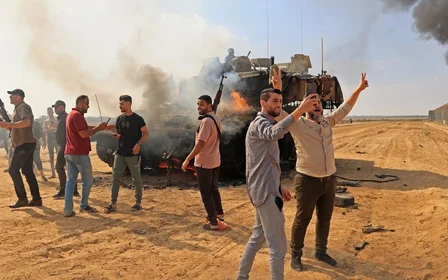
Analysts who spoke to Middle East Eye today have said that the Israeli-Palestinian conflict may have been totally reshaped after Palestinians entered Israel and launched a surprise attack.
Ameer Makhoul, a Palestinian analyst, said that the consequences of the attack are difficult to ascertain due to its unusual nature.
“Even if the Palestinian attack ends, its impact will be long-term and strategic, and will change the rules of the game,” he told Middle East Eye.
Hani Masri, a Palestinian analyst, said the current situation was a result of the “tragic” economic situation in the besieged Gaza Strip; Israel’s repeated attacks in the occupied West Bank, on holy sites, and against Palestinian citizens of Israel; and its oppressive policy against prisoners.
A change in the status quo?
Masri said that while the results of the attack are still unclear, different scenarios could play out.
Israel might make a move to return soldiers to the Gaza Strip, he said, effectively changing the status quo that has been in place since it withdrew its forces from the coastal enclave in 2005.
Israeli journalist Meron Rapoport questioned how such an attack could happen, and called the breach into Israel a blow to its deterrence strategy and “a complete collapse of Israeli training”.
For further analysis, click on the link below.
Palestinian attack on Israel may change the conflict, analysts say

Itamar Ben Gvir, Israel’s national security minister, has declared a state of national civil emergency, granting significant powers to Israel's police force.
The decree allows police to impose curfews, ban civilian access to areas, and give law enforcement agencies access to personal property. Police are also allowed to use "reasonable force" against civilians who fail to comply.
Meanwhile Defense Minister Yoav Gallant has extended the Home Front Command's state of emergency to all of Israel. Originally only applying to Israel's south, the state of emergency allows the Israeli army to "set special instructions for the population, limit gatherings and close sites in particular places".
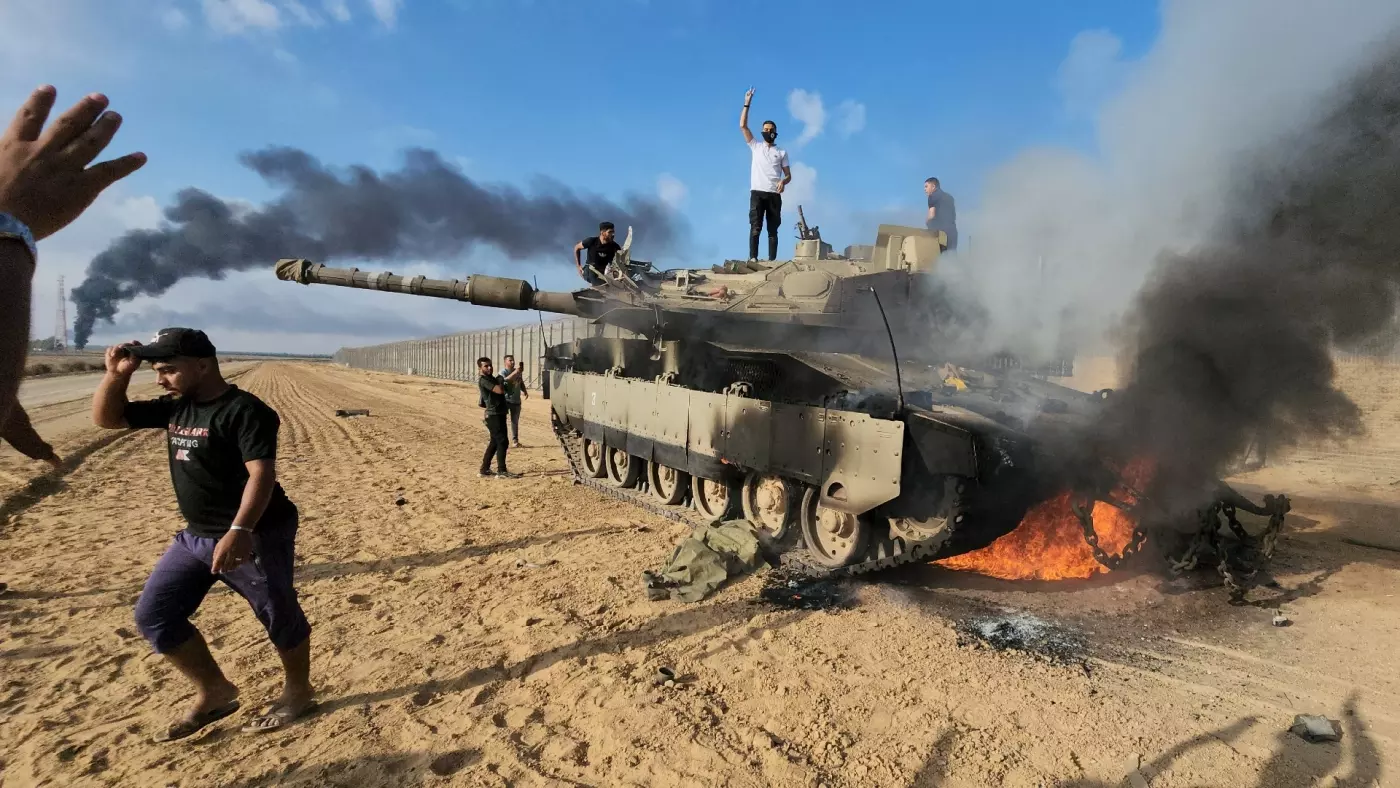
When Palestinians, some of whom belonged to the Hamas movement, crossed from Gaza into southern Israel earlier today, locals in Gaza knew that there would be retaliation.
Inside the besieged enclave, hundreds of Palestinians started queuing up at bakeries and stocking up on essentials, while others sought refuge in schools, expecting a large-scale attack.
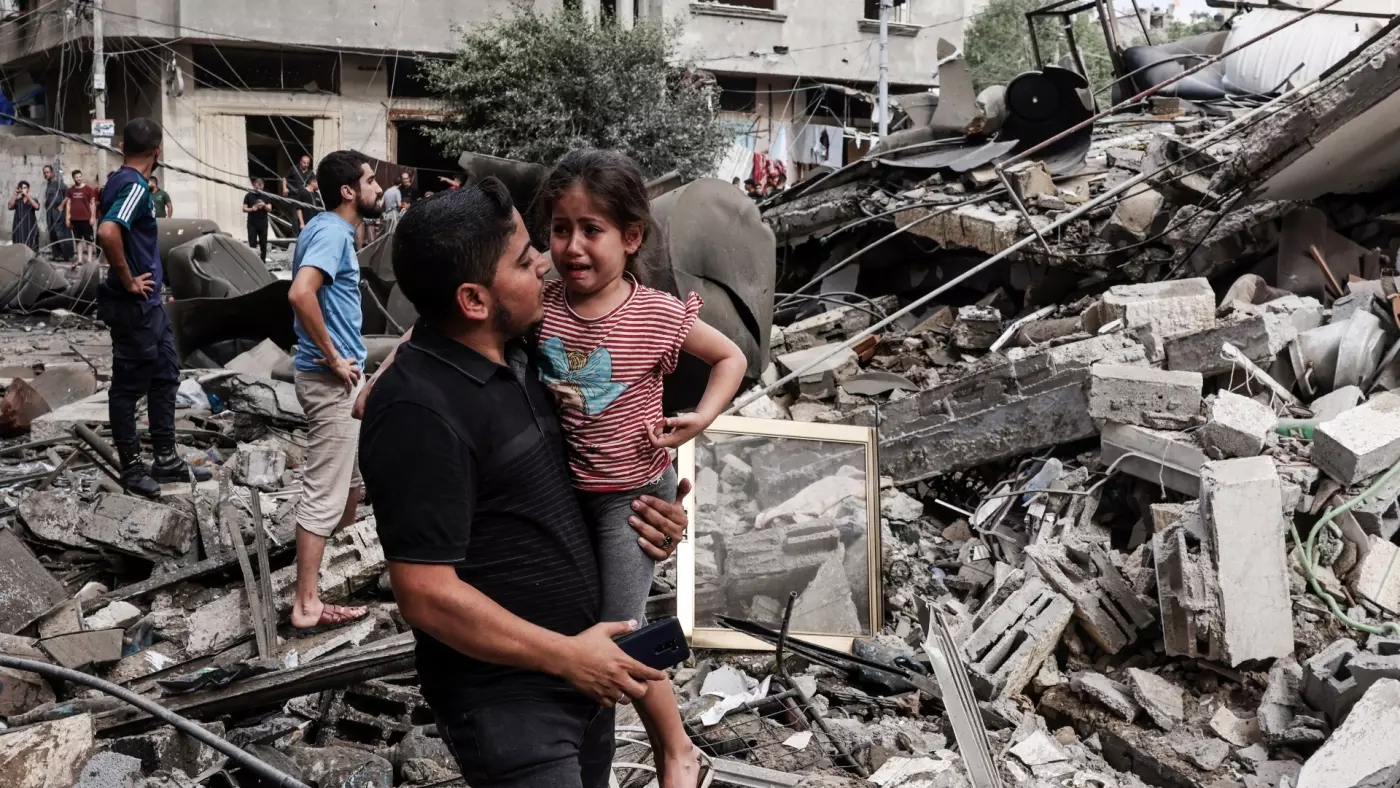
Bombs tarted raining down on residential parts of the Gaza Strip, levelling buildings.
Click on the link below to read a report from Maha Hussaini, our correspondent on the ground in Gaza City.
As rockets began to fire, Palestinians prepared for the worst
US President Joe Biden refused to answer questions on whether an intelligence failure led to Hamas launching an assault on southern Israel.
Speaking in an address from the White House, Biden said the US "stood with Israel" and that "support for Israel's security is rock solid and unwavering".
Biden added that he will "personally stay in close contact with Israeli Prime Minister Benjamin Netanyahu".
Israel has regained control of most of the southern areas that were taken by Hamas earlier on Saturday, the Israeli army has said
The locations taken back, it said, include Sderot, Sofa, Kerem Shalom, Nirim, Naziv Hathara, Nir Oz, Nahal Oz outpost, Hulit, Nir Am, Nir Yitzhak, Be'er Sheva, Sde Yemen, Magen and Urim.
Good evening Middle East Eye readers.
It is now around 15 hours since Palestinians launched a surprise attack on Israel from Gaza.
Here are some of the latest developments since our last recap.
- Israel’s health ministry has reported that at least 200 Israelis have died since Hamas launched its attack in early this morning. Meanwhile, 1,452 people are wounded.
- At least 232 Palestinians have been killed and over 1,697 wounded in Israeli air strikes on Gaza, the Palestinian health ministry has said.
- The Gaza Strip is in a total blackout after Israel’s energy minister announced plans to cut power to the Gaza Strip. Health officials in Gaza warn that this could cause serious health consequences.
- Rockets fired by Hamas have caused a building in Tel Aviv to collapse, while the Israeli army says they have regained control of the key Reim military base.
- Scores of Palestinian civilians have been displaced after Israeli fighter jets bombed a high-rise residential building. Hospitals have also been targeted.
- Israeli fighter jets reportedly struck the house of Yahya al-Sinwar, Hamas’s leader in Gaza, although the details surrounding the attack are not yet clear.
- Prime Minister Benjamin Netanyahu's Likud party, rival National Unity party Benny Gantz and opposition leader Yair Lapid have expressed that they are willing to form an "emergency government" in the face of the attacks.
The death tolls on both sides are expected to rise, and Palestinians have already started bracing for a full-blown war by stocking up on essentials and seeking shelter in schools.
Follow Middle East Eye's blog for updates throughout the day, and keep an eye on our social media platforms on Facebook, X, Instagram and YouTube.
Prime Minister Benjamin Netanyahu's Likud party is willing to enter a "broad emergency government" with rival National Unity party head Benny Gantz and opposition leader Yair Lapid, he said in a statement.
Israel’s Health Ministry said that at least 200 Israelis have died since Hamas launched its assault into southern Israel.
At least 232 Palestinians have been killed and over 1,697 wounded in Israeli air strikes on Gaza, the Palestinian ministry of health has said.
Another four Palestinians, including a 13-year-old boy, have been killed by Israeli fire in the occupied West Bank .
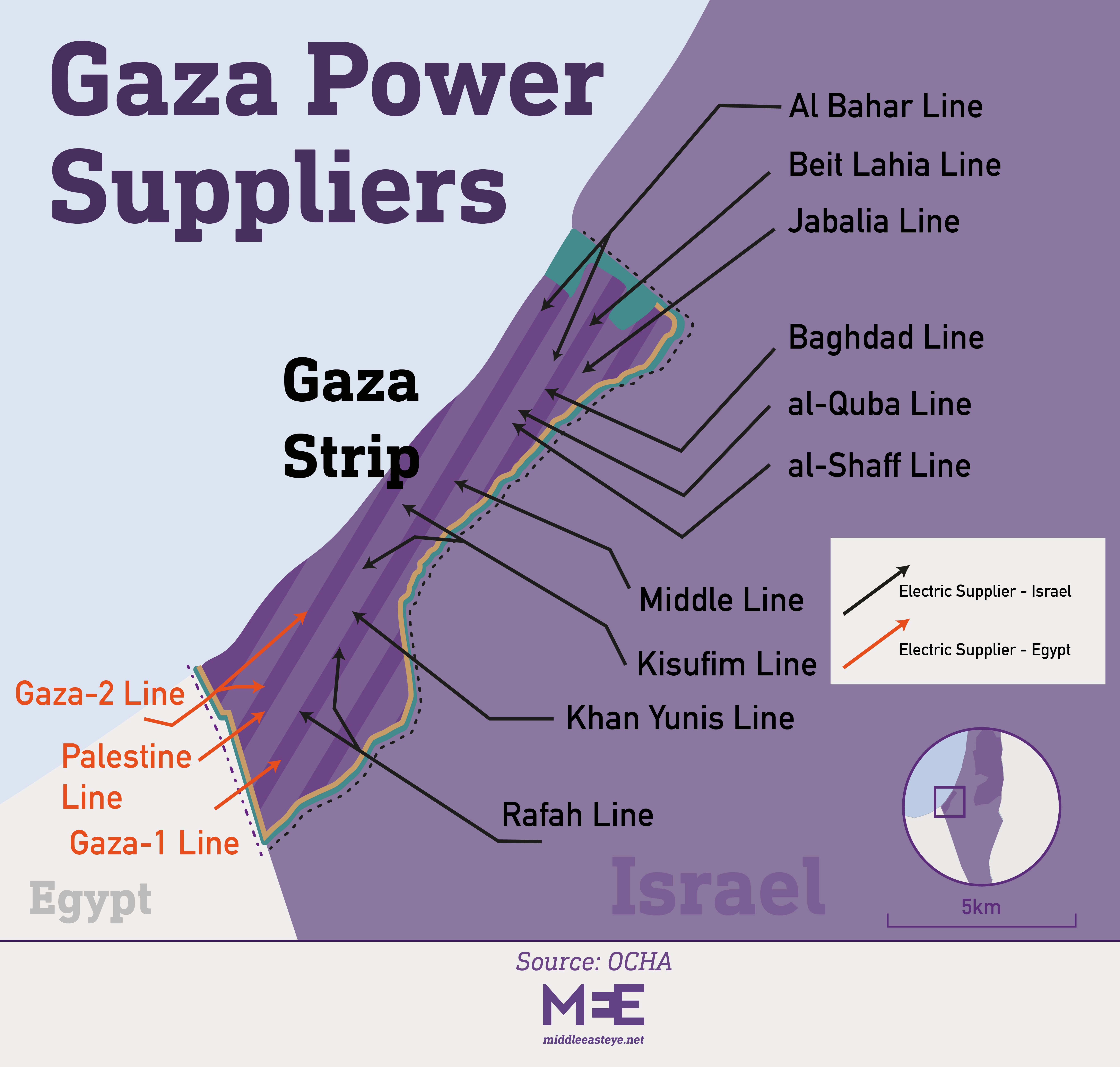
Israel's decision to cut power to the Gaza Strip is set to cause serious health repercussions, the local ministry of health has warned.
As Israel controls around two-thirds of all Gaza's electricity, the decision to cut power to the besieged strip will force hospitals to operate electrical generators for long hours, the ministry said.
However, due to low fuel reserves and the deterioration of the generators, the practice is unsustainable, the ministry warned.
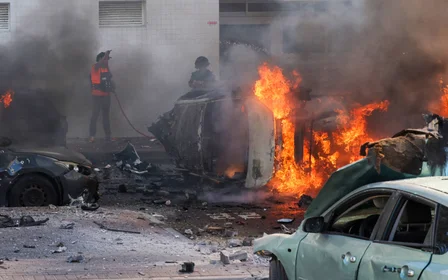
Hamas' latest barrage of rockets collapsed a building in Tel Aviv, Israel's fire department has reported, according to Haartez.
At least two wounded people were rescued from the building. Meanwhile, rescue teams are searching the rubble for others who might have been trapped in the strike.
A total power blackout has "engulfed all provinces of the besieged Gaza Strip", the official Palestinian news agency Wafa has reported.
Israel's energy minister earlier announced plans to cut power to the Gaza Strip in an official decree. Around two-thirds of Gaza's electricity comes from Israel.
A Wafa correspondent said all of Gaza has "gone into complete darkness" due to the power cut by Israel.
Hamas has fired a barrage of 150 rockets at Tel Aviv, the movement said.
Israeli media indicates that heavy rocket fire has been reported in southern and central Israel.
The Israeli death toll has risen to 150 while more than 1,100 more people are wounded, Israeli media has said.
Meanwhile, a barrage of rockets were fired from Gaza towards Tel Aviv, where sires have been heard.
The Israeli army said they have regained control of the key Reim military base, according to Israeli media.
The base, which houses the military's Gaza Division, was taken over by Hamas fighters in the early hours of the morning and remained under their control for nearly 12 hours.
Heavy clashes between Israelis and Palestinians were reported at the base.
Fighting continues in several other areas inside Israel as the military attempts to regain control of areas seized by Palestinians.