Israel imposes curriculum on 45,000 Palestinian students in East Jerusalem

Israeli authorities are imposing their curriculum on more than 45,000 Palestinian students in state-run schools in East Jerusalem, as part of a wider crackdown on education in the occupied area of the city.
The new measures mean that around 38 percent of all Palestinian students - a marked increase on recent years - will be taught the Israeli curriculum rather than the Palestinian one from Tuesday. This includes all new first grade and seventh grade classes opening in the state education system in East Jerusalem.
The Palestinian Authority's Jerusalem Governorate spokesperson Maarouf al-Rifai said the decision represented a dangerous escalation and one unprecedented since 1967, the year Israel occupied East Jerusalem.
He called the move a direct attack on the Palestinian national and cultural identity of Jerusalem, saying the imposition of the Israeli curriculum was particularly dangerous given the marginalisation of “fundamental topics regarding the Palestinian narrative and history - foremost among them the Nakba, prisoners, and Jerusalem”.
Al-Rifai said this meant “turning the curriculum into a battleground over consciousness, memory and identity in the city”, and that the decision was part of a “systematic policy targeting the Palestinian education sector in Jerusalem”.
New MEE newsletter: Jerusalem Dispatch
Sign up to get the latest insights and analysis on Israel-Palestine, alongside Turkey Unpacked and other MEE newsletters
The move to impose Israel’s curriculum on yet more Palestinian students comes as Itamar Ben Gvir, the far-right national security minister, plans to distribute a children’s book celebrating his “activities and achievements” to Israeli education institutions.
The book, titled The Minister Who Didn’t Stop, was to be launched on Tuesday, the start of the Israeli school year, at Ben Gvir’s Jewish Power party conference.
Teachers refused entry from West Bank
The number of Palestinian students studying the Israeli curriculum rose from 10,347 in 2020-21 to 27,041 in 2025-26 and is now at more than 45,000, a marked increase.
Palestinian children usually attend one of four types of school: those run by the United Nations, private schools, Islamic Waqf schools, or Israeli-run municipal schools, where the curriculum will now be widely imposed.
After Israel’s occupation of East Jerusalem, the education system remained the same as the one in the West Bank and taught the Jordanian curriculum, which was later replaced in the 1990s by a curriculum developed by the Palestinian Authority.

Israel has also refused to allow around 70 teachers from the West Bank entry to East Jerusalem, where they work, thereby delaying the start of the school year in Palestinian private schools in the city.
These schools have announced a suspension in classes and will not begin the 2026-27 academic year until teachers and staff from the occupied West Bank have their entry permits reissued or renewed.
Forty percent of teachers in Jerusalem’s Palestinian private schools - most of them Palestinian Christians - live in the West Bank.
Omar Rjoob, media director for the Jerusalem Governorate, told Middle East Eye that Israel’s targeting of the education sector was linked to a broader policy aimed at “entrenching the annexation of Jerusalem and severing it from its Palestinian surroundings”.
Restrictions on the movement of residents and teachers are part of this, he said, as well as checkpoints and the separation wall constructed by Israel in the early 2000s, which severs Jerusalem from the West Bank.
Historically, this separation of Jerusalem from the rest of occupied Palestine helped force Palestinians from Jerusalem into looking for jobs in the Israeli labour market, meaning the need for Hebrew language education in East Jerusalem increased.
Israeli action against Unrwa schools
In January 2026, Israel’s parliament banned the employment - within the Israeli education system - of teachers holding academic degrees from educational institutions affiliated with the Palestinian Authority.
This move has direct repercussions for the Arabic education sector in East Jerusalem because a significant portion of the teaching staff is made up of graduates from Palestinian universities.
Israel has also taken measures against educational institutions affiliated with the United Nations Relief and Works Agency for Palestine Refugees (Unrwa), including the closure of several of its schools and the seizure of educational complexes belonging to the agency in the Shuafat and Kafr Aqab camps.
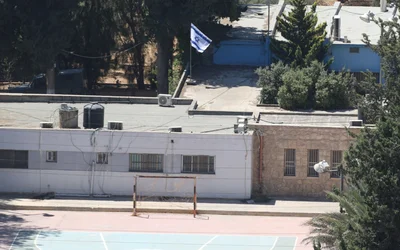
Haaretz reported that the large school built by Unrwa in the heart of Shuafat has been taken over by the Jerusalem municipality, which plans to house 14 high school classes, a mixed primary school for boys and girls and five special education kindergartens there.
Middle East Eye contacted the education department of the municipality for comment.
“With its various components, this trajectory represents an attempt to re-engineer the educational environment in occupied Jerusalem to serve the Israeli occupation's policies,” Rjoob told MEE.
The weakening of Palestinian institutions, restrictions on teachers and changes in curriculum threaten the Palestinian identity of students in Jerusalem, he said, with education transformed into a tool for “policies of annexation, Judaisation, and the erasure of the city’s Arab-Palestinian character”.
Middle East Eye delivers independent and unrivalled coverage and analysis of the Middle East, North Africa and beyond. To learn more about republishing this content and the associated fees, please fill out this form. More about MEE can be found here.