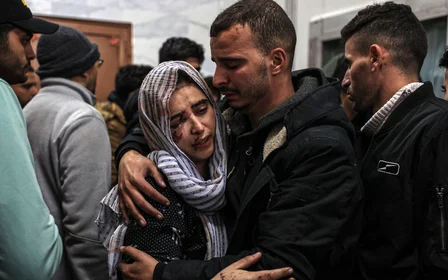
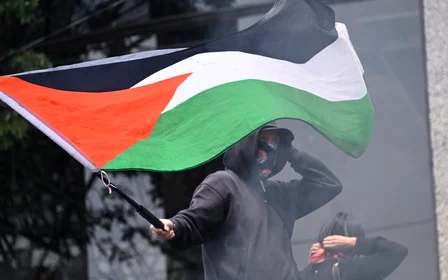
Israeli journalist says Palestinians face threat of expulsion from the river to the sea
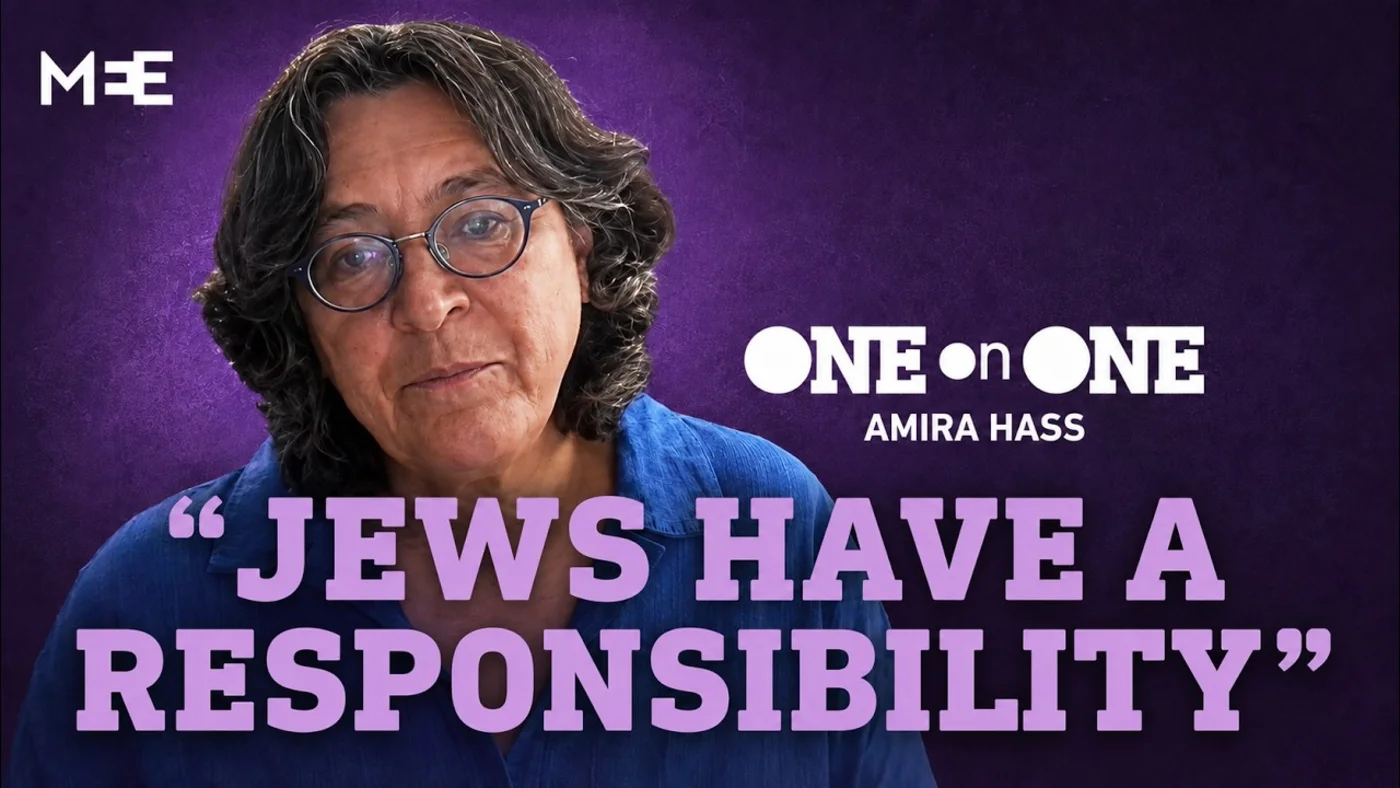
Israeli veteran journalist Amira Hass has warned that Palestinians between the Jordan River and the Mediterranean Sea face a growing threat of forced expulsion.
Speaking to Middle East Eye, Hass said Israel now has an increasingly powerful ideological, political, economic and military infrastructure capable of facilitating mass displacement.
“It’s not a prophecy. It’s a warning. It’s expressing my fear,” Hass said.
Hass, whose parents survived the Holocaust, has lived in the Gaza Strip and the occupied West Bank since 1993. She has reported on Israel’s occupation of Palestinian territory for Haaretz for more than three decades. Earlier this month, she published a column arguing that Israel was seeking to “erase” Palestinians rather than debate a diplomatic solution for a Palestinian state.
She said the policy targeted Palestinians in Gaza, the West Bank and Palestinian citizens of Israel.
New MEE newsletter: Jerusalem Dispatch
Sign up to get the latest insights and analysis on Israel-Palestine, alongside Turkey Unpacked and other MEE newsletters
“Israel makes life unbearable everywhere now,” she told MEE. “It’s not temporary. It’s a policy in Gaza, it’s a policy in the West Bank, and it’s a policy in Israel proper.”
Hass said religious-nationalist and far-right forces had become Israel’s strongest political actors, giving them increasing influence over government policy and state bureaucracy.
'I am very afraid about what the Israeli state is capable of doing now'
– Amira Hass, Israeli journalist
“They are the strongest, and they have been dictating the track,” she said.
But she argued that pressure on Palestinians to leave their homeland should be understood as part of a broader policy that has become normalised and institutionalised across Israel’s political spectrum.
“It has been completely normalised,” she said.
“We know this has been a process. It didn’t start with this government or the previous one. It has been built up over years.”
‘Despair and fear’
Israeli officials have openly called for Palestinians to be expelled from Gaza over the past three years.
Last week, Israeli Defense Minister Israel Katz said Israel was awaiting US approval to expel Palestinians from the Strip.
He said there was “no real solution for Gaza in the end without this migration”, adding that the Israeli government was “organised and prepared to get them out by sea, by air, by every way possible”.
In the occupied West Bank, Hass described “unprecedented despair and fear and helplessness”, particularly in Palestinian villages facing repeated settler attacks.
Small groups of settlers, she said, can paralyse entire communities, while the presence or actions of Israeli soldiers can prevent Palestinians from helping one another.
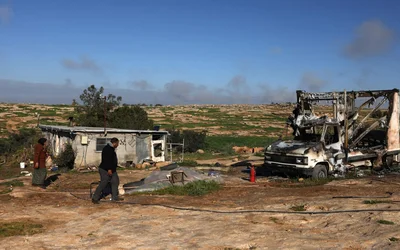
“It can be five and it can be 20, and it can be 30, and it can be 40, and they can paralyse a whole village,” she said.
Hass described visiting a Palestinian family whose home had been attacked months earlier and was now surrounded by fencing and metal doors.
The family could no longer reach trees just metres from their house.
She also cited a Palestinian vineyard in Beit Ummar where, she said, settlers had uprooted all 1,000 trees.
Movement restrictions and checkpoints prevent Palestinians from reaching agricultural land and grazing areas, while home demolitions further disrupt communities.
She said settler influence over Israel’s Civil Administration had also grown, linking demolitions and other restrictions to wider government policies.
“There is no real Palestinian leadership that can face it, or that can take decisions, or that can do anything,” she said. “People are left very alone and lonely in this.”
Economic and security pressure
Hass said the current situation was the product of a much longer process in which Palestinians had been politically and geographically fragmented while Israel retained control over most of the territory.
She described the Oslo Accords process as ultimately producing Palestinian “Bantustans”.
Hass characterised this as an Israeli compromise between a desire to see Palestinians disappear and a recognition that their removal was not then considered possible.
But she said forces within Israel now believe the conditions are right to go further.
“Now we have the forces who think that this is a time, this is the right time also to achieve another stage of taking more land and pushing more Palestinians out, out of the borders and out of the world. Out of existence.”
She said the threat also extended to Palestinian citizens of Israel, arguing that far-right political forces increasingly viewed their presence as a problem.
Making life increasingly difficult, she said, could encourage those with the means to leave.
“There is a very tiny and thin difference… between expulsion and emigration,” she said.
“When people feel that they cannot stand it any longer, they emigrate. They choose to emigrate, those who can.”
Across Gaza, the West Bank and inside Israel itself, the state is employing similar tactics to exert pressure on Palestinians, Hass said. These range from economic pressure to the use, or toleration, of armed groups that undermine Palestinians’ sense of safety and security.
In Gaza, Israel has deployed armed militias to terrorise civilians. In the West Bank, armed settlers have been allowed to operate with increasing impunity.
Inside Israel, meanwhile, deadly armed crime has continued to grow, with little state intervention to curb it.
“Israel pampers militias in Gaza and allows crime organisations in Israel proper to kill Palestinians every day,” Hass said.
She also condemned the international community for failing to respond decisively, saying governments had repeatedly found new reasons to postpone meaningful action.
“I am very afraid about what the Israeli state is capable of doing now,” she said.
Middle East Eye delivers independent and unrivalled coverage and analysis of the Middle East, North Africa and beyond. To learn more about republishing this content and the associated fees, please fill out this form. More about MEE can be found here.