Kuwait revokes journalist Ahmed Shihab-Eldin's citizenship

Ahmed Shihab-Eldin, the Kuwaiti-American journalist who recently spent weeks in jail over sharing images related to the US-Israeli war on Iran, has had his Kuwaiti citizenship revoked.
The citizenships of his two sisters were also stripped.
“I am free - but many remain behind bars in Kuwait and across the region for speaking the truth. Today, my sisters and I have become part of the more than 50,000 Kuwaitis who have had their citizenship revoked,” Shihab-Eldin said in a statement issued on Wednesday by his legal team.
The American-born Kuwaiti national, 41, was arrested on 2 March while visiting family in Kuwait.
The Committee to Protect Journalists (CPJ) reported that his arrest came after he shared publicly available footage and images related to the Iran war. The posts included footage of a US fighter jet crashing into a US air base in Kuwait.
New MEE newsletter: Jerusalem Dispatch
Sign up to get the latest insights and analysis on Israel-Palestine, alongside Turkey Unpacked and other MEE newsletters
He was released last week and found innocent of all charges, according to his international counsel.
“Ahmed Shihab-Eldin is a superb journalist and storyteller,” Shihab-Eldin's lawyers, Caoilfhionn Gallagher KC and Kate Gibson, said in a statement.
“For 52 days, he was wrongly imprisoned and endured repeated, grave violations of his fundamental rights due to his work. For reporting. For expressing opinions. For simply doing his job,” they added.
The Supreme Committee for the Investigation of Kuwaiti Nationality announced on Wednesday that 21 people had their citizenships revoked on the basis that they held dual citizenship.
The decision was based, the committee said, on Article 11 of Kuwait’s nationality law, which prohibits dual nationality.
Shihab-Eldin’s name, as well as those of his two sisters Lana and Luma, appeared on the list of 21 names.
The journalist has contributed to several international media outlets, including The New York Times, Al Jazeera English and PBS.
His work has won multiple awards, including a British Journalism Award and an Amnesty International Human Rights Defender Award.
“Citizenship stripping in Kuwait has become a recurring tool to silence dissent, forming part of a broader pattern of weaponising nationality laws against human rights defenders, which have documented regularly over the past year,” Falah Sayed, of MENA Rights Group, told Middle East Eye.
“This is not the first case, and sadly, it will not be the last.”
Mass citizenship revocations
Kuwaiti authorities – like other Gulf states – have imposed tight restrictions on online content in the wake of regional conflict, particularly to limit reporting about attacks on their infrastructure.
In addition, Kuwait has for months been stripping citizenship from nationals, in what campaigners have said could affect hundreds of thousands of people.
That process accelerated since the war on Iran broke out.
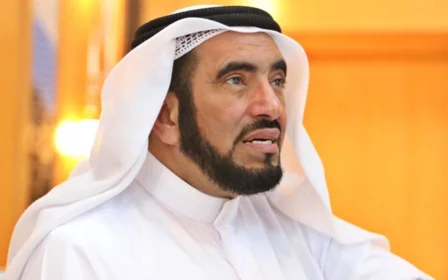
Among those who have lost their citizenship in recent months is the prominent Islamic scholar, Tareq al-Suwaidan.
Legislation passed in December 2024 stipulated that citizenship could be removed for reasons including “moral turpitude or dishonesty, or for actions aimed at threatening state security, including criticism of the emir or religious figures”.
A number of reasons have been cited for the campaign of revocations, including a crackdown on dissent and economic considerations.

For decades, Kuwait has provided generous welfare packages to its citizens on the back of large numbers of migrant labourers and oil wealth.
But more recently, oil-rich Gulf states have attempted to diversify their economies and bring more citizens into the regular workforce.
“There are well-established international laws which prohibit depriving someone of their nationality arbitrarily, prohibit discrimination in the treatment of people, protect an individual from being rendered stateless and ensure that any decisions made need to follow due process,” Tiana Danielle Xavier, from the Institute on Statelessness and Inclusion, told Middle East Eye in December.
On Monday, Bahrain revoked the citizenship of 69 people it accused of sympathising with Iran and “aiding foreign entities”.
The 69 people include those accused of “causing harm to the interests” of the kingdom, as well as their dependent family members.
Campaigners told MEE that many of those named were “Ajami”, a term referring to longstanding communities in Gulf Arab states whose ancestors migrated from southern Iran.
The announcement came a few days after Bahrain’s king met with Kuwait’s foreign minister.
“Unfortunately, since the beginning of the war on Iran, the GCC regimes have taken this as an opportunity to crack down even harder,” Maryam al-Khawaja, a Bahraini-Danish activist, told MEE, using the acronym for the Gulf Cooperation Council.
Middle East Eye delivers independent and unrivalled coverage and analysis of the Middle East, North Africa and beyond. To learn more about republishing this content and the associated fees, please fill out this form. More about MEE can be found here.