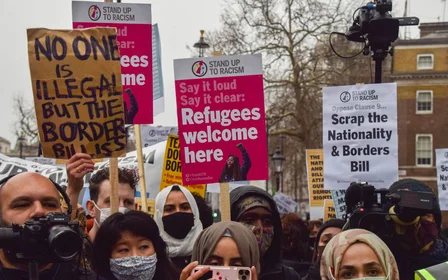
UK: Millions of British Muslims could lose citizenship, warns new report

The UK's "extreme and secretive" citizenship-stripping powers are putting millions of British Muslims at risk of being deprived of their nationality, a new report has warned.
Research published by the Runnymede Trust and Reprieve on Thursday found that nine million people in the UK – approximately 13 per cent of the population – could be legally stripped of their citizenship at the home secretary’s discretion.
The powers, campaigners warn, disproportionately impact and endanger citizens with heritage linked to South Asia, the Middle East and Africa.
Both organisations warn that the "deprivation regime" now represents a systematic threat to Muslim communities, echoing the state’s discrimination against British nationals with familial links to the Caribbean in the Windrush scandal.
Under current law, British citizens can lose their nationality if the government believes they are eligible for another citizenship, even if they have never lived in that country or do not identify with it.
New MEE newsletter: Jerusalem Dispatch
Sign up to get the latest insights and analysis on Israel-Palestine, alongside Turkey Unpacked and other MEE newsletters
The report shows that people connected to Pakistan, Bangladesh, Somalia, Nigeria, North Africa and the Middle East – all countries with a sizeable UK Muslim population – are among the groups most vulnerable.
Campaigners say this has created a racialised hierarchy of citizenship, where Muslims’ belonging in Britain is conditional in a way that white Britons’ is not.
“The previous government stripped British trafficking victims of citizenship for political gain, and the current government has just expanded these extreme and secretive powers,” Reprieve’s Maya Foa told Middle East Eye.
'Just like the legislation which caused the Windrush scandal, there are no effective checks to prevent these powers from being used widely'
– Shabna Begum, CEO of Runnymede Trust
“The nine million people whose rights could be taken away by the next home secretary have every reason to be worried about what a full authoritarian government might do,” Foa said.
Foa’s concerns were echoed by Shabna Begum, who runs the Runnymede Trust. Begum said there was a “chilling undercurrent of citizenship stripping” at the Home Office's discretion and that it has disproportionately impacted Britain’s Muslim community.
“Just like the legislation which caused the Windrush scandal, there are no effective checks to prevent these powers from being used widely,” Begum told MEE.
“Citizenship is a right, not a privilege. Yet successive governments are advancing a two-tiered approach to citizenship, setting a dangerous precedent that someone’s citizenship can be removed on ‘good’ or ‘bad’ behaviour, no matter how many generations your family has lived in this country.”
The Home Office did not respond to MEE's request for comment. But a government spokesperson described the report as "scaremongering and wrong" to the Independent.
The spokesperson added that the system was only used “to protect the British public from some of the most dangerous people, including terrorists and serious organised criminals”.
Three in five people of colour at risk
The analysis by Reprieve and Runnymede shows:
-
Three in five people of colour could be stripped of their British citizenship.
-
Only one in 20 white Britons faces the same risk
-
People with heritage linked to India (984,000 people), Pakistan (679,000) and Bangladesh (part of the 3.3 million Asian Britons at risk) are among the largest affected groups
-
The majority of those stripped in practice have been Muslims of South Asian, Middle Eastern or North African heritage
Both organisations said the racial disparities mirror the institutional failings that produced the Windrush scandal.
The report added that people of colour are 12 times more at risk than their white counterparts.
The report traces how citizenship revocation, once a tool used only in exceptional wartime cases, has been transformed by two decades of counterterror legislation.
Since 2010, more than 200 people have had their citizenship revoked for reasons described as “conducive to the public good”, with the overwhelming majority being Muslim. In 2022, the government gained the power to strip citizenship without notifying the individual.
And a 2025 law now ensures that even when courts rule the deprivation unlawful, people do not regain their citizenship until the government’s appeals – sometimes lasting years – are exhausted.
The report highlights several cases where the UK erroneously believed someone could acquire another nationality, only for courts to rule they had been left unlawfully stateless – sometimes for years.
Reprieve says it knows of Muslim clients whose appeals are still frozen because they are detained abroad and unable to instruct lawyers.
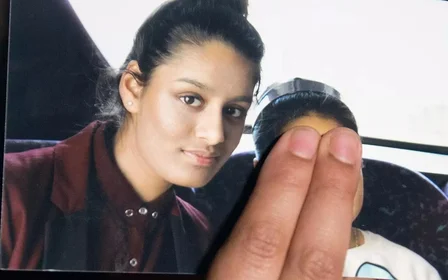
The most high-profile case remains that of Shamima Begum, a British-born teenager stripped of citizenship on the grounds she was supposedly a citizen of Bangladesh – something Bangladeshi officials publicly denied.
The findings come amid increasingly hardline rhetoric from Conservative and Reform UK politicians, with both parties floating plans that could see hundreds of thousands of legally settled people deported.
With deprivation powers already concentrated in the hands of the home secretary, Muslim organisations fear that escalating nationalist politics could translate into widespread misuse.
Calls for urgent reform
Runnymede and Reprieve are calling for:
-
An immediate moratorium on the use of citizenship stripping
-
The abolition of Section 40(2) of the British Nationality Act, which allows deprivation “for the public good”
-
The restoration of citizenship to everyone stripped under these powers
Unless the law is repealed, they warn, the UK will continue to operate a “two-tier system of belonging” that places millions of Muslims in permanent insecurity.
Last month, the former lord chief justice of Ireland, Declan Morgan, told MEE that the UK should not have stripped Shamima Begum of her citizenship.
'Deprivation [of citizenship] may proceed where another nationality is merely presumed'
– Independent Commission on UK Counter-Terrorism Law, Policy and Practice
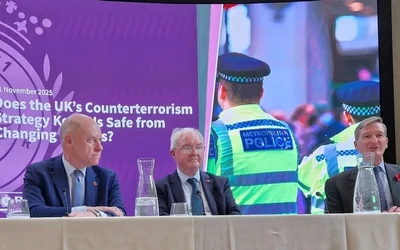
Morgan, a supplementary panel member of the UK Supreme Court, made the remarks at the launch of a new report by the Independent Commission on UK Counter-Terrorism Law, Policy and Practice, which he chairs.
The commission's report says that over the past two decades, "the threshold for [citizenship] deprivation has been steadily lowered, and procedural protections have weakened".
It adds: "Evidence from practitioners and researchers indicates that race, belonging, and identity shape the application of deprivation powers.
"Although the law prohibits statelessness, in practice, deprivation may proceed where another nationality is merely presumed.
"This results in unequal protection among British citizens, as only those with actual or potential claims to another nationality are vulnerable to deprivation – disproportionately affecting minority ethnic communities."
Middle East Eye delivers independent and unrivalled coverage and analysis of the Middle East, North Africa and beyond. To learn more about republishing this content and the associated fees, please fill out this form. More about MEE can be found here.