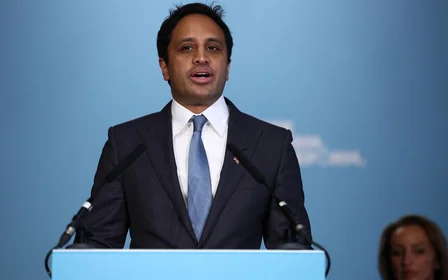
Reform UK candidate descended from top Muslim scholar rues racist abuse in campaign

A Muslim candidate in Nigel Farage’s Reform UK who came second in a recent local election has revealed to Middle East Eye that he faced a storm of Islamophobic and racist abuse during his campaign - and that he wished the party had addressed it publicly.
Siddiq Mahmood Malik, widely known as "Sidney", stood in the 24 July byelection in Llanrumney, a predominantly working-class ward in Cardiff in Wales.
Malik, a Cardiff resident and descendant of the renowned 19th-century Indian Muslim thinker Sir Syed Ahmed Khan, received 630 votes and lost to a Labour incumbent who received 755.
This week, Malik told MEE he faced a barrage of online abuse over his “Muslim identity” during the campaign.
On 6 July, an anonymous X account with over 100,000 followers posted a photo of Malik with the caption: “Why do Reform keep choosing Muslims for candidates?”
New MEE newsletter: Jerusalem Dispatch
Sign up to get the latest insights and analysis on Israel-Palestine, alongside Turkey Unpacked and other MEE newsletters
The post had received over 600,000 views and over 800 comments at the time of writing, many of which were racist and Islamophobic in nature.


Far-right activist Tommy Robinson’s X account shared the post and commented “I hope people can see it now” in a post that received over 500 comments.
Numerous comments also directed anti-Muslim abuse at Reform’s former chairman and current head of the its department of government efficiency, Zia Yusuf.
“During my candidacy, I encountered significant challenges, primarily related to my Muslim identity,” Malik told MEE.
“Reform UK was supportive throughout my campaign, and I’m grateful for that,” he added.
“However, I did hope there would be some public acknowledgement of the negative commentary directed at me online - particularly from figures like Tommy Robinson.”
MEE asked Reform UK for comment but did not receive a response by the time of publication.
Malik added that his ethnic background was “clearly a point of contention, even among some within the online Reform UK community".
"I’m still a member of Reform UK and may remain involved in the future," he said.
But, he added: “I found Reform UK still faces serious challenges with its relationship with Muslim communities and other minority communities. All communities play a role in British national cohesion, our great multiculturalism and contribute to how we’re perceived globally.”
Sir Syed Ahmed Khan's legacy
During the campaign, a spokesperson for Reform UK Wales said that Malik “is passionate about Reform. It runs in his family as he is a descendant of Sir Syed Ahmed Khan, the 19th-century Muslim reformer and scholar”.
Khan was an Indian modernist thinker and Anglophile who founded the Aligarh Mohamedan Anglo-Oriental College, modelled on Oxford and Cambridge, after the fall of the Mughal Empire.
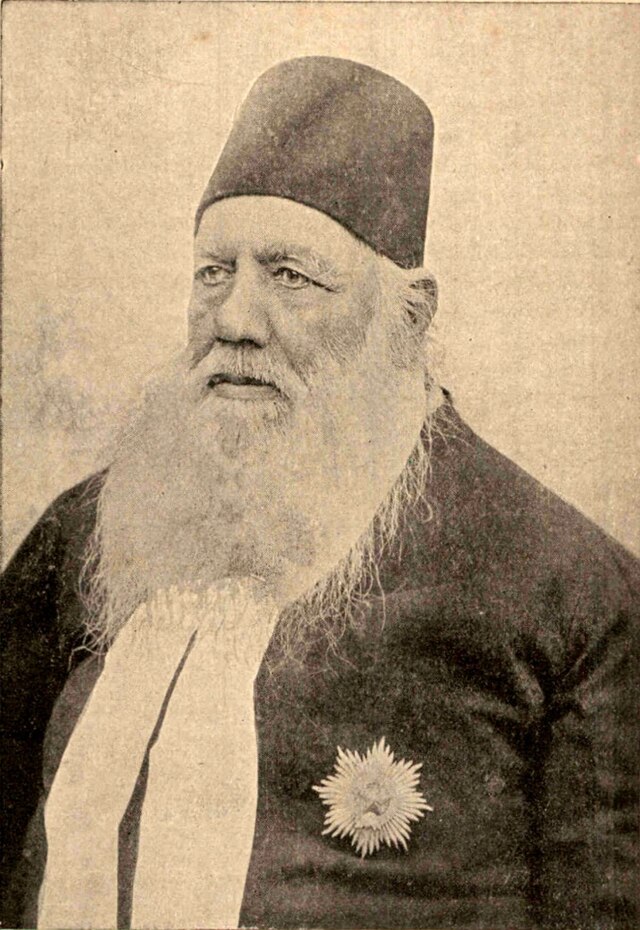
He was avowedly loyal to the British empire and was revered by later generations of Indian Muslim thinkers.
Renowned 20th-century philosopher Sir Muhammad Iqbal said of Khan: "The real greatness of the man consists in the fact that he was the first Indian Muslim who felt the need of a fresh orientation of Islam and worked for it."
Khan's university exists today in India as the Aligarh Muslim University and has produced many of the subcontinent’s most famous politicians.
In the early 20th century, it was considered the main recruiting ground for the All-India Muslim League, the party which would found Pakistan in 1947.
“I’m deeply proud of my heritage and of Sir Syed,” Malik told MEE, describing him as “the first British Muslim knight, and a reformer of education, science, and integration during a time of deep division”.
“In many ways, he inspired me to stand,” he said.
Reform's complex relationship with Muslims
Opinion polls consistently indicate that Reform, which advocates for the mass deportation of illegal immigrants and has four MPs in parliament, is the most popular party in Britain.
It has often been accused of stoking bigotry against Muslims and other minorities, which the party strenuously denies.
On the other hand, far-right activists, including Tommy Robinson, have often accused the party of being too pro-Muslim.
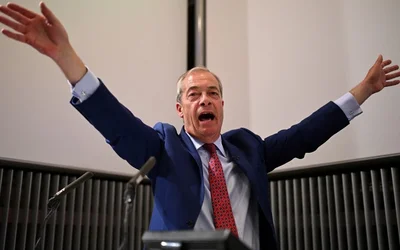
In June Zia Yusuf, who describes himself as a “British Muslim patriot”, resigned as the party's chairman in a shock move following a public row with Reform MP Sarah Pochin after she urged a ban on women wearing the burqa in a parliamentary debate.
Party leader Nigel Farage suggested Yusuf quit because he received relentless abuse online from the “very hard extreme right”.
“When Zia says anything you cannot believe the absolute tirade of personal racist abuse that he gets,” Farage said. “And I just think he snapped.”
But Yusuf rejoined the party just days later, saying his resignation had been a mistake.
Malik, while disheartened at the abuse he faced during his own campaign, said he was “proud to have come a very close second to Labour” in the recent byelection.
He said the result signalled that “many are ready, open-minded, and willing to support my candidacy and hope to one day lead meaningful change on the national stage”.
He also said he is working on “the first British VR [virtual reality] feature film”, entitled Once Upon a Time In Britain.
“I aim to empower underrepresented voices and foster understanding through storytelling.”
Middle East Eye delivers independent and unrivalled coverage and analysis of the Middle East, North Africa and beyond. To learn more about republishing this content and the associated fees, please fill out this form. More about MEE can be found here.