Shobeiri Zanjani: The quiet ayatollah who bridged Iran’s political divide

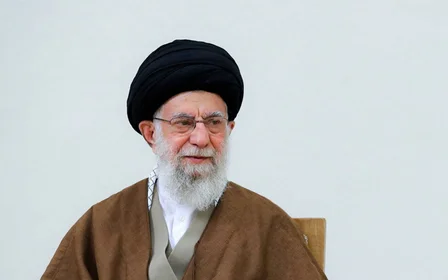
When Grand Ayatollah Mousa Shobeiri Zanjani died at 98 on 20 September, he left behind a rare position in Iran’s religious establishment: a cleric who kept his distance from political power, yet whose influence reached across the Islamic Republic’s deepest political divides.
His students included former reformist President Mohammad Khatami and, according to a source in the Qom Seminary, Mojtaba Khamenei, the current supreme leader. For decades, politicians and clerics on opposing sides of Iran’s political spectrum turned to Shobeiri because his authority rested outside politics.
That independence made him an important figure at moments when Iran’s political and religious establishments collided.
Shobeiri was one of seven senior clerics identified by the Society of Seminary Scholars of Qom in the 1990s as qualified to be followed as a grand ayatollah and serve as a marja, or religious authority.
The ayatollah belonged to a strand of the Iranian clergy that believed clerics should not directly enter politics.
New MEE newsletter: Jerusalem Dispatch
Sign up to get the latest insights and analysis on Israel-Palestine, alongside Turkey Unpacked and other MEE newsletters
They are often described as “traditional” clerics, a group that includes Ayatollah Vahid Khorasani, another highly respected figure in the seminary establishment. Both men have largely stayed outside of the Islamic Republic's factional politics.
Traditional clerics tend to see their role primarily as preserving the independence of the seminaries from the state, maintaining the institution of marjaʿiyyah – the system of senior religious authorities whom believers may follow for guidance on matters of Islamic law – and addressing religious and social affairs rather than directly participating in political power.
Shobeiri argued that excessive political involvement by the clergy could undermine their religious standing and weaken religious faith.
“Some clerics believe that by becoming more involved in political matters, they can better preserve the standing of the clergy or the position of the mosque. We, however, believe that excessive politicisation, along with the emergence of differences of opinion – which are inevitable – can harm the standing of the clergy and the mosque and lead to a weakening of religious faith,” the ayatollah said at a meeting in 2017.
He also emphasised the importance of expertise when clerics address political issues:
“Those who do not have expertise in this field would be better off refraining from getting too deeply involved in political matters,” Shobeiri said.
“If someone has expertise, there is no problem with them expressing views on broader issues. But when someone who has no expertise in political science speaks without studying the subject, it creates problems.”
At the same meeting, he addressed the relationship between religion, the state and public support:
“The Islamic Republic was established in the name of religion and is associated with religion, and preserving it is a religious duty. However, we must consider what contributes most to the survival of the government,” he said.
“The satisfaction of the people is, first and foremost, one of the things that can contribute to the survival of a government, and we must all work toward this.”
From Khatami to Mojtaba
Shobeiri was so independent, politically detached and highly regarded for his expertise in fiqh, or Islamic jurisprudence, that students and figures from across Iran’s political spectrum attended his classes.
In the late 1960s, Khatami, the leader of the reformist movement, studied advanced fiqh under the ayatollah.
Shobeiri reportedly once praised the “young Khatami”, saying in response to his letters: “Just as Christopher Columbus discovered the American continent, I too discovered Seyyed Mohammad Khatami in the seminary.”
Mohammad Reza Khatami, the former president’s brother, described their relationship as a decades-long friendship and spiritual bond, as well as that of teacher and student.
Meanwhile, according to a source in the Qom Seminary who spoke to Middle East Eye, the sons of the late Supreme Leader Ali Khamenei attended Shobeiri's classes, particularly Mostafa and Mojtaba Khamenei.
Shobeiri's brother recalled Khamenei telling the cleric: “When my sons decided to become seminary students, I did not tell them to do so; they chose it themselves, and of course I was happy with their choice. When one of them came to Qom, I did not tell him to attend your classes; he chose your classes himself, and I was also happy with that choice.”
Seeking Shobeiri's help
The disputed 2009 presidential election was a turning point for Iranian politics.
Reformist candidates Mir Hossein Mousavi and Mehdi Karroubi alleged that the vote had been rigged in favour of incumbent President Mahmoud Ahmadinejad, who had the backing of Khamenei. The contested result triggered mass protests, followed by a government crackdown in which thousands of people were arrested.
Many people looked to Shobeiri because of his longstanding relationship with Khamenei.
Around 70 political and academic figures, including Mousavi, Karroubi and Khatami, issued an open letter to Shia clerics, expressing concern over reports of the “repeated torture” of detainees and asking the clerics to intervene.
In this context, Grand Ayatollah Shobeiri, Grand Ayatollah Hossein-Ali Montazeri and Ayatollah Mousavi Ardabili, a former chief of justice, met to discuss the “religious and political issues of the day”.
Years later, prominent religious researcher Mohsen Kadivar said Shobeiri also held meetings with the supreme leader during the protests in an effort to reduce state violence.
Following the imprisonment of political activists, the ayatollah intervened on several occasions and sought their release. According to Kadivar, Shobeiri once contacted Khamenei's office and helped secure the release of Ali Shakouri-Rad, a prominent reformist politician close to Mousavi.
A source in the reformist camp told MEE that after Khamenei decided to place Mousavi and Karroubi under house arrest in 2011, Shobeiri made several attempts to persuade the supreme leader to release them, but his efforts were unsuccessful.
He had also intervened on political issues before 2009. Kadivar said that Shobeiri met with Khamenei on at least two occasions and called for the lifting of the house arrest imposed on Montazeri, an influential critic of Khamenei.
Tensions with hard-liners
In late 2018, after photographs emerged showing Shobeiri alongside Khatami, the interior minister Abdollah Nouri, and a group of reformist figures, Ayatollah Mohammad Yazdi, a senior conservative cleric, sent a strongly worded letter to Shobeiri, calling on him to observe the dignity of his position and respect the Islamic system in power.
Yazdi criticised Shobeiri for not responding to two previous letters and wrote that “your position and standing are grounded in respect for the Islamic system in power, the Leader, and the status of religious authority”.

He urged Shobeiri to “observe this respect and the dignity of the position of religious authority” and take measures to prevent such encounters from happening again.
The letter sparked criticism from various figures and clerics. One senior cleric, Ayatollah Mohammad Andalib Hamadani, resigned from the Society of Seminary Teachers, where Yazdi was the chairman, in protest.
Kadivar, criticising what he described as the threatening tone of Yazdi’s letter, wrote:
“Mousa Shobeiri does not owe his religious authority to the political system or to Mr Khamenei, so that the Leader’s agents can threaten him. His standing and respect are the result of his scholarly precision and practical piety.
“Yazdi conveyed a message from the Leader: if you make a mistake and act differently from the Leader’s wishes, you will lose the respect due to your scholarship and the status of religious authority, because, from the system’s perspective, the dignity of religious authority means conformity with the wishes of the supreme leader.”
Middle East Eye delivers independent and unrivalled coverage and analysis of the Middle East, North Africa and beyond. To learn more about republishing this content and the associated fees, please fill out this form. More about MEE can be found here.