
Syrian foreign minister in Russia for first meeting since Assad's overthrow

Syria’s foreign minister said his country wanted a “correct and sound” relationship with Russia on Thursday as he visited Moscow in an apparent attempt to mend relations with the erstwhile enemy.
In December, Syria’s longtime ruler Bashar al-Assad was overthrown by rebels and he fled to Russia, which had been his staunch ally during the 14-year Syrian civil war.
Moscow has had decades of close ties with Damascus, which deepened during its ultimately unsuccessful military intervention on Assad’s behalf. These included several economic agreements.
On Thursday, Syria’s new foreign minister, Asaad al-Shaibani, spoke with his counterpart Sergey Lavrov about maintaining agreements struck with Assad’s government, as well as the future of Russia’s military bases in the country.
“The relationship between nations is a historical and humanitarian one, but some governments are spoiling this relationship,” Shaibani said at a news conference.
New MEE newsletter: Jerusalem Dispatch
Sign up to get the latest insights and analysis on Israel-Palestine, alongside Turkey Unpacked and other MEE newsletters
“We are here today to represent the new Syria, as we want to establish a correct and sound relationship between the two countries based on cooperation and mutual respect.”
He added: “Of course, there are a number of factors that determine and complicate these relations on the ground.”
Russia’s naval base in Tartus and its airbase at Hmeimim are Moscow's only official military outposts outside the former Soviet Union.
They were key to Russia’s support of the Assad government, which prevented his overthrow for many years after the 2011 uprising.
Lavrov said Moscow was ready to help Syria rebuild after more than a decade of devastating conflict and to review “agreements and contracts concluded under different conditions”, and said their decision to remain allies “doesn't depend on the political situation or changes of government”.
Neither minister said whether there had been any discussion of the status of the military bases.
Assurances
Despite providing a haven for Assad, Russia has quickly moved to try to build connections with the new government in Syria.
Footage released in January appeared to show Russia removing vehicles and containers from its base in Tartus on the Mediterranean coast.
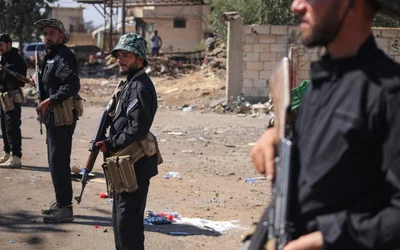
Russian President Vladimir Putin and Syrian President Ahmed al-Sharaa spoke for the first time in February, with the former saying he was ready to reconsider agreements signed between Russia and Syria under Assad.
“Vladimir Putin reaffirmed Russia’s invariable readiness to help improve the socio-economic situation in Syria, including the provision of humanitarian aid to its residents,” the Russian presidency said at the time.
Syrian Defence Minister Murhaf Abu Qasra is also part of the delegation to Moscow. In February, he told the Washington Post that this government was open to allowing Russia to retain its bases if there were “benefits for Syria”.
The status of Assad, however, could remain a sticking point.
Shaibani called on Russia to support a “transitional justice” process in Syria, possibly referencing Assad’s presence in the country.
He also said Syria had formed a committee to review existing agreements with Russia.
In January, Sharaa reportedly requested Russia extradite Assad. The Russian government refused to comment on the matter at the time.
Israeli attacks
Shaibani’s discussions with Lavrov also touched upon Israel's recent attacks on southern Syria.
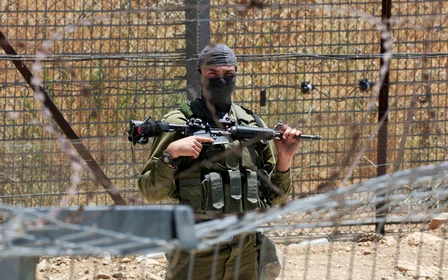
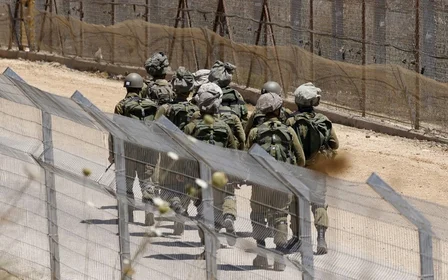
Since the fall of Assad, Israel has repeatedly bombed Syrian military targets, and invaded even more Syrian territory than the Golan Heights it occupied in 1967.
Earlier this month, Israeli attacks intensified, which Israel said were done in support of the Druze minority. However, the raids only raised communal tensions, which broke out into sectarian clashes that killed about 1,200 Druze and Bedouin Syrians.
Speaking alongside Lavrov, Shaibani said that Israel’s attacks on Syria posed a serious threat to his country’s recovery
“These attacks not only represent a clear violation of international law and the UN Charter, but also disrupt the process of reconstruction, exacerbate the suffering of civilians, and fuel cycles of violence and instability,” he said.
“We have received a commitment from Russia to reject these attacks and stand with Syria to prevent these violations.”
Lavrov concurred with his counterpart and called on members of the international community to help de-escalate the situation.
“We have always been against the use of Syrian territory as an arena for geopolitical conflicts to settle scores between various countries,” he said.
Russia and Israel have had a close working relationship in Syria, where Israeli attacks repeatedly struck Hezbollah and Iranian-linked targets. In 2019, Russia helped recover the remains of an Israeli soldier buried in Syria.
Middle East Eye delivers independent and unrivalled coverage and analysis of the Middle East, North Africa and beyond. To learn more about republishing this content and the associated fees, please fill out this form. More about MEE can be found here.