
Trump administration issued ultimatum to ICC: Report

The US government has threatened the International Criminal Court with new sanctions unless it amends its foundational treaty so it cannot investigate President Donald Trump and senior administration members, Reuters reported on Wednesday, citing an unnamed source.
The Trump administration is also demanding the ICC shelve investigations of Israeli politicians over the Gaza war, which has been recognised as a genocide by the United Nations, scholars and historians, and end an investigation into potential war crimes conducted by US troops in Afghanistan.
If the ICC does not comply, it could face further sanctions against its staff and the court itself, an unnamed Trump administration official told Reuters.
The official declined to comment on whether the Trump administration is concerned that it might be investigated for its series of aggressive, deadly strikes on alleged drug boats in the Caribbean, which have killed at least 80 people.
The ICC, however, told Reuters they had not received any requests to investigate US strikes against Venezuela.
New MEE newsletter: Jerusalem Dispatch
Sign up to get the latest insights and analysis on Israel-Palestine, alongside Turkey Unpacked and other MEE newsletters
Middle East Eye first reported on Friday that the oversight body of the ICC shunned US demands for the court to drop its investigation into Israeli war crimes and to amend the Rome Statute to prevent the prosecution of nationals from countries that do not recognise the court’s jurisdiction.
Pressure from US
Diplomats speaking on the sidelines of the Assembly of States Parties (ASP) event last week told MEE that the Trump administration had tried to exert further pressure on the ICC in the lead-up to the ASP meeting by calling on the court to drop its investigations into war crimes in Palestine and Afghanistan as a condition for lifting sanctions.
The US also called on member states to amend the founding Rome Statute to prohibit prosecutions of citizens of non-signatory states, a move that would effectively grant immunity to American and Israeli nationals.
The US and Israel are not signatories to the Rome Statute.
An amendment of that nature would also end the Ukraine investigation into alleged war crimes by Russia, a non-member of the ICC.
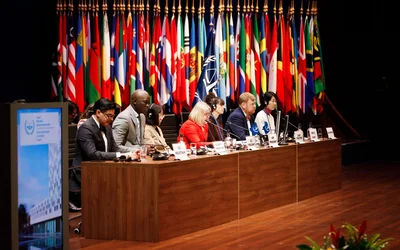
Based on briefings by three diplomats familiar with the matter, MEE revealed that representatives of ICC member states were presented with the US demands by a diplomat from an EU state at a meeting last month.
The meeting of the ASP, made up of representatives from the 125 countries that have ratified the ICC's Rome Statute, has taken place at a time of unprecedented threats to the court, prompted mostly by its investigation into Israel over alleged war crimes in Gaza and the occupied Palestinian territories.
Sanctions have also targeted judges who worked on the Afghanistan investigation, which, since 2021, has deprioritised investigating US nationals and has instead focused on Afghan nationals.
ICC judges are currently examining an Israeli challenge to its jurisdiction on the Palestine situation, and a separate Israeli complaint, filed on 17 November, seeks to disqualify the prosecutor over alleged lack of impartiality.
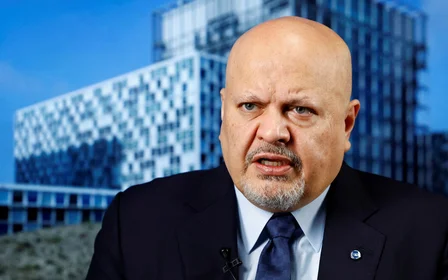
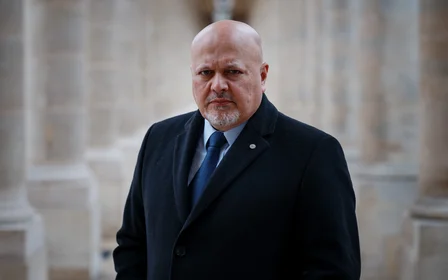
ICC prosecutor Karim Khan has been on voluntary leave of absence since May, pending a UN-led investigation into the allegations. Khan strenuously denies the accusations.
Since February, Trump's administration has imposed financial and visa sanctions on the prosecutor, his two deputy prosecutors, six judges, the UN’s special rapporteur on Palestine, and three Palestinian non-profit organisations.
Middle East Eye delivers independent and unrivalled coverage and analysis of the Middle East, North Africa and beyond. To learn more about republishing this content and the associated fees, please fill out this form. More about MEE can be found here.