
Turkey replaces Russian oil and diesel imports from US as wars reverberate

Turkey is turning to the United States for crude oil and refined products as supplies from Russia are jolted amid increasing Ukrainian attacks on its energy infrastructure, according to recent Turkish customs data.
The US overtook Russia in June as Turkey’s main crude oil supplier with roughly 570,000 tonnes arriving compared to 425,000 from Russia. The numbers reflect how Ankara is reducing its exposure to Russian crude after emerging as one of its top buyers following Russia’s invasion of Ukraine.
Turkey’s cut in Russian crude oil imports also comes as it purchases more diesel from the US and India.
According to energy analytics firm Kpler, Turkey has imported more than 120,000 barrels per day of Indian diesel and 90,000 bpd of diesel from the US since August. The volumes were the highest on record, according to Kpler data starting in 2017.
Turkey’s changing energy imports arise from three factors.
New MEE newsletter: Jerusalem Dispatch
Sign up to get the latest insights and analysis on Israel-Palestine, alongside Turkey Unpacked and other MEE newsletters
US President Donald Trump's administration has pushed Ankara to increase purchases of US energy, while Russia’s energy industry has been upended by Ukrainian drone and missile strikes on infrastructure, sparking lines at home for petrol and other refined petroleum products.
Russia banned diesel exports in July as a result of Ukrainian air strikes. Kyiv has pummeled Russia’s energy infrastructure, including hitting its largest oil refinery in Siberia along with refineries in Novgorod and Tatarstan.
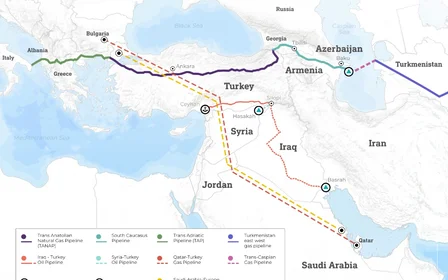
The US-Israeli war on Iran has also disrupted supplies to Turkish refineries in Iraq, Saudi Arabia, Kuwait and the UAE.
The Trump administration lobbied Turkey to cut energy purchases from Russia during President Recep Tayyip Erdogan’s visit to the White House in September 2025.
A former US official told Middle East Eye at the time of that visit that Turkey was more likely to shift away from Russian oil than gas, much of which is supplied under long-term contracts via pipeline.
In 2024, Turkey received 41 percent of its gas imports from Russia. The gas has come in the form of favourable payment options that Turkey is using to power its manufacturing sector and offset double-digit inflation.
Turkey has positioned the TurkStream Pipeline as Russia's backdoor into European markets amid sanctions.
Last December, Turkey extended its expiring Russian gas import contract by a year.
Middle East Eye delivers independent and unrivalled coverage and analysis of the Middle East, North Africa and beyond. To learn more about republishing this content and the associated fees, please fill out this form. More about MEE can be found here.