
UK MPs to vote on Palestine Action ban

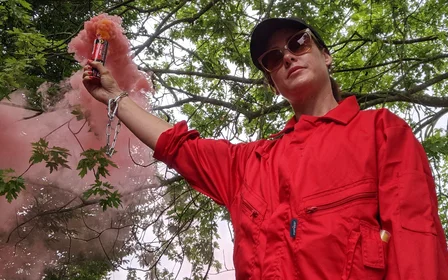
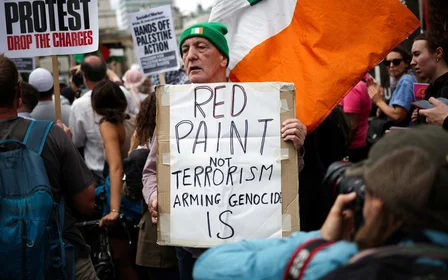
British parliamentarians are set to vote on an order for the proscription of the protest group Palestine Action on Wednesday afternoon.
If MPs vote in favour, the order will go before the House of Lords on Thursday, with the ban due to come into force as soon as Saturday.
If passed, the move will designate Palestine Action a terrorist organisation, making membership and support for them a criminal offence, and punishable by up to 14 years in prison.
It will mark the first time that a direct action group has faced proscription, placing it alongside groups like the Islamic State and al-Qaeda under British law.
Home Secretary Yvette Cooper’s order, which was laid before parliament on 23 June, has proposed two other organisations, neo-Nazi groups the Maniacs Murder Cult (MMC) and the Russian Imperial Movement (RIM) for proscription along with Palestine Action.
New MEE newsletter: Jerusalem Dispatch
Sign up to get the latest insights and analysis on Israel-Palestine, alongside Turkey Unpacked and other MEE newsletters
In a statement, Cooper said that each of the groups had “passed the threshold for proscription based on clear national security evidence and assessments”.
All three proscription orders will be debated and voted on together under the statutory instrument, with MPs unable to vote to ban some organisations and not others.
Palestine Action said the move to group the organisations together in the same vote is a deliberate attempt to ensure the order passes and forms part of Cooper's efforts to proscribe the group “via the backdoor without proper Parliamentary consideration”.
Clare Hinchliffe, the mother of one of 18 Palestine Action activists who were arrested on terrorism charges in August 2024 and have been held on remand since, told MEE that the ban could criminalise her support for her daughter.
"It's scary, because we will continue to advocate for our loved ones and we don't know if that will be interpreted as support for Palestine Action," she said.
"I cannot afford to go to prison. I am needed to support my daughter. I'm a single parent, the only one paying the mortgage. I have a younger daughter to care for. I can't go to prison, but I'm outraged that I should be put in that position for advocating for my daughter."
'A terrifying escalation'
On Monday, the High Court granted Palestine Action an urgent hearing on Friday to consider a judicial review of the decision. If successful, the group's co-founder, Huda Ammori, would be given the opportunity to apply for "interim relief", which could stay the ban until after the review.
Speaking to Middle East Eye on Tuesday, Ammori said that she thought it was likely the ban will be voted through.
"Palestine Action was formed because we didn't rely on appealing to the politicians and the government to create changes for the people of Palestine," Ammori said.
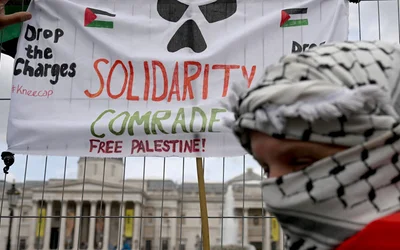
"I understand how the system works and it's not a democracy by any means," she said, adding that she thought it would be likely MPs will be whipped to supporting the ban.
"I don't think that's an excuse for us to be complacent in not holding them to account. Every single person who votes for us to be proscribed should be held to account for this huge attack on civil liberties."
Meanwhile, pressure is mounting on Cooper to abandon the ban, with several UN special rapporteurs warning the decision could have a "chilling effect” on protest and advocacy in relation to Palestine.
On Tuesday, hundreds of lawyers signed two letters to Cooper from the Network for Police Monitoring (Netpol) lawyers’ group and the Haldane Society of Socialist Lawyers, warning that the group's ban could set a dangerous precedent.
Also on Tuesday, Amnesty International’s UK CEO wrote to parliamentarians, warning that the group’s proscription would be a “grave misuse of anti-terrorism powers”.
“The proscription of Palestine Action would be wholly unnecessary, disproportionate, and in violation of the right to freedom of association and expression amongst other human rights at risk should this harmful and dangerous motion proceed,” the NGO’s UK chief, Sacha Deshmukh, said.
Yasmine Ahmed, UK director of Human Rights Watch, described the proposed ban as “a terrifying escalation in this government’s crusade to curtail protest rights”.
“Politicians should not be wielding the power of the state to protect corporate interests and silence legitimate non-violent protest. We expect this of authoritarian regimes like Russia or China, not a country like the UK that professes to believe in democratic freedoms.”
Middle East Eye delivers independent and unrivalled coverage and analysis of the Middle East, North Africa and beyond. To learn more about republishing this content and the associated fees, please fill out this form. More about MEE can be found here.