US used more missile interceptors defending Israel than its own forces did: Report

The US military used more of its advanced missile defence interceptors to defend Israel from Iranian attacks than its ally spent defending its own homeland, according to a report by The Washington Post published on Thursday.
The heavy burden the US endured to defend Israel has caused the shortage of interceptors that Middle East Eye and other outlets reported on previously.
The US's Gulf allies were brushed off when they requested interceptor refills, MEE reported during the height of the war. Israel did send Iron Dome batteries and personnel to defend its close Arab partner, the UAE.
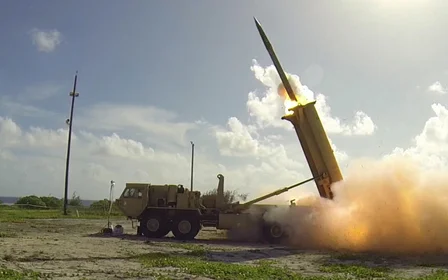
The US launched more than 200 Terminal High Altitude Area Defence (Thaad) interceptors in defence of Israel, roughly half of the Pentagon’s total inventory, the Washington Post reported.
The US also fired more than 100 Standard Missile-3 and Standard Missile-6 interceptors from vessels in the Eastern Mediterranean.
New MEE newsletter: Jerusalem Dispatch
Sign up to get the latest insights and analysis on Israel-Palestine, alongside Turkey Unpacked and other MEE newsletters
Israel fired fewer than 100 Arrow interceptors and around 90 David’s Sling interceptors. The latter were also used to shoot down projectiles fired from the Houthis in Yemen and Hezbollah in Lebanon. Both groups generally have fewer advanced missiles and drones than Iran.
'Lopsided dynamic'
The Washington Post said that the numbers reflect a “lopsided dynamic” in the military relationship between the two countries.
“Stunning!” Trita Parsi, the executive vice President at the Quincy Institute, wrote on X.

“Very understandable that many view the Iran war as ‘Israel first’ when you see these statistics,” he added. “The US depleted far more of its advanced missile defense interceptors inventory to defend Israel than Israel itself did.”
The US and Iran are currently discussing a proposal to end the war amid a shaky ceasefire. President Donald Trump has threatened to resume attacking Iran if it doesn’t agree to his terms to end the war.
But with just 200 Thaad interceptors left, the US appears to be in a vulnerable position. It was no secret that the US’s stockpile of interceptors was stretched going into the conflict.
The battle was a race, with the US and Israel trying to destroy as many of Iran’s ballistic missiles and launchers inside the country as possible, and Iran trying to outlast the supplies of US, Israeli, and Gulf interceptors.
The New York Times reported last week that Iran still has about 70 percent of the mobile missile launchers and roughly 70 percent of the missile stockpile it had before the war.
The Washington Post reported that the US would likely have to carry an even greater share of Israel’s defence if the war resumes because of a recent decision by the Israeli military to take some of its missile defence batteries offline for maintenance.
“The imbalance will likely be exacerbated if fighting restarts,” a US official told the newspaper.
Middle East Eye delivers independent and unrivalled coverage and analysis of the Middle East, North Africa and beyond. To learn more about republishing this content and the associated fees, please fill out this form. More about MEE can be found here.