Vance: US investigating strike on Iran wedding 'very fully'

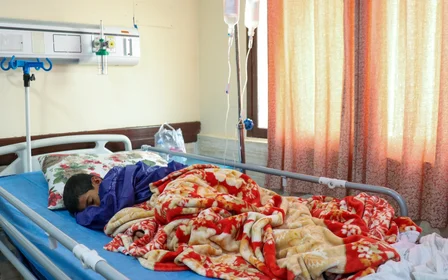
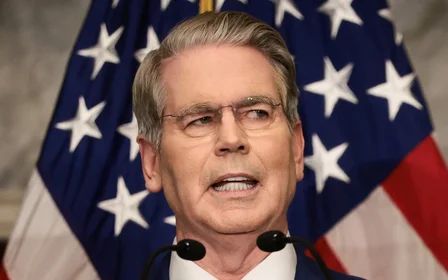
US Vice President JD Vance told reporters on Thursday that the US is "very fully" investigating the military's reported strikes on a wedding in Iran which killed at least four people this week.
There were at least a dozen other victims along the southern coast of Iran after the US unleashed a barrage of attacks in one of the largest flare-ups since the Islamabad Memorandum of Understanding was signed between the two sides more than two months ago.
"I've been briefed to the extent that I know that we're investigating," Vance said during the White House briefing.
"I will say that the Iranian state media has not been a very good scribe about what's happened in the conflict thus far. So I'm extremely sceptical of this," he added.
"The United States never targets civilians in combat. We never will do that. We never have done that. And unfortunately, obviously, sometimes things happen... When our military makes mistakes, they learn from them to try to get better from them. So we're investigating it very fully."
New MEE newsletter: Jerusalem Dispatch
Sign up to get the latest insights and analysis on Israel-Palestine, alongside Turkey Unpacked and other MEE newsletters
Vance effectively acknowledged that there are currently no open diplomatic channels between Washington and Tehran when he didn't push back on reporters who contextualised the issue. The vice president had previously led the US negotiating team in both Islamabad and Lucerne.
He did, however, push back on reporters who referred to the ongoing "war".
"Major combat operations are currently not ongoing, and they haven't been ongoing in a very long time," he said.
"I wouldn't call it a war. Right now, there is no active shooting."
Yet the vice president spent much of the nearly hour-long briefing explaining that the US must use its military might in the Strait of Hormuz "because the Iranians are shooting at commercial shipping".
Iran has imposed a blockade - its most effective leverage - on US and Israel-linked vessels in the critical waterway since the early days of the US and Israeli attacks, which began on 28 February.
"Obviously that means some ships don't want to go through [but] we got about 15 million barrels out of the Strait of Hormuz just yesterday, despite the fact that the Iranians continue to shoot," he said.
The US navy imposed a counter-blockade in April.
"What has anybody in the world done? Why is it incumbent upon the United States of America to be the only country in the world that can actually ensure world energy markets continue to stay supplied?" Vance asked.
He inadvertently answered his own question just minutes later.
"We are the only country in the world that can ensure, as you heard the president say, the control over the Strait of Hormuz... if we don't do it, nobody else would do it."
'Stop acting like crazy people'
Vance said he has one piece of advice to Iran: "Stop acting like crazy people."
Iran's First Vice President Mohammad Reza Aref on Thursday said the US has transformed Tehran’s security and defence calculations, warning that Iran will deliver an "asymmetrical" and "multi-layered" response.
Iran's responses have frequently involved targeting US assets in the region, particularly in Kuwait, the UAE, Bahrain, and Jordan.
"The Americans should start thinking about stockpiling gasoline and fuel. Dark months await the American economy," Aref wrote on X.
"We really have two options here," Vance told reporters. "We could leave, and the entire world would be way worse off because there would be no guaranteed access to oil and gas... or we could accept the Iranians are going to shoot at ships like crazy people, and we're going to do what we have to do in order to ensure that their efforts don't lead to a worldwide energy crisis."
'I don’t think we are ever going to move back into those [Gulf] bases'
- Harrison Mann, former US Defense Intelligence Agency officer
He added that Gulf nations have communicated to Washington that it "would be the worst thing in the world" if the US permanently withdrew from regional bases that have grown exponentially since the 1990 Gulf War.
But it's unclear if forces and civilian personnel evacuated earlier this year will move back. The US has lost 18 military personnel since it launched the war.
"I don't think we are ever going to move back into those bases in Bahrain and Qatar, in Kuwait, in eastern Saudi Arabia," Harrison Mann, a former US Defense Intelligence Agency officer, told a panel hosted by Democracy in the Arab World Now (Dawn) on Thursday.
"This war has made those bases even more of a political liability for the monarchies there," he said, adding that there is a likelihood the US could consolidate its regional military presence in Israel.
That may be an even greater liability, he noted, given Iran-backed groups like Hezbollah in Lebanon have rockets within reach of Israel.
The escalation game
Vance made it clear there is no timeline for an end to hostilities, despite the administration previously pledging to Americans that gasoline prices would drop significantly by the first week of September. That has not materialised.
The US, Vance said, does not plan to "depend on the Iranians behaving responsibly or negotiating in good faith".
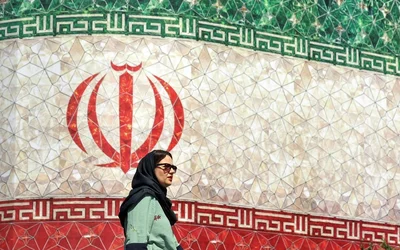
"What we're going to do is use the tools that we have at our disposal to ensure that the American people, one, never have to deal with the threat of an Iranian nuclear programme, and two, that world energy markets are properly supplied."
Negar Mortazavi, a senior non-resident fellow at the Center for International Policy, told the Dawn panel that Iran has learned not to submit to a ceasefire agreement too soon.
In June 2025, when Israel launched its attack on Iran, "they let the war end too soon, within 12 days. They accepted the ceasefire very rushed, and that's why the war came back even more for a third time, which is this year in February," she said.
"And so now the shift in policy or that doctrine is that they have to be more offensive, more aggressive."
"Tehran has learned from dealing with President Trump," Mortazavi added.
"What they keep saying publicly and also privately is that with him, when you back off, he escalates more. If you escalate at some point, he backs off, and they have examples for that."
'Operation economic outcast'
One of the tools in the US toolkit is an expansion of the longstanding sanctions package on Iran, which was unveiled by Treasury Secretary Scott Bessent last week.
"Operation Economic Outcast" is meant to "asphyxiate" Tehran by cutting off its "enablers", he said, adding that President Donald Trump has been speaking to allies around the world about joining the project.
But no leaders were identified nor a timeline divulged.
On Thursday, Vance was asked which countries had stepped up beyond the UAE.
"If you look at Turkey, if you look at Azerbaijan... Saudi Arabia, Qatar, a lot of the Gulf Arab coalition... all across the world, we're actually seeing a lot of countries. Sometimes they're not willing to say so publicly," he said.
When pressed on China - Iran's most powerful ally that has long aided it in evading the US-dominated international financial system - Vance appeared to soften his approach.
"We've certainly had a number of conversations with the Chinese, and frankly, I think the Chinese have been responsive to some of the requests that we've made," he said.
"Say what you will about them; they are not the sort of nation that shoots at commercial shipping because they're not getting their way in an international dispute," he added. "They are, in that way, I think, willing to be a little bit more responsible."
Chinese President Xi Jinping is expected to make a state visit to the US later this month.
Middle East Eye delivers independent and unrivalled coverage and analysis of the Middle East, North Africa and beyond. To learn more about republishing this content and the associated fees, please fill out this form. More about MEE can be found here.