Was Jason Arday really a serial plagiarist? No, the evidence shows

Jason Arday was widely accused of being a serial plagiarist and fabulist in a media campaign before his death earlier this month.
Numerous opinion columns and online posts claimed the Cambridge academic had a largely fabricated backstory.
But last week, a Middle East Eye analysis found that key claims Arday made, which had become central talking points in attacks on him, appeared to be true.
This included the sociologist's widely mocked claim that he ran 30 marathons in 35 days for charity.
Now MEE has found that the characterisation of Arday as a serial and unrepentant plagiarist does not stand up to scrutiny.
New MEE newsletter: Jerusalem Dispatch
Sign up to get the latest insights and analysis on Israel-Palestine, alongside Turkey Unpacked and other MEE newsletters
Instead, an examination of his work and the controversies surrounding it reveals a more complex picture.
The professor was not found guilty of plagiarism by any academic institution, despite allegations against him, although some academics have called for further investigation into his work.
Arday wrote 33 peer-reviewed academic papers. Two of these 33 have had corrections made to them over questioned attribution.
These papers made up approximately 6.06 percent of Arday's peer-reviewed output.
The vast majority of Arday's work, which has largely focused on the topic of race in education, has not been charged with plagiarism.
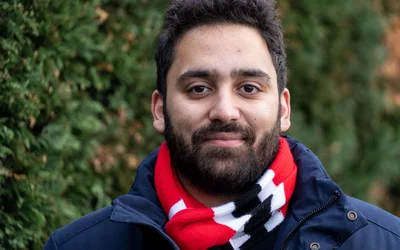
Nathan Cofnas, the academic and proponent of "race science" whose blog post about Arday triggered much of the press coverage about him, wrote: "When you take away the work that is plagiarized or not otherwise written by Arday, there is essentially nothing resembling real scholarship."
But the academic Jason Stanley argued last week that Arday's "impact is easily comparable to the leading scholars in his academic field".
He said: "In 2018, he published four single authored papers, an impressive achievement. According to Google Scholar, the most cited paper of these four has 238 citations, the second most cited paper has 184 citations, the third has 177 citations, and the fourth has 47 citations.
"This is very impressive impact for a scholar right out of their PhD. A surprisingly large percentage of academic papers receive no citations at all."
Stanley argued that "Arday came into the field around the time work on race in education was flourishing. It’s reasonable to assume that Arday’s work in fact contributed to that flourishing."
Some of Arday's writing has been accused of being plagiarised on the basis of AI detection software.
Cofnas based his accusations on an AI detection software called Copyleaks.
Such software identifies textual overlap but does not in itself prove that work was plagiarised.
The University of Cambridge's educational policy defines plagiarism as "using someone else’s ideas, words, data, or other material produced by them without acknowledgement".
Plagiarism, understood in the academic sense, needs to be established through academic procedures within universities.
Arday was cleared of plagiarism
A large part of the media coverage of Arday's alleged plagiarism focused on his PhD thesis, completed in 2015 at Liverpool John Moores University (LJMU).
The university investigated the thesis over plagiarism claims earlier this year. It concluded in March that the citation issues in the thesis were the result of "honest and reasonable error", and that textual overlap with other work was "well within the accepted range of compliance with the academic standards of the time".
It said Arday's supervisory team had been "depleted" and that he had received only one formal supervision during the PhD.
Most of the citation issues investigated by the university in a section on literature review involved significant textual overlap and similarities with work by academic Paula Zwozdiak-Myers.
The Telegraph reported in July 2026 that it had identified 188 sentences in the thesis which were identical or highly similar to Zwozdiak-Myers's 2009 thesis.
MEE has examined Arday's thesis, entitled "An exploration of peer-mentoring among student teachers’ to inform reflective practice within the context of action research".
MEE has also reviewed a copy of the thesis that was put through the Turnitin detection software, which is used by most universities, including Cambridge.
Much of the textual overlap with Zwozdiak-Myers which went uncited and unattributed appeared in the literature review section of Arday's thesis.
Notably, as an analysis by Robert Chapman has shown, Arday extensively cited Zwozdiak-Myers in other sections of the thesis.
Arday also acknowledged that he drew heavily on her work, writing that "findings were situated within categories and dimensions of mentoring and reflective practice, which helped to navigate and facilitate the purpose of the study.
"Ideas for this were generated from the work of Pollard (2011) and Zwozdiak-Myers (2012), with regards to their conceptions of reflective practice."
"Reflective practice" means using direct experience to further one's understanding of something.
Zwozdiak-Myers had written that "reflective practice" could be useful for student teachers, while Arday engaged with this by arguing that peer-mentoring could aid reflective practice for student teachers.
Crucially, Liverpool John Moores University (LJMU) considers intent when defining academic misconduct, which covers "all deliberate attempt(s) to gain an unfair advantage in assessments. This includes cheating, plagiarism, unauthorised collusion or any other deliberate attempt to gain an unfair advantage in summatively assessed work".
Its consideration of the intent helps explain why the university cleared Arday of accusations of plagiarism.
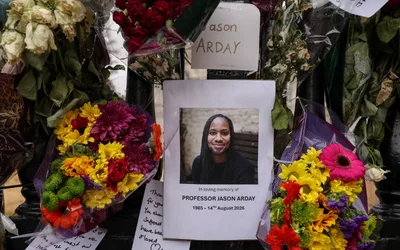
LJMU said Arday's "PhD still stands" on 14 August, after his death.
Corrections made to two of Arday's papers
Two of Arday's published papers have had corrections made to them. Allegations against the academic include that he reproduced quotes from interviews conducted by other academics and that quotes from his interviews were repeated in different papers.
A 2018 paper by Arday, "Understanding Mental Health: What Are the Issues for Black and Ethnic Minority Students at University?", was amended in 2023. New citations were added to make it "clear where ideas were adapted from past research", and some quotes attributed to interview transcripts were amended or removed.
In particular, concerns had been raised about similarity between lines in Arday's paper and those in a 2016 paper by the academic Anjum Memon.
Social Sciences, the academic journal which published Arday's paper, said that "the statement that the research had been adapted from Memon" did appear in the paper.
But the paper "inadvertently omitted overlap between the two publications in prior sections. The author has revised the text to address this, so that it is clear where ideas were adapted from past research".
A 2021 paper by Arday was also amended, with two new references added.
Peter Jukes, a journalist and the co-founder of Byline Times, said: "We’ve worked with academics comparing the 3% of the texts of two papers (of the 33 Arday had peer reviewed) and they confirm the university assessment - citation failures and data handling errors, corrected."
Responding to accusations of plagiarism in an interview with the Times last month, Arday said: "At the stage I’m at now, if I write something, I can afford a proofreader... You’ll see there’s a very big difference between the work I wrote post-2021 and the work I’ve written up until now.
"My writing is a lot better, purely because I can afford a proofreader to read through everything I’ve done and sharpen up the language."
Calls for further investigation
Outstanding questions about some of Arday's work still remain, and numerous academics called for a further investigation into his work earlier this month.
Papers are often retracted and corrected in academia. According to the Retraction Watch database, which has recorded around 63,000 retractions, nearly 500 papers are retracted a month.
There are many reasons why papers might be retracted. Retraction Watch has recorded 16 papers being retracted for "plagiarism or implied plagiarism" at Oxford University and five at Cambridge.
William O'Reilly, a Cambridge historian, was accused of having plagiarised one of his undergraduate student's essays. In 2023, a university tribunal upheld a complaint of plagiarism, ruling that the offence was "the product of negligent acts but was not deliberate." As a result, O'Reilly remained in his academic role.
Cambridge initially resisted calls to investigate Arday's academic record and CV, citing LJMU having cleared him of plagiarism allegations.
On 7 August, however, the university said it was opening an investigation "following new information about Professor Arday’s academic qualifications and honorary appointments". Cambridge's statement did not mention the plagiarism allegations.
Shortly afterwards, Arday resigned, stressing that the move should not "be mistaken for an acceptance of the narratives that have surrounded me".
A senior academic at the University of Cambridge, who asked not to be named, told MEE that "universities shouldn't be safe spaces for plagiarism, and if we hold our students to the highest standards we have to apply those standards to ourselves.
'The university simply has to learn something from this tragedy... The case of Professor Arday has revealed huge problems with the process'
- Senior Cambridge academic
"But calling someone a plagiarist is not a very helpful way of measuring the severity of what has been alleged - which is why both a careful, though speedy, investigation and some commitment to convey its findings to the public where allegations are already in the public domain ought now to be the norm.
"The university simply has to learn something from this tragedy."
The academic added: "The case of Professor Arday has revealed huge problems with the process, some of which were already known from public reporting of other cases: it takes far too long and the university struggles to balance the need for confidentiality with the fact that an allegation is in the public domain".
They further said: "It's easy to accuse someone of plagiarism and those allegations - as in this case - absolutely merit a careful investigation.
"But if you're going to do that investigation privately and thoroughly, there has to be an acknowledgement of the need to explain and defend the findings rather than abandoning your employee to be tried by social media and hostile columnists who have not carefully considered the facts."
Cambridge's chancellor, Lord Chris Smith, said after Arday's death that the academic had been subject to a "racist feeding frenzy".
Cofnas, who accused Arday of plagiarism and was formerly an academic at Cambridge, is a proponent of "racial realism" and wrote in February 2024 that without affirmative action, "blacks would disappear from almost all high-profile positions outside of sports and entertainment".
Ghent University in Belgium, which employs Cofnas, suspended him last week pending a disciplinary investigation into "recent public statements" that he made. Cofnas said he was being made a "scapegoat".
Arday's claims re-evaluated
While media scrutiny of Arday initially focused on allegations of plagiarism, coverage soon widened to focus on numerous aspects of his life.
Although questions still surround some of Arday's public claims, which were not true or in some cases changed over time, it appears the impression created in much press coverage and online commentary that the academic invented enormous parts of his backstory is false.
Particularly mocked was Arday's claim that he ran 30 marathons in 35 days. But Arday does in fact appear to have completed the challenge in 2010, as MEE showed last week.
There was press coverage by multiple local newspapers before, during and after the challenge; witnesses to it were quoted at the time and this month; Arday blogged about the challenge at the time; and there are numerous photos of him during it.
No evidence has emerged to suggest he faked the marathons.
Another claim derided online in the past few weeks was that Arday played semi-professional football. In fact, he played for two semi-professional clubs, Walton and Hersham FC and Lewisham Borough FC.
'I learned so much from him: from his scholarship, which was brilliant and edifying, but just as much from the way he approached the world'
- Professor Melanie Ramdarshan Bold
Arday claimed on a podcast that he played as an under-18 for Crystal Palace, but the club said it did not have records dating back to the 1990s and early 2000s, the years when he would have done so.
Arday also claimed to have raised more than £5m ($6.8m) for charity, which was heavily ridiculed. Yet he often described this in collective terms, rather than suggesting he alone raised the sum.
He told the Guardian shortly before his death this month that the money had been raised through "many fundraising collectives over a two-decade period".
Byline Times found this week that the publicly identifiable charities Arday was associated with had a combined gross income of more than £1.4bn to £1.5bn, suggesting his claim of £5m in collective fundraising is plausible.
Arday was further accused of falsely claiming to have written a book. It was reported this month that biographies of him online said he was the author of a book called Being Young, Black and Male: Challenging the Dominant Discourse.
But although the book has not been published, it does have a publisher, Palgrave Macmillan, and has been described as a forthcoming title.
Arday as an academic and a teacher
Since his death, numerous former colleagues and students have paid tribute to Arday and praised his record as a sociologist and a teacher.
Dr Rebecca Syed Sheriff, an academic at Oxford who worked with Arday, described him after his death as "kind, wise, warm, fun... He was just incredibly friendly. He loved sport - rugby sevens, football (we always planned to go to a match together), and was very supportive (if a little unreliable) of me, colleagues, early career researchers".
She added: "He always had good ideas, always genuinely interested in the experiences of young people who would not usually be seen in research."
Melanie Ramdarshan Bold, a former colleague of Arday's and a professor at the University of Glasgow, said he was "forever uplifting and supporting the people around him. I went to him for advice often, and he was always wise and thoughtful".
"I learned so much from him: from his scholarship, which was brilliant and edifying, but just as much from the way he approached the world and other people," she added.
Sophie, a former BTEC (Business and Technology Education Council) student of Arday's when he was a college teacher, said: "I met Jason during my college years. I was one of two girls doing a sports btec, the rest of the class was made up of well off boys and I was experiencing homelessness and the accompanying medical and financial struggles.
"Jason was my teacher and my football coach but most of all Jason checked in on me almost every day, he made sure I had somewhere to sleep and eat, he made me feel I belonged and that I could succeed no matter the circumstances."
She added: "He also introduced me to a sports coaching company and I worked there for 11 years before eventually getting my degree."
If you need support in the UK, then the Samaritans can be contacted at jo@samaritans.org or on 116 123. For the US, please try the National Suicide Prevention Lifeline on 1-800-273-8255. For other countries, please see befrienders.org.
Middle East Eye delivers independent and unrivalled coverage and analysis of the Middle East, North Africa and beyond. To learn more about republishing this content and the associated fees, please fill out this form. More about MEE can be found here.