
'We've run out of earthly solutions': Inside Libya's electricity crisis

Earlier this month, Al Robyan, one of Tripoli's most popular seafood restaurants, made an unusual offer: a table laden with seafood in exchange for "some fuel for the generator".
"We've run out of earthly solutions," the restaurant wrote on Facebook.
The post drew thousands of responses, with some joking that the fuel would cost more than the seafood on offer.
Over the summer, Libyans across the country have endured almost daily power outages lasting between six and 10 hours.
That might sound unusual for a hydrocarbon-rich country that produces more than 1.3 million barrels of oil a day and has a population of just over 7.5 million.
New MEE newsletter: Jerusalem Dispatch
Sign up to get the latest insights and analysis on Israel-Palestine, alongside Turkey Unpacked and other MEE newsletters
"Since these massive shortages started, every business in Libya has been affected," said Alaeddin Muntasser, a retired businessman in Tripoli, who described the situation as an "electricity disaster".
Muntasser told Middle East Eye of one water-bottling plant severely affected by the blackouts. "We had a shortage of drinking water for a couple of weeks. If they can't pump or filter, they can't bottle," he said.
"Many small restaurants have shut down; a few who can afford to have a generator to run their ovens managed to open."
Meanwhile, people with the worst blackouts lost all the food in their freezers and fridges.
'The electricity crisis is one of those problems that will not go away until Libya's government can implement a longer-term strategy'
– Hamish Kinnear, analyst
The blackouts have sparked protests in Tripoli, Zawiya, Misrata and elsewhere in Libya. Demonstrators demanding a more reliable electricity supply have also called for the resignation of Prime Minister Abdul Hamid Dbeibah.
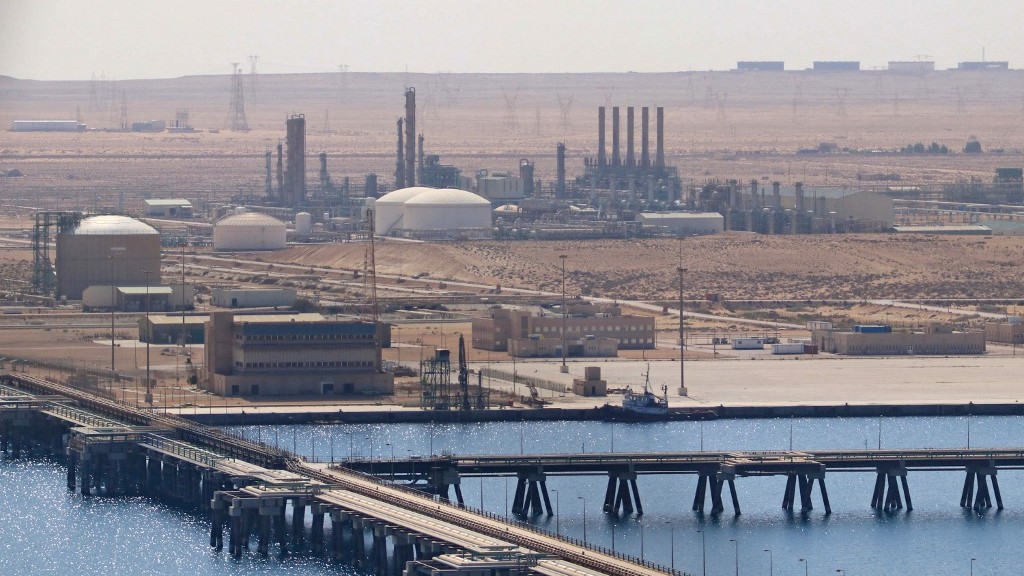
Libya generates roughly 70 percent of its electricity from natural gas, leaving the power grid highly exposed to falling gas production and disruptions at fields and pipelines. Oil accounts for almost all the remainder.
"The electricity crisis and related protests is one of those problems that will not go away until Libya's government can implement a longer-term strategy that ensures a more reliable electricity supply, whether that be through refined fuels or renewable energy sources," Hamish Kinnear, principal Middle East and North Africa analyst at risk intelligence company Verisk Maplecroft, told MEE.
Kinnear noted that Libya was not alone in facing such problems, "but for citizens of a country with the largest oil reserves and the fifth largest gas reserves in Africa, as well as significant solar power potential, blackouts are a particular source of frustration".
A crisis decades in the making
The roots of Libya's current electricity crisis go back years.
The country has not recovered since it plunged into chaos after a Nato-backed uprising toppled and killed longtime leader Muammar Gaddafi in 2011.
Since then, the country has split, with rival administrations in the west headed by the internationally recognised government of Dbeibah, and in the east backed by forces led by General Khalifa Haftar and foreign governments.
Years of underinvestment in the power grid and gas production, combined with this year's heatwave, in which temperatures hit 50C, have all come to a head.
"Oil wealth only becomes reliable electricity when institutions can convert it, and Libya's institutions have been fractured for over a decade," said Karim Elgendy, executive director of the Carboun Institute, a think tank focused on Middle East and North Africa energy and climate.
"Rival authorities issue competing decisions over the same grid and the utility recovers almost none of its costs. Years of deferred maintenance have left the network running on ageing equipment with no margin for error. So every summer becomes a stress test the grid is not ready for," Elgendy told MEE.

In January, Egypt and Libya signed a memorandum of understanding to deepen cooperation in the oil and gas sector.
In July, Egyptian Foreign Minister Badr Abdelatty and other Egyptian officials met with senior Libyan officials, including National Oil Corporation chairman Massoud Suleman, to discuss deepening energy ties between the two sides.
Following Libya's electricity blackouts throughout July, Tripoli turned in part to Egypt, which boosted electricity export capacity to Libya by approximately 43 percent, reaching 100 megawatts.
Despite the apparently sharp rise, the extra supply meets only a fraction of Libya's electricity needs, covering less than a tenth of its recent generation shortfall. Libya also settled outstanding dues to Egypt totalling around $90m.
'A country importing electricity from Egypt is, indirectly, importing Egypt's gas risk'
– Karim Elgendy, Carboun Institute
On the surface, both sides stand to benefit from deepening energy cooperation. Egypt has a massive appetite for energy, and Libya has significant hydrocarbons sitting under its soil.
"The complementarity between the two economies is real: Libya has the hydrocarbons, Egypt has the refining, the generation fleet and the contractors," said Elgendy.
"But genuine integration begins when both sides commit to a long-term commercial framework with obligations running both ways."
And that shows little sign of happening.
Egypt's own electricity needs run on burning gas, and lots of it. Where it once had enough production of its own to meet much of its energy needs, that production has been declining as reserves are depleted.
"Egypt's own power system leans heavily on imported gas it does not control, and recent supply interruptions showed how quickly that exposure travels down the chain. A country importing electricity from Egypt is, indirectly, importing Egypt's gas risk," noted Elgendy.
In recent years, Egypt has had to turn to Israel. Cairo signed a record $35bn gas deal with Israel in 2025, almost tripling its gas imports from the Israeli Leviathan gas fields and marking the largest export deal in Israel's history.
Jalel Harchaoui, Libya specialist with the Royal United Services Institute, says the attempts by Libya and Egypt to look to meet each other's energy needs are "not to be taken seriously".
Harchaoui is sceptical that energy needs were driving the outreach. "I think it would be very incorrect to say that the electricity situation is the reason for the meeting," he told MEE.
"There has been a pattern whereby Tripoli tends to say to Egypt: 'Let's talk. And by the way, I notice you're suffering from energy shortages. Libya has a small population and a lot of energy, Tripoli is happy to help you, Egypt.'"
He described it as "more of a diplomatic trick than something really genuine, especially during a summer when Libya itself is grappling with a very serious electricity crisis".
Harchaoui says the deeper problem is one that Tripoli has been ignoring for a decade.
'To do a corrupt project, you need more time than to do an honest project, because you have to make sure all the key officials are satisfied with their bribes'
– Jalel Harchaoui, RUSI
Libya sits on abundant natural gas reserves both onshore and offshore, "but the error that Libya made, and it's a profound error with long-time consequences, is that it hasn't kept up in terms of natural gas production capacity".
Gas still accounts for roughly three-quarters of the country's electricity output, yet years have gone by "with no new natural gas project of any significance even being launched".
The result, Harchaoui said, is that existing assets have been "shrinking in terms of output", and even a new project greenlit today would take "at least seven or eight years" before producing results.
On current trends, he warned, Libya could within a few years be "humiliated to the point of having to import natural gas", a reversal that would undercut any framing of Libya and Egypt as complementary energy partners.
Part of the failure is cultural as much as technical, he argued. Libya operates with "the culture of a crude oil-producing country" that "just doesn't think in terms of natural gas" as a priority, even though gas, not oil, is what actually keeps the lights on.
Corruption has compounded the delay, not only by diverting money but by slowing decision-making itself.
"To do a corrupt project, you need more time than to do an honest project, because you have to make sure all the key officials are satisfied with their bribes," Harchaoui said, alleging that some power plant units installed between 2022 and 2025 were purchased secondhand and passed off as new.
Political dynamics have also shaped the outbreaks of anger. Harchaoui pointed to years of unfulfilled promises by the country's prime minister – who has claimed since 2021 to have "resolved" the crisis – as one reason unrest has concentrated in the west, where protest is easier to organise than under Haftar's tighter grip in the east. Blackouts, he stressed, are hitting the east and south too, just less visibly and without the same political cost.
Middle East Eye delivers independent and unrivalled coverage and analysis of the Middle East, North Africa and beyond. To learn more about republishing this content and the associated fees, please fill out this form. More about MEE can be found here.