Starmer's 'all guns, no butter' policy will cost him dearly


The recent Nato summit demanded that member states agree to reach a target of five percent of GDP on defence spending over the next decade.
Nato secretary general Mark Rutte was beside himself with joy. This will make Nato “more lethal”, he vowed.
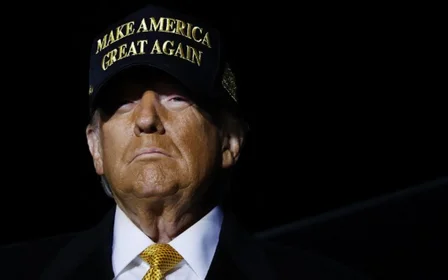
Rutte was in no doubt as to why Nato had successfully agreed on this historic high in arms spending: US President Donald Trump, or “daddy”, as Rutte called him.
In embarrassingly fulsome messages to Trump, made public by the US president, Rutte put to shame the most obsequious courtier in an 18th-century absolute monarchy, as he verbally prostrated himself at the feet of the ruler of the empire.
In all fairness to Rutte, he was correctly summarising the view of European governments. Much as some claim to dislike Trump, they have fallen in line with his demands for increased arms expenditures in double-quick time. All but Spain endorsed the five-percent defence spending target, despite the fact that the US spends only 3.5 percent of GDP on arms.
New MEE newsletter: Jerusalem Dispatch
Sign up to get the latest insights and analysis on Israel-Palestine, alongside Turkey Unpacked and other MEE newsletters
Trump was triumphant, using the Nato news conference to rub the noses of European leaders in the latest proof that the US is the organisation’s top dog. Never has founding secretary general Lord Ismay’s aphorism - that Nato exists to keep “the Soviet Union [read Russians] out, the Americans in, and the Germans [read Europeans] down” - been more true.
British Prime Minister Keir Starmer is an unqualified enthusiast for rearmament. The most clearly defining policy of his prime ministership so far, where so much else is shrouded in serial U-turns, is a commitment to US-led rearmament.
The picture of Starmer at the recent G7 summit bowing at Trump’s knee to pick up papers that the president had dropped went viral, because it accurately captured the political relationship between the two governments.
Credibility gap
Starmer, of course, signed up to the five percent of GDP rearmament target and coupled it with a commitment to buy a dozen American F35A fighters capable of carrying a nuclear payload, marking the first time the UK will have the capacity to deliver airborne nukes since the Cold War. The cost of this programme alone will be £15bn.
More broadly, the newly publicised Strategic Defence Review underpins Starmer’s over-inflated rhetoric about the UK needing to prepare to fight on the “home front” in the case of a full land invasion of the UK. Such a project, unsuccessfully contemplated by Napoleon and Hitler, was last accomplished in 1066.
There is no plausible modern candidate for this project. Russia, with an economy the size of Spain’s and a military depleted by three years of unsuccessful war in Ukraine, is certainly not the 21st-century equivalent of either Napoleon or Hitler when their empires spanned the continent. Indeed, having failed to reach Kyiv, it is improbable to the point of absurdity to think that Russian troops might soon be on the Normandy beaches.
The period of high Starmerism is past. Now the pendulum is swinging in the other direction, back towards traditional centrist Labourism
The UK defence establishment and government are well aware that this huge credibility gap exists in the minds of British voters. The Strategic Defence Review spends an unusual amount of time worrying about how rearmament can be sold to the population.
It calls for a “national endeavour”, first mooted by the previous Tory government, in which a wide variety of propaganda and “educational” weapons will be fired at hapless citizens in order to reduce them to compliance with the warmongers’ project.
And there is no Starmer speech that does not echo the Strategic Defence Review’s insistence that there will be a “defence dividend”, in the Orwellian language now common in government circles, that will result in more jobs.
So far, the “national endeavour” project is failing spectacularly.
The purchase of F35A jets is a case in point. It’s a slap in the face for Unite the Union general secretary Sharon Graham, who campaigned relentlessly for a renewal of the Eurofighter Typhoon fleet in the name of British jobs.
In a sharp lesson in the UK’s defence subservience to the US arms industry, Starmer ignored her and opted instead to flatter Trump with a purchase of American planes manufactured by Lockheed Martin, with only 15 percent of UK-made components.
Leadership in danger
But even when money spent by the UK government isn’t pouring directly into the bank accounts of US defence contractors, it will never produce the same number of jobs as the same amount of money spent on civilian industry. Defence spending is simply a massively inefficient way of generating jobs.
Beyond these specific arguments is the gigantic fact that Starmer is advocating huge increases in arms expenditures, while hacking away at the already emaciated welfare budget.
The assault on welfare, the defining project of the first year of the Labour administration, has already produced a record-breaking back-bench rebellion. This in turn produced yet another screeching U-turn from Starmer.
Accompanying the U-turn is the blame game. At the moment, No. 10 guru Morgan McSweeney and “iron chancellor” Rachel Reeves are the ones catching it in the neck.

As tens of thousands of people at the recent Glastonbury Festival cursed Starmer’s name, Starmer himself has been busy apologising for his own mistakes to any journalist who will listen. A sure sign that Starmer’s leadership is endangered was Health Secretary Wes Streeting’s recent TV interview, in which he refuted criticism of the Glastonbury crowd by saying that Israel should get its “own house in order”.
Starmer is now a couple of by-election losses away from a leadership challenge. Perhaps he can make it to the May 2026 council elections if the fates spare sitting MPs and no by-election takes place.
But whatever the timing proves to be, the period of high Starmerism is past. Now the pendulum is swinging in the other direction, back towards traditional centrist Labourism.
A number of important consequences follow. Firstly, the time for Jeremy Corbyn to launch a new leftist party is now. Secondly, no new party can afford to be merely an electoral project: it must have the closest possible relations with Palestine and anti-war movements whose activists will be its core constituency.
Thirdly, the anti-war movement will be central to ongoing opposition to the government. Reeves or her successor will return to the task of extracting the money for rearmament from working people, one way or another.
The defence of working-class living standards at home will be intimately bound to opposition to the preparation for war abroad.
The views expressed in this article belong to the author and do not necessarily reflect the editorial policy of Middle East Eye.
Middle East Eye delivers independent and unrivalled coverage and analysis of the Middle East, North Africa and beyond. To learn more about republishing this content and the associated fees, please fill out this form. More about MEE can be found here.