How the war on Iran revived the Axis of Resistance


The Epic Fury assault was meant to dismantle Iran's regional power. It has done the opposite. Rather than diminishing Tehran's reach, it has revived it, breathing new life into the network of allied movements known as the Axis of Resistance across multiple fronts.
Having already weakened the so-called Iranian "proxies" across Palestine, Lebanon, Syria, and Iraq, American and Israeli officials declared that it was time to strike the "head of the octopus".
Iran's response did not remain contained within its borders, as it launched missile and drone strikes across several countries and sparked an unexpected resurgence of the Axis of Resistance, a network of Iran-aligned movements committed to resisting US and Israeli hegemony.
What began on 28 February as an attempted decapitation strike against the Islamic Republic rapidly spiralled into a multi-front war. Iraqi resistance factions entered immediately. Hezbollah in Lebanon joined by day four, and Ansar Allah in Yemen fired ballistic missiles and drones into Israel, opening the fourth front against the US-Israeli axis.
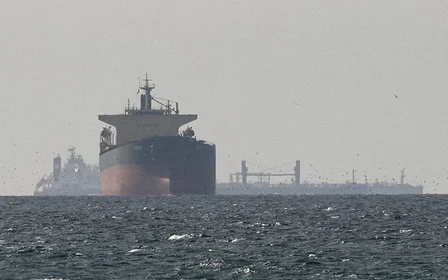
Beyond coordinated regional fronts, Iran itself has struck Israel and US targets across the region, including critical military infrastructure such as radar installations, while simultaneously leveraging strategic chokepoints and the vulnerability of global energy markets.
New MEE newsletter: Jerusalem Dispatch
Sign up to get the latest insights and analysis on Israel-Palestine, alongside Turkey Unpacked and other MEE newsletters
The speed and scale of this expansive regional response, as US President Donald Trump himself acknowledged, came as a surprise to the US and Israel. He had assumed the Islamic Republic was on the verge of collapse and the Iranian people were ready to take to the streets to overthrow the regime.
Iran was portrayed as a paper tiger... that image has now been shattered by its large-scale missile and drone attacks
In his view, the killing of Ayatollah Ali Khamenei would trigger internal collapse and prevent the Islamic Republic from mounting a coordinated regional response.
Another flawed assumption was that the Axis of Resistance would be too fractured to act in coordination across the region.
These claims were widely accepted and amplified in the media.
Iran was portrayed as a paper tiger, weakened not only militarily but also exposed across the region. That image has now been shattered by its large-scale missile and drone attacks, which have struck US bases and assets across the Middle East, rendering some of them inoperable, including Ali Al Salem Air Base in Kuwait and the US Fifth Fleet headquarters in Bahrain.
Setbacks and blows
Well before the war, Israeli Prime Minister Benjamin Netanyahu boasted that Israel had "broken apart this axis, brick by brick".
This narrative reflected his push for total victory and was echoed in recent months by celebratory commentary that treated the Axis's setbacks as proof that it had been neutralised or totally unravelled.
Such confidence rested on a series of developments that, over time, appeared to validate this position. Over the past three years, Israel has inflicted serious military and political blows on the Axis, raising fundamental questions about the viability of the multi-front strategy that long underpinned Iran's deterrence against the US and Israel.
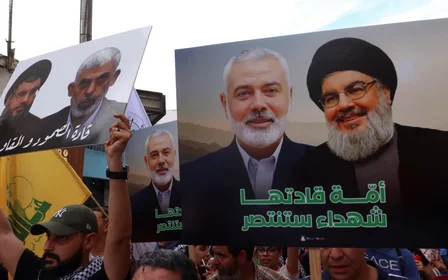
The assassination of key leaders from Hamas, Islamic Jihad, Hezbollah and Iran, along with the collapse of Bashar al-Assad's government in Syria in December 2024, dealt heavy damage to the Axis.
Much of this also reflected Iran's own misjudgments since October 2023, especially its failure to anticipate Netanyahu's determination to go on the offensive and escalate towards a broader and longer regional confrontation.
Khamenei's long-standing approach of strategic patience, marked by cautious, limited responses to Israeli and US aggressions, proved particularly ill-suited to this moment.
To many observers, this restraint signalled weakness and invited further escalation, reinforcing the view in Washington and Tel Aviv that Iran was either unwilling or unable to impose meaningful costs. Inside Iran, these setbacks fuelled sharp criticism of the forward defence doctrine and prompted calls for a strategic shift.
Outside observers, meanwhile, increasingly portrayed the Axis of Resistance as fractured and incapable of mounting effective regional resistance, arguing that Iran's network had become a liability it could no longer sustain.
Resilience under pressure
The loss of Syria was particularly consequential as it severed the territorial corridor linking Iran to Lebanon and Palestine and deprived Hezbollah of critical strategic depth and direct logistical access to Iran.
The shifting political landscapes in Lebanon and Syria since late 2024, away from Iran, further compounded the Axis's predicament.
Consequently, many analysts concluded that an isolated Hezbollah entering another war with Israel could face existential risks, especially if forces loyal to the new Syrian leadership opened a second front from eastern Lebanon.
Follow Middle East Eye's live coverage of Israel's genocide in Gaza
These developments seem to have convinced Trump and Netanyahu that the moment was ripe to strike directly at the heart of the Axis in Iran. That is precisely why the unfolding multi-front response, particularly Hezbollah's return to the fight, has come as such a surprise to Israeli and US officials.
Israeli officials had repeatedly suggested that Hezbollah had been broken and severely weakened after months of targeted assassinations against its leadership and sustained military pressure.
Yet what is unfolding on the ground now tells a very different story. Hezbollah is confronting the Israeli invasion in southern Lebanon in ways Israeli planners did not anticipate.
Israeli officials did not expect Hezbollah to enter the fight so rapidly, nor did they anticipate the intensity of its sustained fire.
Instead, Hezbollah has shown that it retains substantial fighting capacity by engaging Israeli forces directly along the front lines, while continuing missile and drone attacks from south of the Litani River, an area Israel believed had been cleared of resistance fighters. It has also launched longer-range strikes reaching as far as Tel Aviv and the Gaza border.
What is striking is that, during the 66-day war of 2024, Hezbollah's resilience was evident despite heavy losses among its leadership and fighters.
Its forces held out until the November ceasefire and prevented Israeli troops from mounting a major ground invasion, which raises serious questions about the Israeli underestimation of the party.
In the current war, Hezbollah's barrages have increasingly taken place in coordination with Iranian missile launches to overwhelm Israeli air defence systems.
What has emerged on the Lebanese front is a mosaic-style of defence, where dispersed units continue to operate independently of central leadership while maintaining coordination across multiple fronts of the Axis.
Hezbollah is a core pillar of the Axis, and its battle performance is stretching Israeli air defences across multiple fronts and galvanising the resistance from Palestine to Syria and Yemen.
The multi-front war expands
In parallel, a second front has already opened in Iraq. Since 28 February, the Islamic Resistance in Iraq, a coalition of Iran-aligned armed groups, has steadily escalated attacks against US forces and pro-American regimes in the region, including Kuwait and Saudi Arabia.
They have targeted US bases and the embassy in Baghdad and have threatened to escalate against the Syrian government should it move against Hezbollah.
The Iraqi Resistance has issued an ultimatum to the US embassy in Baghdad, offering not to target the embassy if Israel halts its assault on Beirut's southern suburbs and the displacement of civilians, underscoring the Axis's strategy of unifying battlefields.

This intervention is happening amid popular anger at the US-Israeli campaign and the assassination of Ayatollah Khamenei, and in the wake of a statement by Grand Ayatollah Sistani that popular public support for Iran during this war is a "collective duty".
Given its deep religious and cultural ties to Iran and the central role of resistance forces, Iraq has therefore emerged as a principal arena in this expanding multi-front struggle.
At the same time, Ansar Allah (the Houthis) in Yemen has formally entered the confrontation alongside Iran and the Axis in Lebanon and Iraq through ballistic missile and drone attacks on Israel.
With the opening of the Yemeni front, Israel has faced missile attacks from three fronts, which the movement said are carried out "in coordination with our brothers in Iran and Hezbollah in Lebanon".
Ansar Allah leader Sayyed Abdul-Malik al-Houthi has declared that joint military operations with the Axis of Resistance will escalate and described this as a crucial prelude to the reunification of the umma. Ansar Allah has hinted at further "surprises", meaning potential escalation against Saudi and UAE targets and direct pressure on the Bab el-Mandeb Strait, the narrow gateway between the Red Sea and the Indian Ocean.
In a scenario of a double chokehold blocking transit through the Hormuz Strait, the Bab el-Mandeb Strait and the Suez Canal, the global energy system could face significant disruption. This risk remains despite the current pause in fighting.
The Axis after Epic Fury
The Axis's performance, increasingly coordinated and expansive, has punctured the "paper tiger" narrative, unsettling two widely circulated assumptions about its capabilities.
First, despite months of speculation that Iran's regional allies had crumbled, the Axis of Resistance is far from finished.
Even after major setbacks, not least the loss of Syria and the heavy losses inflicted on the Palestinian resistance in Gaza, it remains a decisive factor in shaping the course of a war that is already recasting the region's future.
By engaging adversaries across several theatres, it has raised the costs for its opponents and complicated their military campaigns in Iran and Lebanon
Second, rather than becoming a strategic burden, the continued impact of the Axis underscores the relevance of a multi-front strategy. By engaging adversaries across several theatres, it has raised the costs for its opponents and complicated their military campaigns in Iran and Lebanon.
As the Axis sheds its strategic patience and moves into an expansive offensive posture, its core premise comes into clearer view. Confronting imperialism on a single front is doomed to fail.
This principle, rooted in both self-defence and transnational resistance to colonial domination and imperialism, has long underpinned the Axis's deterrence strategy.
The US-Israeli assault has reaffirmed this logic: fighting alone increases the likelihood of defeat.
This is clearly echoed in Iran's 10-point proposal, accepted by the Trump administration as the basis for negotiations, which calls for halting the war on all fronts, particularly against the Islamic Resistance in Lebanon.
By pressing this demand throughout the negotiations, widely seen by observers as maximalist, Iran signals that the Axis moves as a single front and cannot be fragmented. It reflects a prevailing view in Tehran that its multi-front resistance has paid off and forced the US-Israeli axis to negotiate on Iran's terms.
For a state built on the ideas of the 1979 revolution, forged in response to successive imperial interventions, the path forward appears less a choice than a continuation. If the Islamic Republic survives this war, it will be even less likely to retreat from its forward strategy, since abandoning the Axis would only deepen its vulnerability.
The views expressed in this article belong to the author and do not necessarily reflect the editorial policy of Middle East Eye.
Middle East Eye delivers independent and unrivalled coverage and analysis of the Middle East, North Africa and beyond. To learn more about republishing this content and the associated fees, please fill out this form. More about MEE can be found here.